🔥 Calorie Calculator for Weight Loss
Calculate your personalized daily calorie target and macro breakdown to lose weight effectively
| Activity Level | Multiplier | Description | Example |
|---|---|---|---|
| Sedentary | 1.2x | No exercise | Desk job, no gym |
| Lightly Active | 1.375x | 1–3 days/week | Weekend walks, yoga |
| Moderately Active | 1.55x | 3–5 days/week | Gym 4x/week |
| Very Active | 1.725x | 6–7 days/week | Daily training |
| Extra Active | 1.9x | 2x/day training or labor job | Athletes, construction |
| Deficit/Day | Weekly Loss | Monthly Loss | Sustainability |
|---|---|---|---|
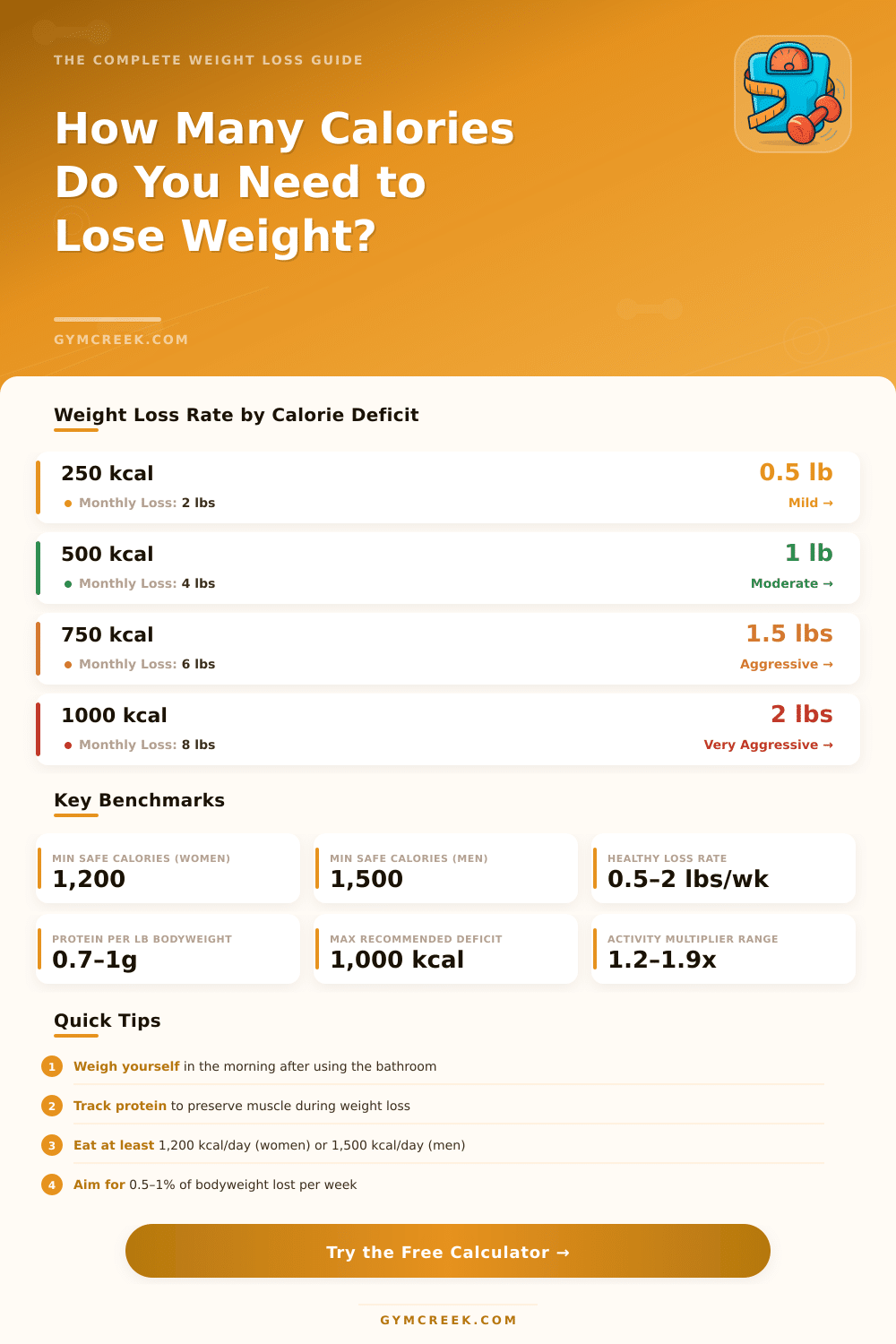
| 250 kcal | ~0.5 lb (0.23 kg) | ~2 lbs (0.9 kg) | Very sustainable |
| 500 kcal | ~1 lb (0.45 kg) | ~4 lbs (1.8 kg) | Recommended |
| 750 kcal | ~1.5 lbs (0.68 kg) | ~6 lbs (2.7 kg) | Moderate effort |
| 1,000 kcal | ~2 lbs (0.9 kg) | ~8 lbs (3.6 kg) | Max recommended |
| Macro | Calories/g | % of Calories | Goal |
|---|---|---|---|
| Protein | 4 kcal/g | 30–35% | Preserve muscle mass |
| Carbohydrates | 4 kcal/g | 35–45% | Energy & performance |
| Fat | 9 kcal/g | 25–30% | Hormones & satiety |
| Fiber | ~2 kcal/g | 25–38g/day | Fullness & digestion |
| BMI Range | Category | Health Risk | Action |
|---|---|---|---|
| Below 18.5 | Underweight | Elevated | Increase calories |
| 18.5 – 24.9 | Normal Weight | Low | Maintain or mild deficit |
| 25.0 – 29.9 | Overweight | Moderate | 500 kcal deficit |
| 30.0 – 34.9 | Obese Class I | High | 500–750 kcal deficit |
| 35.0 and above | Obese Class II+ | Very High | Consult a physician |
📏 How to Measure Height: Stand barefoot against a wall, heels together, look straight ahead. Mark the top of your head and measure to the floor.
💪 Protein Target for Weight Loss: Aim for 0.7–1g of protein per pound of bodyweight (1.5–2.2g per kg) to preserve lean muscle during a calorie deficit.
💧 Daily Water Intake: Drink at least 0.5 oz per pound of bodyweight (30 mL per kg) per day. Adequate hydration supports metabolism and reduces false hunger.
The path to Weight Loss comes down to one main spot: Calorie intake against calories leaving. If you burn more energy than you pick, then your body starts to lose pounds over time. In theory it sounds very simple.
DISCLOSURE: This post may contain affiliate links, meaning when you click the links and make a purchase, I receive a commission. As an Amazon Associate I earn from qualifying purchases.

But the main challenge is that you keep that deficit, while you keep the hunger under control, here everything becomes more complex.
Lose weight by eating fewer calories
A good first step is remove 500 calories from your whole everyday energy use (TDEE) that depends on your lifestyle. If you cut around 500 calories daily from what you usually eat, then you can expect a loss of half pound to one pound of weight for every week. However the exact figures range based on your body shape, sex, amount of weight that you carry and level of activity.
Here is that old rule, that goes around everywhere: 3 500 calories match to one pound of fat. But here is the problem; that math does not describe what actually happnes in your body during Weight Loss. When you remove 3 500 calories, you do not simply burn only fat.
Reality is much more twisted than that.
Whether you go under 1 000 calories below your normal everyday needs? That pushes the limit. Losing more than two pounds weekly is usually risky and can itself slow your metabolism.
You also risk losing muscle, which works against you more then for you later.
Online calculators help well to figure out where you should aim for Calorie intake. They consider your age, current weight and height to estimate needs for keeping weight and targets of Weight Loss. Here is the main spot even so; after you lost a big amount of weight or changed your exercise routine, you need to recalculate.
Your values then will adjust.
Men commonly hear about 2 500 calories daily as standard value, while women usually have around 2 000. Every case is different however. Your lifestyle and metabolism affect those numbers much more than any general advice ever could.
Lasting Weight Loss comes from building solid habits. Increasing your protein intake helps very much. Dropping sugary drinks and processed carbohydrates makes a clear change.
You would want to also drink enough water and regularly move. Rather than fully cutting meals, you swap them for lower Calorie options, which mostly gives better results on a long-term basis.
What you pick matters more than how far you move, when dealing with real Weight Loss. Naturally, exercise burns calories and does contribute, but good diet is what truly drives the progress. Diet changes usually give bigger impact than only exercise programs, when you want to lose pounds.
Failing to always eat under your needs each day will eventually hit a wall. Adding some days at normal intake beside your deficit days can stop that state from settling. That stops your body fromfully adjusting to the reduced intake.