Neck Size Calculator
Estimate how your measured neck circumference compares with height, bodyweight, and body-fat context, then convert that number into a dress-shirt collar suggestion with practical ease.
📌Scenario Presets
These nine presets cover lean endurance builds, desk-lifter recomps, grapplers, broad frames, classic tailoring, and heavier strength blocks so the ratio and collar math shifts in realistic ways.
⚙Neck Inputs
Neck ratio and collar snapshot
Enter your build details to compare measured neck size against height, lean mass, and shirt-collar ease.
📊Neck Metrics Grid
📑Reference Tables
| Ratio | Read | Typical look | Use |
|---|---|---|---|
| Under 19.5% | Very slim | Distance build | Collars often stay trim |
| 19.5-21.0% | Lean-athletic | Balanced frame | Common office fit |
| 21.1-22.4% | Thick-athletic | Lifter or swimmer | Watch tie pressure |
| 22.5%+ | Yoke-heavy | Football or grappling | Relaxed collars help |
| Measured | Trim fit | Classic | Easy fit |
|---|---|---|---|
| 14.0 in | 14.5 in | 14.5 in | 15.0 in |
| 15.0 in | 15.5 in | 15.5 in | 16.0 in |
| 16.0 in | 16.5 in | 16.5 in | 17.0 in |
| 17.0 in | 17.5 in | 17.5 in | 18.0 in |
| Context | Men | Women | Collar read |
|---|---|---|---|
| Very lean | Under 10% | Under 18% | Low soft tissue |
| Athletic | 10-15% | 18-24% | Clean baseline |
| Average | 16-22% | 25-31% | Moderate softness |
| Higher | 23%+ | 32%+ | Leave more ease |
| Layer | Low | Mid | High |
|---|---|---|---|
| Frame | -1.2 cm | 0.0 cm | +1.2 cm |
| Training | -0.5 cm | 0.0 cm | +1.1 cm |
| Tape state | 0.0 in | -0.1 in | -0.25 in |
| Collar ease | +0.25 in | +0.50 in | +0.75 in |
💡Practical Tips
To properly find the correct size of a shirt collars for your neck, it is first necessary to measure your neck circumference. Beyond measuring your neck circumference, there are other factor that should be considered in determining the size of shirt collars that will best suit your body type. Other factors to consider besides your neck circumference include your height, lean body mass, and body fat percentage.
In determining your neck size, it is important to take measurements that are accuracy. When measuring your neck, ensure that you are standing in a neutral position with your shoulders resting in a normal position, and ensure that the tape measure are even with your neck. People often make the mistake of measuring there neck after having exercised, as exercising will cause the muscles in the neck and traps to swell.
Measure Your Neck and Choose the Right Collar Size
If you measure your neck while your muscles is swollen, your measurement will be larger than your normal neck circumference, which could result in purchasing shirt collars that are too large for your normal wear. Therefore, it is important to take measurements of your neck while your muscles are in a resting state. Your height is another factor that will impact your ideal neck circumference.
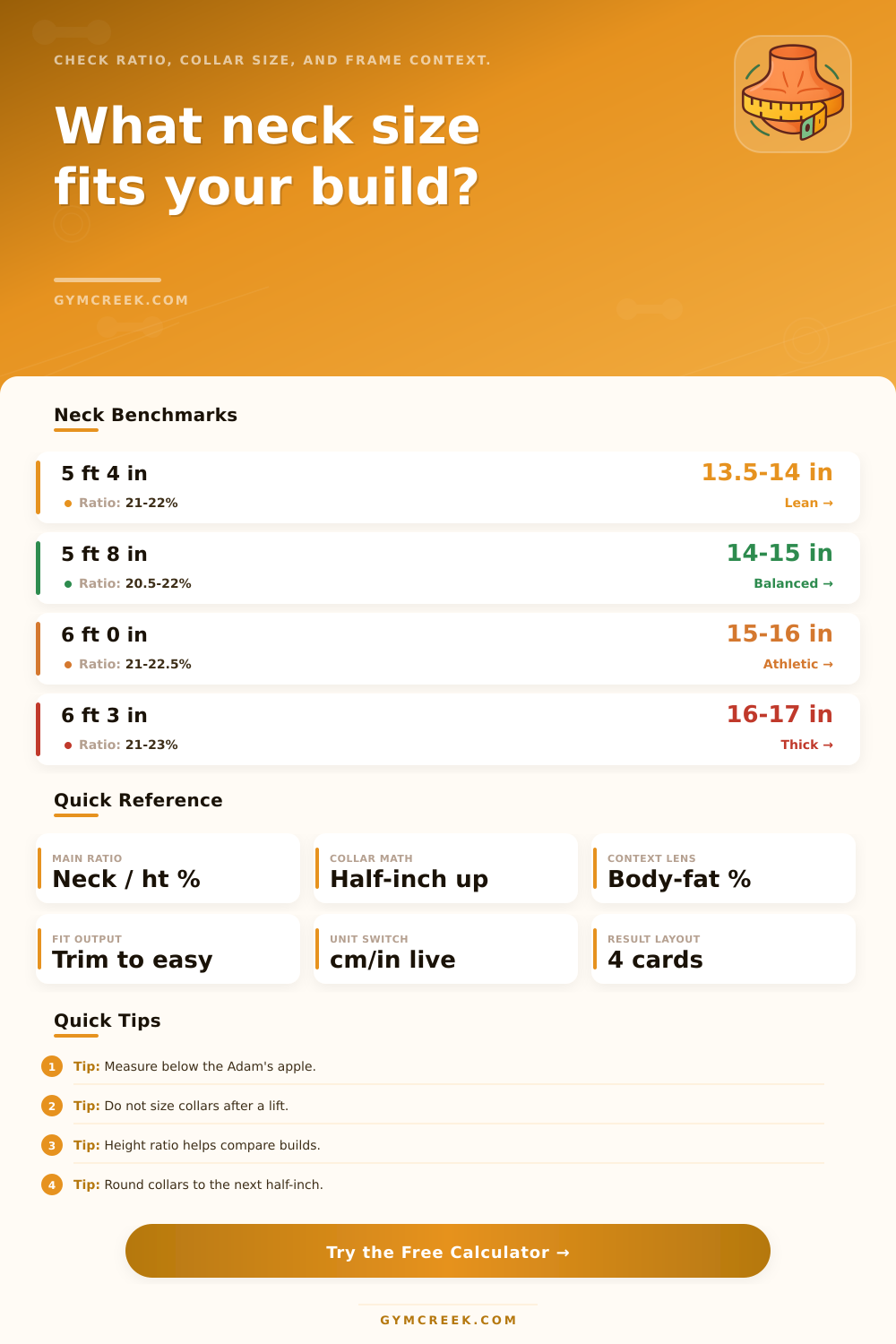
The ideal neck circumference for any individual is between 20% and 22% of they total height. For instance, an individual that is 5 feet 8 inches (173cm) in height should have a neck circumference of between 15 and 17 inches. An individual that is 6 feet 3 inches (191cm) in height should have a neck circumference of between 16.5 and 19 inches.
These ratios can be used to determine if any individual’s neck size are proportional to their height. Another factor to consider for individuals is body fat percentage. Individuals with a lower body fat percentage will typically have more muscle on there necks than individuals with higher body fat percentage.
Thus, individuals with lower body fat percentages may require shirt collars with less room for breathe than the shirt collars that may be needed for individuals with higher rates of body fat. Additionally, the bodys lean body mass can have an impact upon any shirt collar size recommendations for individuals. For instance, individuals whose bodies possess more muscle mass may require different sized collar than individuals whose bodies have less lean mass.
An individual’s training requirements can also impact the size of shirt collars that best suit their body types. For instance, individuals that train their traps muscle will have thicker necks than individuals that only perform endurance training exercises. Determine your true neck circumference, and add some “ease” to that circumference.
Ease is the amount of space that you need in the collar for breathing while wearing the shirt. Add between 1/4” to 3/4” of ease to your true neck circumference. Shirts often come in even increment of 1/2 inch, so always round your number up to the nearest 1/2 inch measurement.
For instance, a true neck circumference of 15.3” should result in a recommended collar size of 16”. Finally, consider any other factors besides neck size and height that may impact the size of the shirt collars that you wear. As individuals age, the tissue that makes up there neck may soften.
Additionally, individuals that have a thick neck and tall frame may require differently fitted shirts than those with thinner necks and shorter body frames. By considering each of these factors, an individual can ensure that the shirt collars that they wear will best suit there body type.