Lean Bulk Macro Calculator
Build a clean massing plan from TDEE, surplus size, and macro floors so you can push scale weight without turning every extra calorie into sloppy gain.
📌Presets
Every preset loads a realistic lean bulk case so you can compare slower ramps, higher-step weeks, and carb-heavy training blocks.
⚙Calculator
Lean bulk macro snapshot
Enter your stats and calculate a clean surplus with matched macros.
📊Macro Metrics
📑Reference Tables
| Style | Calories | Gain rate | Best when |
|---|---|---|---|
| Primer | +120 to 160 | 0.15-0.25% | Post-cut |
| Steady | +180 to 240 | 0.2-0.35% | Main phase |
| Build | +260 to 320 | 0.3-0.45% | Hard training |
| Push | +340 to 400 | 0.4-0.55% | True hardgainer |
| Macro | Low end | Standard | Why |
|---|---|---|---|
| Protein | 0.8 g/lb | 0.9-1.0 | Support growth |
| Fats | 0.25 g/lb | 0.3-0.35 | Hormone support |
| Carbs | 2.2 g/kg | Fill rest | Training fuel |
| Fiber | 20 g | 28-38 g | Appetite control |
| Pattern | Factor | Steps | Lift days |
|---|---|---|---|
| Sedentary | 1.20 | <5k | 1-3 |
| Light | 1.375 | 5-8k | 2-4 |
| Moderate | 1.55 | 8-11k | 3-5 |
| Very active | 1.725 | 11k+ | 4-6 |
| Zone | Men | Women | Surplus cue |
|---|---|---|---|
| Lean | 8-12% | 18-22% | Can push |
| Athletic | 12-16% | 22-26% | Steady bulk |
| Middle | 16-20% | 26-30% | Stay modest |
| Higher | 20%+ | 30%+ | Use primer |
💡Tips
A lean bulk is a method of gaining body weight by gaining muscle while gaining minimal body fat. Individuals who attempt to gain body weight typicaly do so by consuming a significant amount of extra calories above there maintenance level. However, consuming too many extra calories will lead to excessive body fat storage.
Therefore, an individual must manage there calories carefuly to ensure that the extra calories is used for gaining muscle rather than fat. One method to manage lean bulking is to calculate an individual’s maintenance calories, or there Total Daily Energy Expenditure (TDEE). You calculate TDEE by taking an individual’s resting metabolism and adding the calories burned during physical activity during the day.
How to Do a Lean Bulk
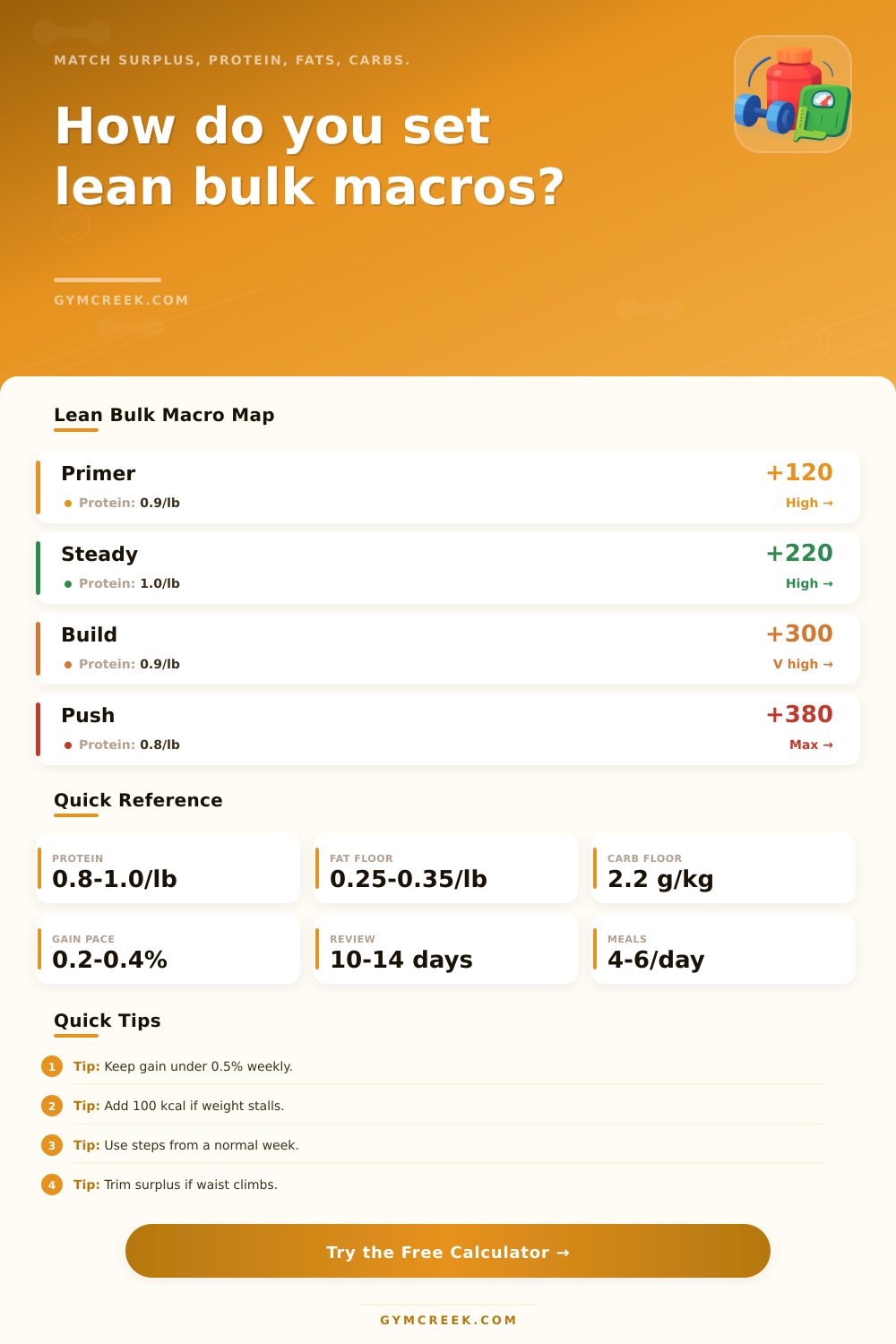
The primary component of a lean bulk is protein intake. Protein is required for muscle protein synthesis. An individual should consume between 0.8 and 1.0 gram of protein per pound of body weight.
An individual recovering from a period of calorie restriction may require more protein to aid in the recovery of its muscle. Fats is also an essential component of a lean bulk. An individual should consume between 0.25 and 0.35 grams of fat per pound of body weight because consuming too little fat can lead to lowered testosterone level.
Carbohydrates should make up the remainder of an individual’s calories. Carbohydrates is essential for maintaining an individual’s glycogen level. An individual’s caloric surplus will impact the rate at which they gain weight.
During the primer phase for bulking, an individual should consume a surplus of 120 to 160 calories per day. This phase allow the body to adapt to eating more food. During the steady build phase, an individual should consume a surplus of 220 calories per day.
During the muscle build phase, an individual should consume a surplus of 300 calories per day. This phase is used for individuals who lift extreme heavy weights during their workouts. An individual who consistently has trouble gaining weight (hardgainer) may require a surplus of 380 calorie per day.
An individual with a high body fat percentage should use a smaller surplus because they are more likely to gain fat then muscle. Physical activity can alter an individual’s TDEE. An individual that leads a sedentary lifestyle will have a different TDEE than an individual that walks 8,000 to 11,000 steps per day and lift weights.
Consistency in the number of steps that an individual takes and the number of days that they lift weights will ensure that their TDEE remain accurate. An individual who lifts weights may increase the amount of carbohydrates that they consume if they lift weights regular. Carbs will provide the energy required to lift heavy weights.
An individual that does not lift weight as often will consume fewer carbohydrate. An individual may make some mistake when bulking lean. One mistake is changing the calories that an individual consume based on there fluctuation in body weight each day.
Body weight can fluctuate due to factors other than muscle gain so an individual should not adjust there calories based on their daily scale reading. Rather, an individual should review there weight every 10 to 14 day. If an individual has not gained weight after two weeks of bulking, they should increase there calories by 100 per day.
If an individual’s waist circumference increase significantly and they are gaining strength, but not significant amount of weight, they should reduce there caloric surplus. An effective lean bulk will result in an increase of 0.2 to 0.4 percent of an individual’s total body weight per week. In order to ensure the success of the lean bulk method, an individual should track a few different metric.
An individual should track their body weight each morning and determine the average weight each month. An individual can also track there logs at the gym as an increase in strength indicate that there calories are supporting the growth of their muscle. An individual should consume between 28 and 38 grams of fiber daily from vegetable.
By following these step, an individual can ensure that their body is effectively utilizing there calories to gain muscle.