Fluid Replacement Calculator
Translate weigh-ins, bottle counts, urine losses, and turnaround timing into a fluid refill plan that shows how much to drink back, how fast to pace it, and how much sodium to pair with recovery.
📌Preset Playbook
These nine presets mix short sessions, humid endurance work, match play, studio heat, and fast-turnaround training so you can compare how the refill target changes when sweat loss and recovery urgency shift.
⚙Hydration Log
Fluid replacement snapshot
Enter valid weigh-ins, intake, and urine data to build a refill and sodium plan.
📊Replacement Metrics Grid
📑Reference Tables
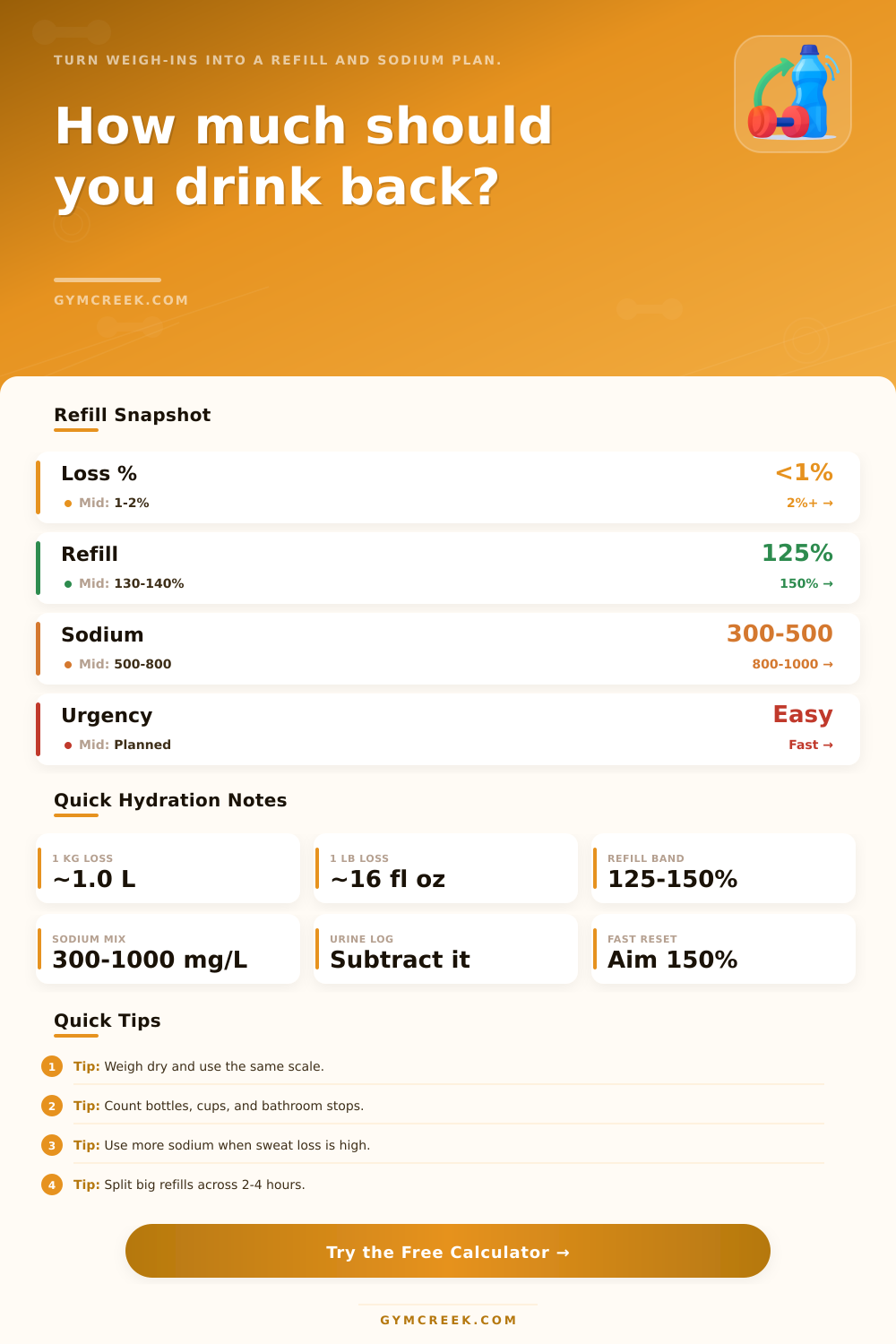
| Loss % | Read | Refill range | Practical cue |
|---|---|---|---|
| <1% | Light | 125% | Comfortable refill pace usually works. |
| 1-2% | Noticeable | 130-140% | Use a measured drink plan instead of thirst alone. |
| 2-3% | High | 140-150% | Faster recovery matters if training continues soon. |
| >3% | Very high | 150%+ | Recheck heat, pace, and tolerance before repeating. |
| Plan | mg/L | Per 500 mL | When it fits |
|---|---|---|---|
| Water only | 0 | 0 mg | Short, cool work with low losses. |
| Light sodium | 350 | 175 mg | Everyday sessions with food soon after. |
| Standard | 550 | 275 mg | Common middle ground for many athletes. |
| Heavy sodium | 800-1000 | 400-500 mg | Salty sweaters or fast repeat sessions. |
| Next push | Multiplier | Reason | Use case |
|---|---|---|---|
| Easy tomorrow | 1.25 | More time to finish the refill naturally. | One key session per day. |
| Next day | 1.30 | Still measured, but a little more complete. | Normal training week rhythm. |
| Same day | 1.40 | Push the target higher before round two. | Two-a-day training or late games. |
| Under 6 hr | 1.50 | Fast reset window with less margin for delay. | Tournaments or double practices. |
| Hour | Target by then | Running total | Note |
|---|---|---|---|
| Hour 1 | -- | -- | Enter valid numbers above. |
| Hour 2 | -- | -- | The ladder updates after calculation. |
| Hour 3 | -- | -- | Use it to pace a big refill calmly. |
| Hour 4 | -- | -- | Shorter windows compress the same total. |
💡Coach Notes
If the scale shows a large drop, do not force the full replacement in one sitting. Spreading the target across the chosen recovery window is usually easier on the stomach and more realistic between sessions.
Repeat the test in cool and hot conditions. Your sodium plan and refill multiplier may stay the same, but sweat rate and the amount you can comfortably drink back often change with environment and pace.
To determine how to replace the fluids that you lose during exercise, you must calculate the total loss of fluids that your body endure during exercise. Total loss of fluids is an amount of fluid that your body loses through sweating during the exercise. To calculate the total amount of fluid that you lost during exercise, you must weigh yourself before you perform exercise, and then you must weigh yourself after you have performed the exercise.
You must account for the weight of the water that you drank while performing exercise, as must the weight of the fluid that you lost through urination while performing exercise. If you dont account for the fluid that you lost through urination, you will find that you underestimates the amount of fluids that you lost through exercise. As a result, you may provide insufficient fluid replacement for you body.
How to Replace the Fluids You Lose During Exercise
Instead of relying upon your sensation of thirst to determine how much fluid to consume, you should rely upon the measurements that you take with the scale to determine how much fluid you need to drink. In addition to using the scale to determine how much fluid you need to drink, you should also consider how much time you have before your next exercise session. If you have a short amount of time before your next exercise session, you may want to drink your replacement fluid more quick.
If, however, you have more time before your next exercise session, you can take in your fluids at a slower rate. Sweat contains electrolytes, and one of the electrolytes included in sweat is sodium. It is important for athletes to ensure that they are replacing sodium that is lost in there sweat, since sodium helps the body to hold onto the fluids that are replaced.
If you do not replace sodium with the fluids that you drink, your body may not be able to hold onto the fluid that is consumed. Additionally, you may feel muscle cramp, or you may feel mentaly fog. These symptoms result from the bodys insufficient replacement of sodium that was lost through sweating.
You can consume fluids that contain a specific concentration of sodium, and you should select that concentration to match your own individual rate of sweating. Another important consideration is how long you should take your fluids. You should spread your fluid intake over a period of two to four hours.
If you drink all of the fluid that you calculated that you need to consume at once, you may experience discomfort and bloating. Consuming fluids in small amount over a period of several hours allows the body to absorb the fluid that is consumed. Additionally, spreading the fluid over a period of two to four hours allows you to reach the amount of fluid that you need to consume, without drinking too much fluid at once.
The environmental temperature and humidity can impact how much fluid that you lose during exercise. For instance, high humidity and high temperature will cause your body to lose more fluid through sweating. If you perform your exercise in a cooler environment different than where you performed your exercise session, you will lose less fluid.
Therefore, your rate of sweating will change based off the environment in which you perform your exercise. To account for this change in variable, you must test your sweating rate in a variety of different environments. Your sweating rate can also be tested while performing a variety of types of exercise.
To ensure consistency in the measurement of your fluid loss, you can develop a routine. You can, for instance, always weigh yourself while wearing the same clothes that you wore during exercise, and you can ensure that you weigh yourself before you use the bathroom. Additionally, tracking how much fluid you consume during exercise will help you to gain an understanding of your fluid loss.
By following these steps, you can ensure that you accurately replace the fluids that your body loses during exercise. By accurately replacing the fluids that your body loses during exercise, you can maintain your performance during future exercise sessions.