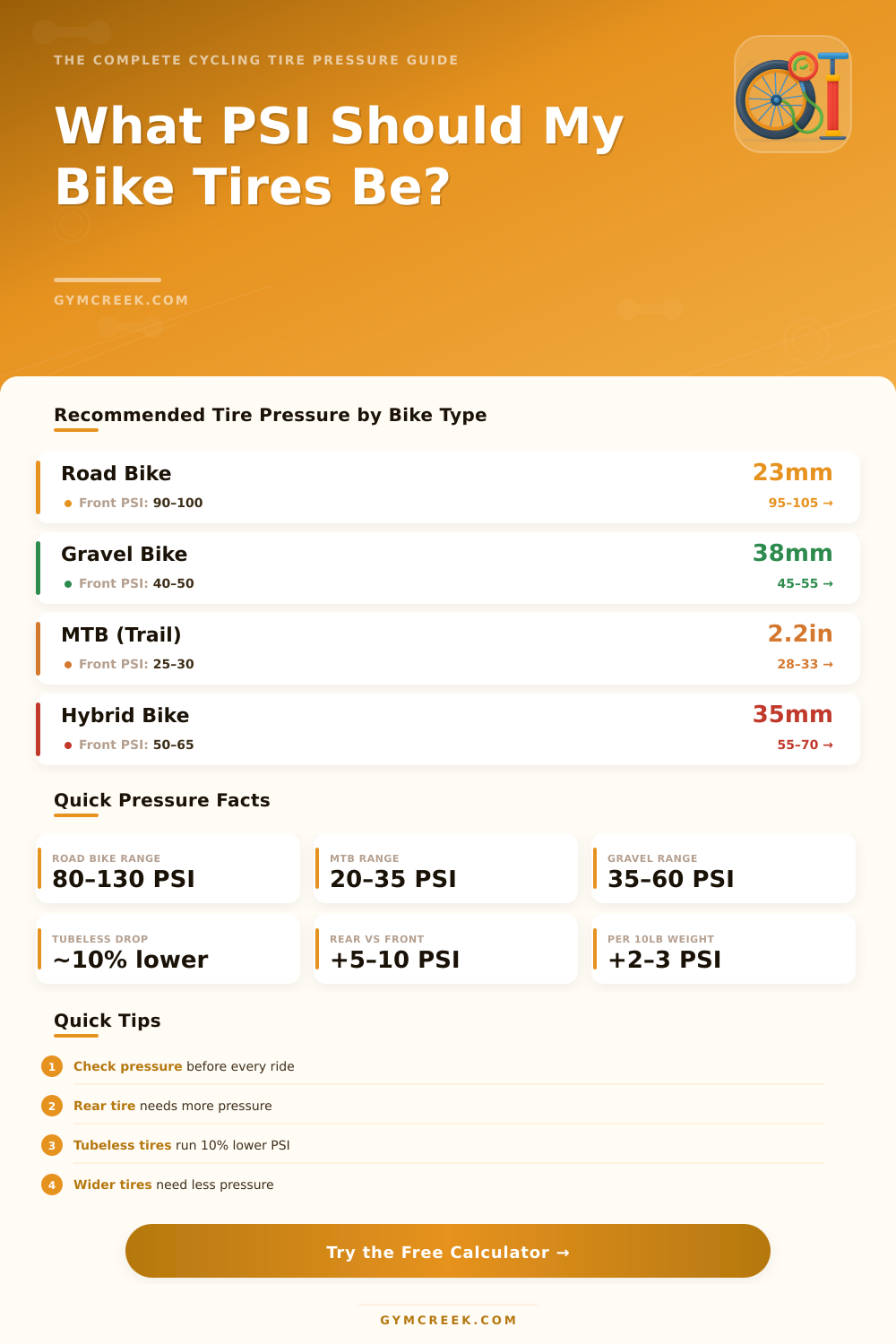
🚴 Cycling Tire Pressure Calculator
Find your ideal PSI based on rider weight, tire width, bike type & riding surface
| Tire Width | Bike Category | Front PSI (bar) | Rear PSI (bar) | Tubeless Adjust |
|---|---|---|---|---|
| 23mm | Road Race | 90–100 (6.2–6.9) | 95–105 (6.5–7.2) | −8–10 PSI |
| 25mm | Road Sport | 85–95 (5.9–6.5) | 90–100 (6.2–6.9) | −8–10 PSI |
| 28mm | Road Endurance | 75–85 (5.2–5.9) | 80–90 (5.5–6.2) | −8 PSI |
| 32mm | Road / Gravel | 60–75 (4.1–5.2) | 65–80 (4.5–5.5) | −6–8 PSI |
| 38mm | Gravel | 45–55 (3.1–3.8) | 50–60 (3.4–4.1) | −5–7 PSI |
| 45–50mm | Gravel / Adventure | 35–45 (2.4–3.1) | 40–50 (2.8–3.4) | −5 PSI |
| 2.1–2.2" | XC MTB | 25–30 (1.7–2.1) | 28–33 (1.9–2.3) | −3–4 PSI |
| 2.3–2.4" | Trail MTB | 22–27 (1.5–1.9) | 24–29 (1.7–2.0) | −3 PSI |
| 2.5–2.6" | Enduro MTB | 18–24 (1.2–1.7) | 20–26 (1.4–1.8) | −2–3 PSI |
| 2.8–3.0" | Plus / Fat Bike | 10–18 (0.7–1.2) | 12–20 (0.8–1.4) | −2 PSI |
| Surface Type | Pressure Adjustment | Reason | Example |
|---|---|---|---|
| Smooth Asphalt | Baseline (0%) | Optimal rolling resistance | Race roads, tarmac |
| Mixed Urban | −3–5% | Comfort over bumps & curbs | City commuting |
| Gravel / Dirt | −8–12% | Better traction & control | Gravel roads |
| Singletrack | −12–18% | Max grip on loose terrain | MTB trails |
| Mud / Wet | −15–22% | Prevents spinning, enhances grip | Wet roots, mud |
| Cobblestones | −5–8% | Absorbs vibration & impact | Pave, rough roads |
| PSI | Bar | kPa | Typical Use |
|---|---|---|---|
| 20 PSI | 1.38 bar | 138 kPa | Fat bike, very soft MTB |
| 30 PSI | 2.07 bar | 207 kPa | MTB enduro / downhill |
| 40 PSI | 2.76 bar | 276 kPa | XC MTB, gravel front |
| 50 PSI | 3.45 bar | 345 kPa | Gravel rear, hybrid front |
| 60 PSI | 4.14 bar | 414 kPa | Hybrid rear, wide road |
| 70 PSI | 4.83 bar | 483 kPa | Road endurance front |
| 80 PSI | 5.52 bar | 552 kPa | Road endurance rear |
| 90 PSI | 6.21 bar | 621 kPa | Road race front |
| 100 PSI | 6.89 bar | 689 kPa | Road race rear |
| 120 PSI | 8.27 bar | 827 kPa | Narrow road / tubular |
Tire pressure is an critical factor in bicycle performance, as the bicycle’s tire pressure will impact how the bicycle move on different surfaces. When the pressure in the tire is set to high, the bike will bounce over bumps in the road, and the rider will waste energy. Too low tire pressure will create more drag for the tire, or the tire could develop a pinch flat, making it difficult for the cyclist to maintain there speeds.
Therefore, it is critical for the cyclist to find the correct tire pressure for their bicycle to allow for an improved range of cycling performance. A person’s weight will play a critical role in the tire pressure requirement of a bicycle. A person that weighs less will require less air in there tires than a person that weighs more; the weight of the person impact the deformation of the tires.
Choose the Right Tire Pressure for Your Bike
Additionally, the type of bicycle that the rider is using will also play a critical role in determining the tire pressure requirements. For example, a road bike will require higher tire pressure than a mountain bike. This is due to the type of terrain that each type of bike is designed to riding on.
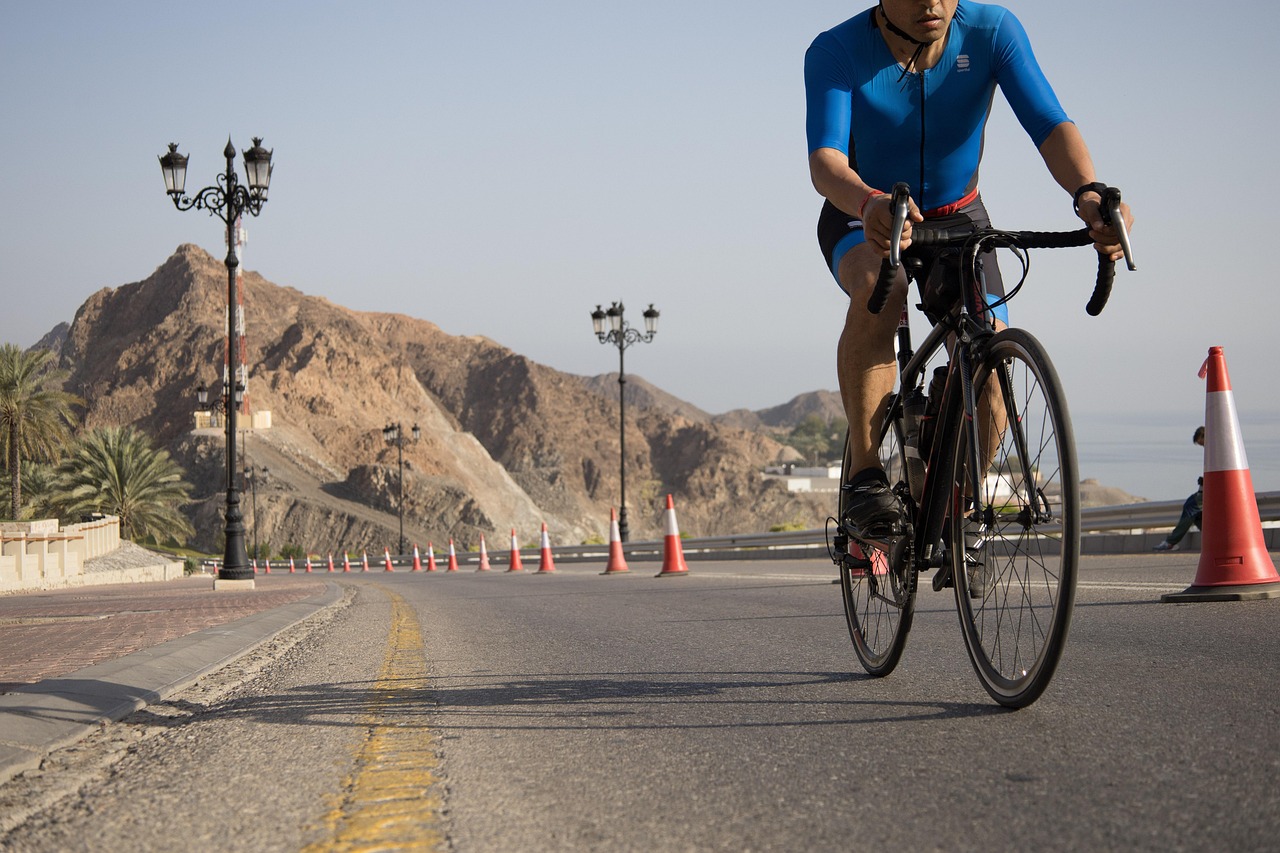
Bikes with lower tire pressure will allow the tires to conform to the terrain, while road bikes require higher pressure to allow for improved efficiency on tarmac. Other factors include the tire width, as wider tires will require lower pressure than narrow tires. The type of terrain that the cyclist intend to use the bicycle on will also impact the tire pressure requirements.
For instance, smooth asphalt allow for higher tire pressure than gravel or mud. By using lower tire pressure on off-road bicycles, the footprint of the tires will increase, allowing for the bicycle to have more control on the terrain. Additionally, other components of the bike, such as the type of tire tube will play a role in the tire pressure.
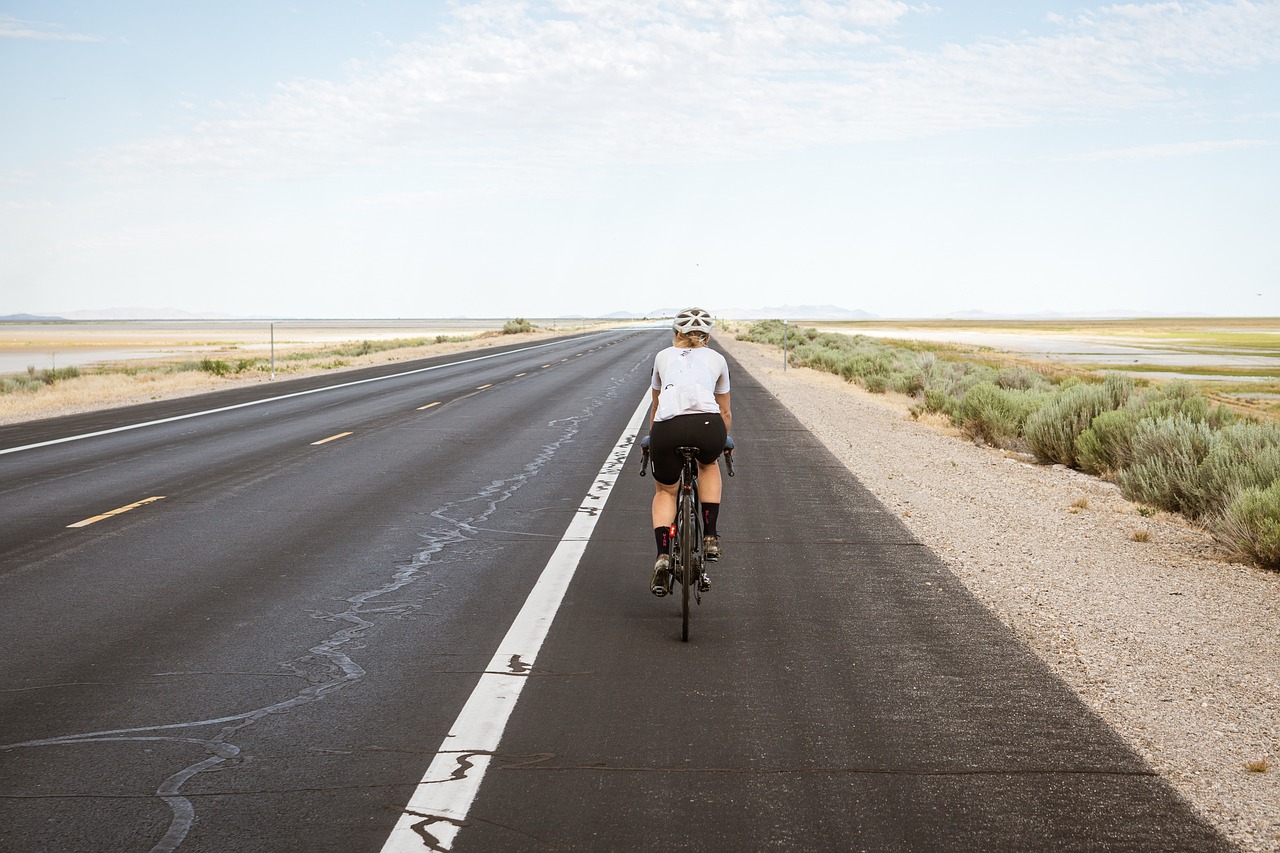
Tubeless tires can allow for up to 10% less pressure in the tires than clincher tires. The weight distribution that the cyclist use while biking will also play a role in the tire pressure that should be used. For example, most cyclists will place most of their weight on the rear wheel.
Therefore, the rear tire will require more pressure than the front wheel. The rear tire will have 5 to 10 PSI more pressure than the front tire. Additionally, the amount of cargo that is being transported will also impact tire pressure; the more cargo, the more weight the tires must supports.
Bicycles come with calculators that provide the range of tire pressure that should be used for the front and rear wheels of the bicycle. This will provide more accuracy to the bicycle rider than if they solely used the tire pressure indicated for a given condition. The temperature of the tires will also impact the tire pressure that should be used.
For example, if the temperature drop, the pressure in the tires will drop. In this case, the cyclist will have to add air to the tires to maintain performance. Riders should always check the tire pressure before riding their bicycles to ensure that the tires have the correct amount of pressure.
If the tires is vibrating within the riders hands, the rider should lower the pressure by 3 PSI. If the bike is skittering on the ground, especially when turning corners, the tire pressure should be increased. The size of the wheels that are used on a bicycle will play a critical role in the tire pressure of that bike.
For instance, 29-inch wheels will require less pressure than 26-inch wheels. However, each bicycle is unique. Therefore, the general rule for tire pressure cant be applied to all bicycles.
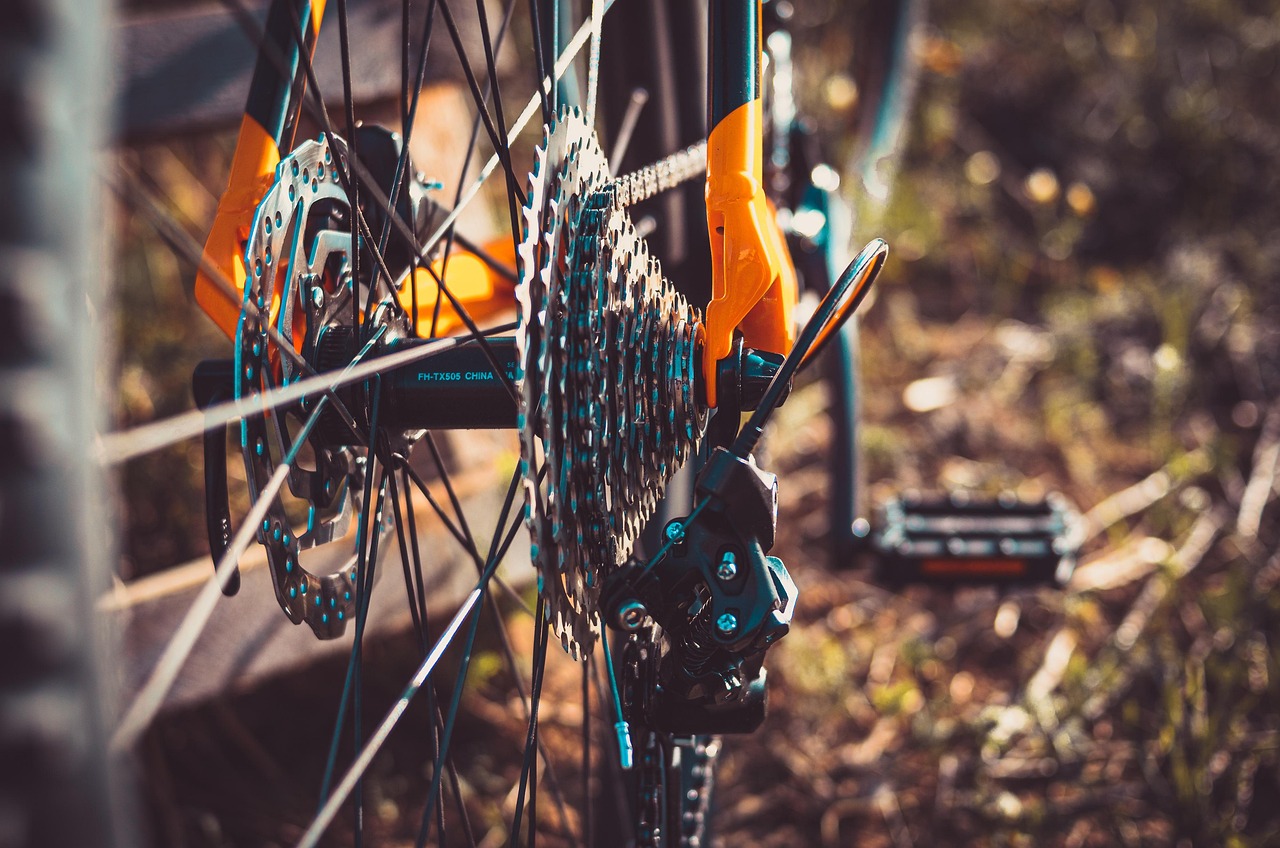
To determine the proper tire pressure for the cyclist, specific calculations based off the riders weight, the different types of bikes, tire width, and the type of terrain to be ridden will allow the cyclist to have an improved range of performance with the bicycle.