
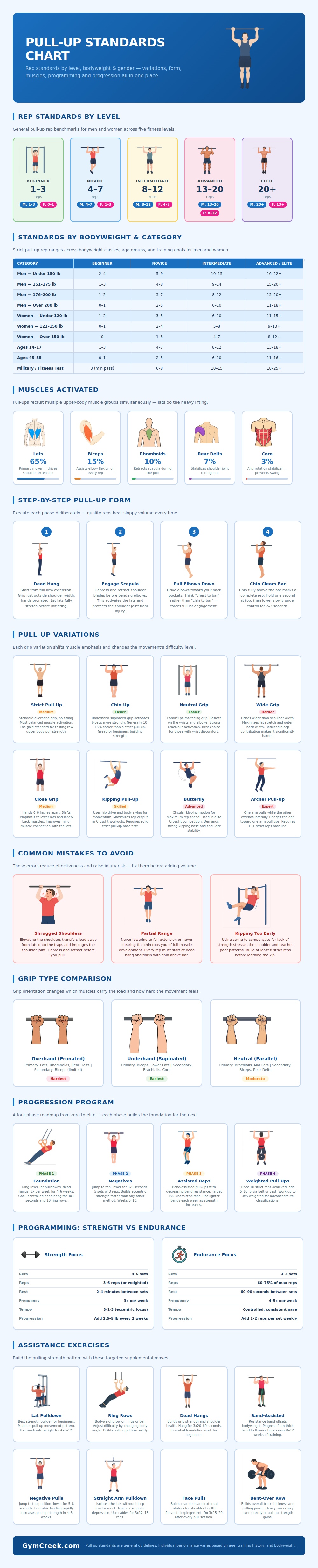
Pull-ups is a strength exercise that require an individual to pull there body upward toward a bar. Pull-ups help to increase the strength of the upper body and use several different muscle group to perform the movement. The difficulty of performing pull-ups are dependent upon an individual’s body weight.
An individual with a lower body weight will find it more easier to perform pull-ups than an individual with a higher body weight due to the necessity of moving more mass against gravity. The muscles that are used during a pull-up include the latissimus dorsi, biceps, rhomboids, rear deltoids, and the core muscles. The primary muscle group that work to perform the movement of pulling the body upward are the latissimus dorsi.
How to Do Pull-Ups and Build Upper Body Strength
These muscles are located along an individuals back. The biceps flex the elbow, whereas the rhomboids provides stability to the shoulder blades. Additionally, the rear deltoids are used to keep the shoulders in a proper alignment for performing the exercise.
The core muscles must be braced to prevent the body from swinging during the exercise. Should an individual not properly engage these muscles, they may experience difficulty with performing the exercise or risk injuring their upper body. In order to perform pull-ups correctly, individuals must utilize proper form when performing the exercise.
An individual should begin in a dead hang position. Prior to beginning the movement of pulling the body upward, the individual should engage their scapula by depressing their shoulders. Finally, the individual should perform the movement of pulling the body upward by drive their elbows toward their hips and pulling their chin above the bar.
After the chin passes the bar, the individual should lower their body slow. It is important for an individual to lower their body slow, taking two to three seconds to complete this phase of the exercise. The gradual lowering of the body help to build the eccentric strength of the muscles used during the exercise.
If an individual lowers their body too quick, they may use momentum to lower their body, which will reduce the effectiveness of the exercise. There are a few different type of grips that an individual can use when performing pull-ups. An overhand grip is the most difficult grip for an individual to master, as it require strength in the latissimus dorsi muscles alone.
An underhand grip, also known as a chin-up, is easier for individuals because the biceps muscles takes more of the load of the exercise. A neutral grip requires an individual to place their palms in facing each other. This grip is considered to be easier on the wrists.
An individual can use any grip for pull-ups, but should master the overhand grip. Individuals can use a method called progression to help increase their ability to perform pull-ups. If an individual cannot perform any pull-ups yet, they can begin performing rowing exercise or lat pulldowns to increase their strength.
Additionally, performing negative pull-ups will increase the number of pull-ups an individual can perform. These exercises include jumping to the top of the bar for a pull-up and lowering the body slow. An individual can also use resistance bands to perform the exercise; these bands will assist the body with the movement and allow the individual to perform the full range of motion of performing a pull-up.
Once an individual can perform ten strict pull-ups, they can begin to incorporate extra weight into their body to continue increasing their strength. An individual’s benchmarks for performing pull-ups will depend upon their body weight and gender. An individual that weigh less than 150 pounds may be able to perform ten to fifteen pull-ups to reach an intermediate level.
However, an individual that weighs over 200 pounds will require more repetitions to reach the same level of strength. The gender of an individual may also factor into the number of pull-ups an individual can perform because women typically have less upper body muscle mass than men. An individual can use a standards chart to monitor their performance on the exercise.
Additionally, an individual can use the chart to recognize the level of strength that an individual possess. By creating standards for an individual’s performance in pull-ups, an individual can better set goals for their performance in this exercise and ensure that they are making consistent progress.
