Smolov Deadlift Calculator
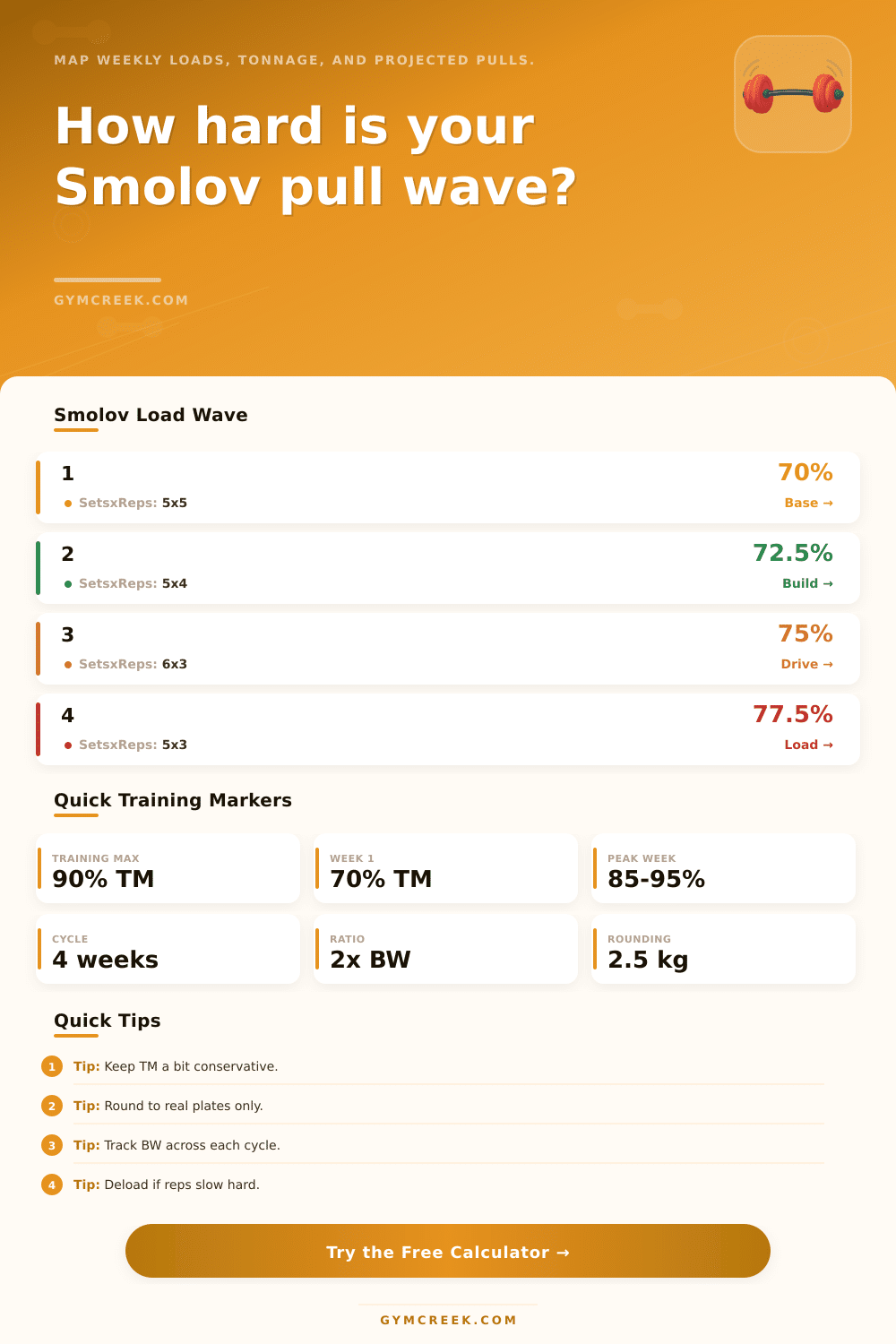
Build a Smolov-style pull wave with training maxes, weekly percentage jumps, tonnage, and a projected end-cycle deadlift.
🏋 Smolov Deadlift Presets
🔧 Smolov Inputs
Smolov deadlift wave snapshot
Enter values to see the weekly load wave, tonnage, and projected end-cycle pull.
📊Fitness Metrics Grid
📑Reference Tables
Cycle preview
Each row shows the selected week, the percentage of training max, the rounded load, and the weekly tonnage.
| Week | %TM | Load | Weekly tonnage |
|---|---|---|---|
| Enter values to preview the wave. | |||
Variation factors
Different Pull styles change leverage, stress, and how aggressively the wave should be treated.
| Variation | Factor | Main effect | Use case |
|---|---|---|---|
| Conventional | 1.00 | Baseline pull | Standard wave |
| Sumo | 0.96 | Shorter range | Hips and speed |
| Deficit | 1.04 | More range | Off-the-floor |
| Block pull | 0.90 | Less range | Lockout overload |
Strength ratio standards
Use these bodyweight ratios as a quick context check when you compare one cycle to another.
| Ratio | Male band | Female band | Note |
|---|---|---|---|
| 1.25x | Novice | Novice | Start point |
| 1.50x | Club | Club | Solid base |
| 2.00x | Advanced | Advanced | Strong pull |
| 2.50x | Elite | Elite | High output |
Formula reference
The calculator uses simple percentage waves so the inputs stay easy to audit and repeat next cycle.
| Metric | Formula | Output | Why it matters |
|---|---|---|---|
| Training max | 1RM x TM% | Program base | Safer wave load |
| Week load | TM x %TM | Rounded bar load | Weekly prescription |
| Weekly tonnage | Load x reps x sets x sessions | Volume per week | Track fatigue |
| Projected gain | Cycle tonnage x factors | End-cycle 1RM | Estimate progress |
💡Practical Tips
Keep the training max honest so the wave stays recoverable.
Use the same plates and bar every cycle for cleaner comparisons.
The Smolov program originally intended weightlifters not powerlifters. Those did high bar squats to improve their skill recover from the bottom squat position They did not record big one-rep maxes based on percentages, and the move was easier to recover than low bar squats or deadlifts.
Because of the specificity of the loading ranges, powerlifters wanting real strength form the main public for Smolov Jr. They should eagerly try this plan. Powerlifters focus on squat, bench press and deadlift. Get the most total from those three lifts induce the victory in contest.
Smolov Jr. for Deadlifts: Risks and Advice
Smolov Junior works well, but usually you advocate it for bench press or deadlift. The Smolov Jr. Deadlift Program is a three-week plan to rush force and technique. It includes five intensive training days each week with emphasis on high-volume barbell deadlifts.
For start, determine your one-rep max and the planned weekly weight increment values. Most lifters add five to ten pounds for the progressive burden.
Even so, such high volume brings big risk of wounds. You strongly warn to no use Smolov for deadlift, because it probbaly causes a bad injury. The amount of work is simply too much, and deadlift improvements usually come from training the lift in pieces, rarely or even never.
To run Smolov for deadlift, you must be extremely well prepared according to recovery skill and training history.
One useful change is doing it as an every-other-day program. Instead of the fourth day following just after the third, jump a day. Like this it becomes four-weekly instead of three-weekly.
Start with 10% under the planned start weight is smart, because the volume grows quickly.
As natural lifter, doing more than two or three cycles of Smolov commonly end by way of plate or wound. The plan will strengthen you, but it also crushes the soul like a steamroller. Smolov can add to squat from 10 to 100 pounds according to your results.
The deadlift commonly progress together with squat.
While running Smolov, little energy stays for other lifts. Squats and deadlifts much more load the body and have bigger impact on everyday recoverythan bench press and military press. It is useful to use a conservative one-rep max instead of that one perfect day in the gym that did not repeat later.