💓 BPM Running Pace Calculator
Find your target running pace from a heart rate in BPM — with full pace conversions and HR zone detection
Your BPM-Based Pace Results
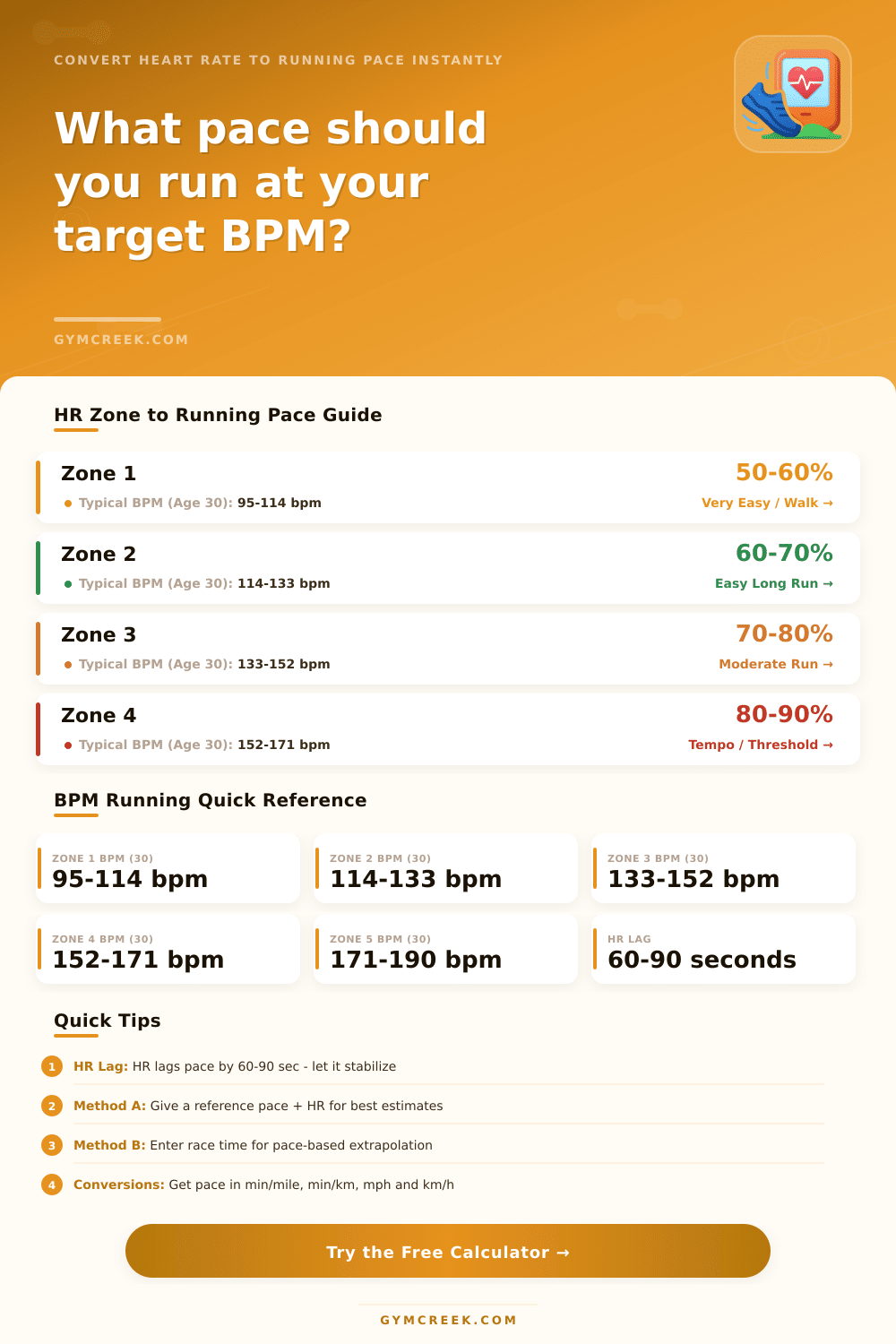
| Zone | % Max HR | BPM Range | Effort Description | Typical Pace |
|---|---|---|---|---|
| Zone 1 | 50–60% | Enter age above | Very easy, recovery | Easy walk / jog |
| Zone 2 | 60–70% | — | Comfortable, conversational | Long slow run |
| Zone 3 | 70–80% | — | Moderate, aerobic work | Steady run |
| Zone 4 | 80–90% | — | Hard, threshold effort | Tempo run |
| Zone 5 | 90–100% | — | Maximum, short intervals | Sprint intervals |
| Training Type | Typical HR % | RPE (Borg) | Purpose |
|---|---|---|---|
| Recovery Run | 50–60% | 9–10 | Active recovery, flush lactate |
| Easy / Long Run | 60–70% | 11–12 | Aerobic base, fat adaptation |
| Moderate Run | 70–80% | 13 | General aerobic development |
| Tempo Run | 80–88% | 14–15 | Lactate threshold improvement |
| Threshold Intervals | 88–92% | 15–17 | Race pace conditioning |
| VO2 Max Intervals | 92–100% | 17–20 | Maximum oxygen uptake |
Running with a heart rate monitor is one of the most reliable form of training for runners of all levels. Instead of relying upon the pace at which you typically run or how you feel on the days that you run, your heartbeat provide the best indication of the effort that your body expends when you are in motion on the track or the road. Introducing a BPM running pace calculator into this equation help runners to understand the relationship between their heart rate and their pace for various types of runs.
As with many other forms of training, your body does not care what type of pace you are running at with a heart rate monitor. Regardless of the pace that is displayed on your training device, your exertions to run will inform your body of how hard you are working. By training within specific heart rate zone, runners of all levels are able to work towards ensuring that they are obtaining the type of training that their bodies needs for that specific type of running.

BPM Running Pace Calculator Insights
The connection between a runner’s heart rate and their pace is both logical and personal to the individual athlete. As an individual increases their pace while running, their heart have to work harder to provide the muscles with the necessary oxygen. Consequently, there is a linear relationship between these two physical attribute for an individual runner. The variables that may impact this relationship include age, level of fitness, genetics, the weather, and the type of meal that an individual consume prior to beginning their run.
Many heart training programs use the concept of maximum heart rate to determine the various training zones that an individual should use when running. The standard equation for determining an individual’s maximum heart rate is 220 minus their age. This calculation is an estimate of the maximum heart rate, although there are other methods for calculating this value. These alternative method often require blood tests or other forms of physical tests to determine an individual’s maximum heart rate.
Following the calculation of an individual’s maximum heart rate, that rate can be broken down into various zones for running. One of the most common zone for runners today is Zone 2, which represents the aerobic zone for runners. This range is typically between 60% and 70% of an individual’s calculated maximum heart rate. Many coaches recommend that an individual should spend 80% of their running mileage within this zone.
The determination of maximum heart rate and training zones allow for the determination of the various rates at which an individual may need to run to reach those zones. For instance, an individual might hit 9:30 per mile when running at a heart rate of 145 bpm on flat terrain under good weather conditions. However, if that individual were to increase the temperature, humidity and hills within those runs, they may reach 11:00 per mile at the same heart rate. The BPM running pace calculator allow for these variables to be accounted for using reference points for their running.
The best way to receive accurate calculations using the BPM running pace calculator is to use the measurements from one of the individual’s recent runs with the noted pace and heart rate. For instance, by noting that an individual reached 10:15 per mile at 135 bpm during an easy run in their most recent training session, the calculator can provide an estimate for their pace if they aim to reach a target of 150 bpm.
Zones 3 and 4 for runners use percentages between 85% and 90% of the individual’s calculated maximum heart rate. These zones are typically used for threshold training and interval training for runners. The goal for threshold training is to improve the body’s ability to clear lactate from the body, which increase the ability of an athlete to run at faster rates for longer periods of time.

In addition to learning how to use the BPM running pace calculator for training zones, all runners, even those of experience, can benefit from incorporating these types of training concept into their current routine. Seasoned runners may understand the various training zones and can typically feel the effort required to reach those zones by the type of breathing that they use while running. However, runners of any experience can benefit from using technology like the BPM running pace calculator to understand the impact of external factor on their running efforts.
The age of an individual also impacts the calculation of BPM for runners. As individuals age, their maximum heart rate typically declines. An individual who is 25 years of age may have a maximum heart rate that is similar to an individual who is 55 years of age, but their actual resting heart rates may differ by 20 to 30 bpm. Understanding this variable allow runners of all ages to account for these differences and appropriately train masters runners of all ages.
For the most advanced runners, those with low resting heart rates indicate high levels of fitness, may benefit from the use of heart rate reserve calculations as a means of calculating training zones. Heart rate reserve calculations, also referred to as the Karvonen formula, account for the difference between an individual’s resting and maximum heart rate.
In addition to the factors discussed previously, the impact of the weather on heart rate for runners may be another variable that impacts BPM calculations. Heat and humidity levels may cause an individual’s heart rate to increase 10 to 15 bpm at the same rate of running. The same impact can be seen in cold temperatures with strong wind.
For runners of any experience level, there are a variety of technologies today that can calculate heart rate in real time, both with chest straps and wrist device. These devices can determine an individual’s training zones with ease, based off their age and their running performance. Additionally, the most valuable data for runners come from the individual’s body and their observations over time.
Heart rate based forms of training are considered to be honest in relation to the body of the individual runner. When an individual calculates their heart rate for a specific form of running, their body may reveal other information about their physical condition. These types of calculation may suggest to an individual that they need to shorten the duration of their runs or to change the pace at which they run.
Regardless of the distance that an individual intends to run during a given week, incorporating elements of both heart rate and pace into the training routine allow for the best form of training for that individual’s goals.
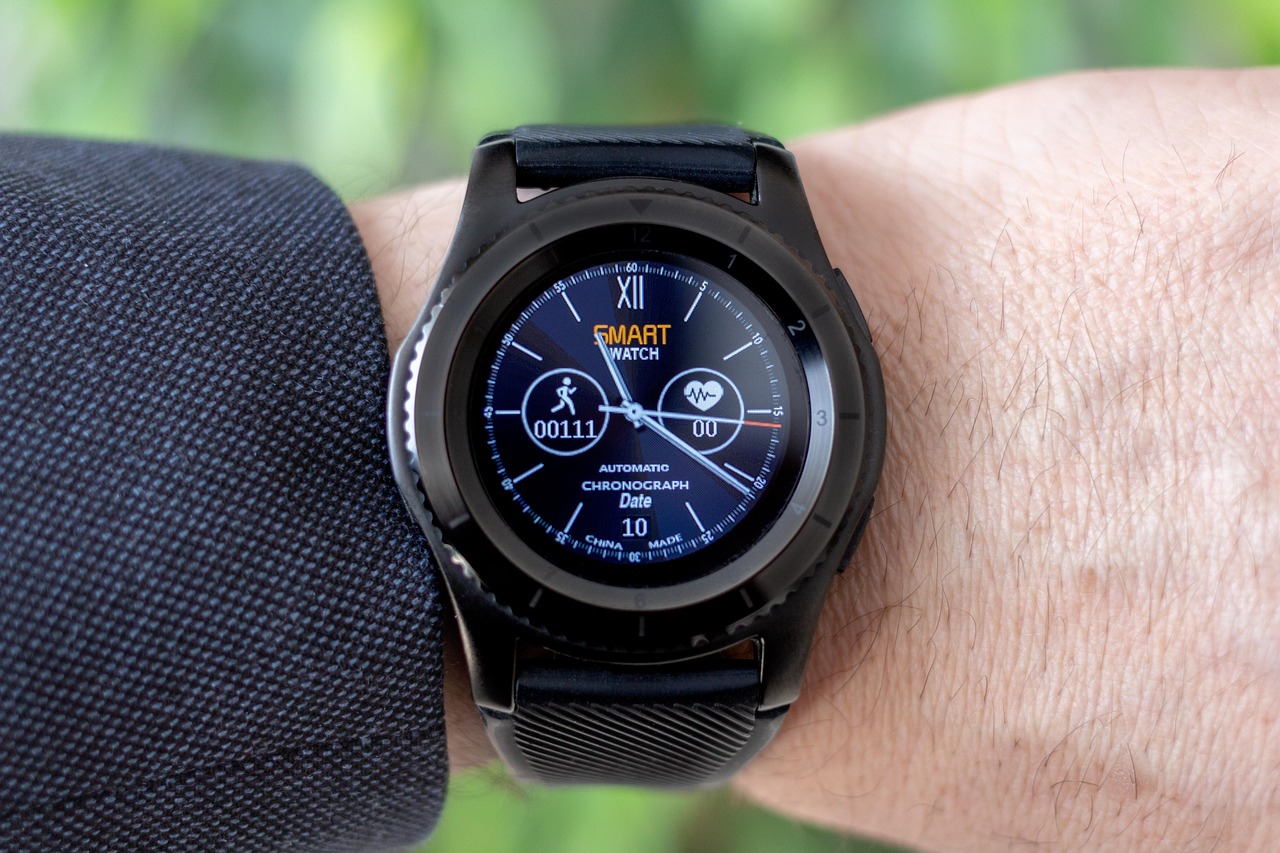
An individual can utilize the BPM running pace calculator to determine the calculations for either their recent running efforts or races.
The calculations based upon BPM and running zones are estimates of the effort that an individual should expend while running. While technology can assist in the training of runners, no amount of technology can replace the knowledge and awareness that an individual has of their own body. Consequently, while the BPM running pace calculator may be of benefit during the initial development of an individual’s training program, an experienced runner may find themselves utilizing these calculations for shorter periods of time.
Successful incorporation of BPM training into an individual’s running routine require a commitment to consistency and patience with the training program. Runners of any experience level may find that their most successful training programs are those that they continue to incorporate into their weekly routines, regardless of the level of strength or endurance that they exhibit at any given time.