🌾 Fiber Intake Calculator
Find your personalized daily fiber needs based on age, sex, weight & activity level
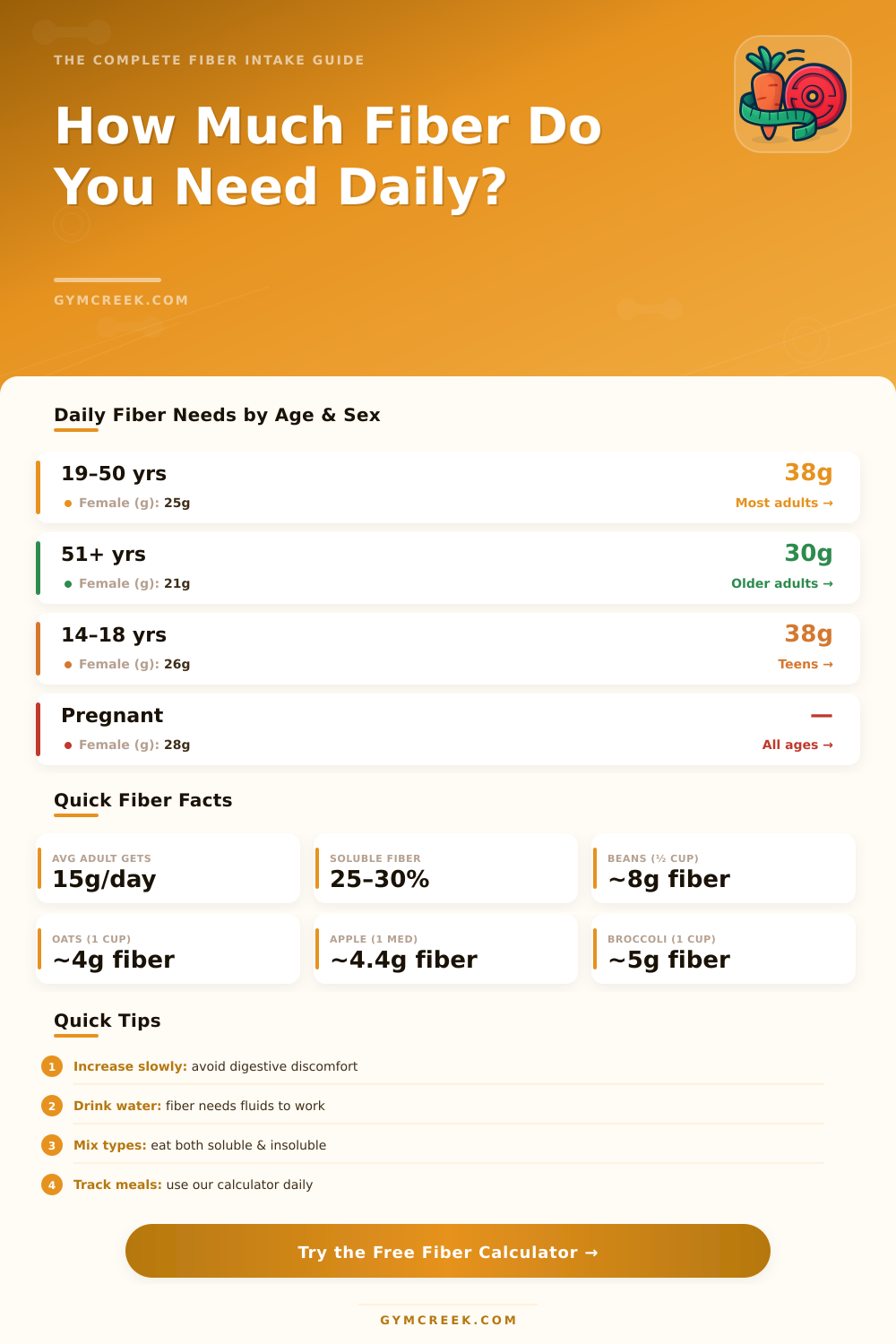
| Age Group | Male (g/day) | Female (g/day) | Pregnant (g/day) | Breastfeeding (g/day) |
|---|---|---|---|---|
| 1–3 years | 19 | 19 | — | — |
| 4–8 years | 25 | 25 | — | — |
| 9–13 years | 31 | 26 | — | — |
| 14–18 years | 38 | 26 | 28 | 29 |
| 19–30 years | 38 | 25 | 28 | 29 |
| 31–50 years | 38 | 25 | 28 | 29 |
| 51–70 years | 30 | 21 | 28 | 29 |
| 71+ years | 30 | 21 | — | — |
| Activity Level | Calories/day (avg adult) | Fiber per 1000 kcal | Est. Fiber Target (g) |
|---|---|---|---|
| Sedentary | 1,600–2,000 | 14g | 22–28g |
| Lightly Active | 2,000–2,200 | 14g | 28–31g |
| Moderately Active | 2,200–2,600 | 14g | 31–36g |
| Very Active | 2,600–3,000 | 14g | 36–42g |
| Extra Active / Athlete | 3,000–4,000 | 14g | 42–56g |
| Fiber Type | % of Daily Intake | Top Food Sources | Key Benefit |
|---|---|---|---|
| Soluble Fiber | ~25–30% | Oats, beans, apples, psyllium | Lowers LDL cholesterol, slows glucose absorption |
| Insoluble Fiber | ~70–75% | Wheat bran, vegetables, whole grains | Promotes regularity, prevents constipation |
| Prebiotic Fiber | ~5–10g target | Garlic, onions, bananas, asparagus | Feeds beneficial gut bacteria |
| Resistant Starch | Bonus source | Cooked & cooled potatoes, unripe banana | Acts as prebiotic, lowers blood sugar |
| Health Goal | Minimum (g/day) | Optimal (g/day) | Focus Foods |
|---|---|---|---|
| General Health | 25 | 25–38 | Varied whole foods |
| Heart Health | 25 | 30–40 | Oats, barley, beans, flaxseed |
| Blood Sugar Control | 25 | 30–50 | Legumes, low-GI vegetables |
| Weight Management | 25 | 30–45 | High-volume, high-fiber vegetables |
| Digestive Health | 25 | 25–38 | Whole grains, prunes, bran |
| Gut Microbiome | 25 | 35–50+ | Diverse plant foods (30+ plants/wk) |
Fiber is a type of carbohydrate that are found in plant-based foods but the human body cant fully digest. Fiber is important for humans because fiber help to regulate digestion and it helps to maintain an individuals blood sugar levels. There are two main types of fiber: soluble fiber and insoluble fiber.
Soluble fiber is able to absorb the water in the body to form a gel like substance in the stomach, which slows the digestion of the food that people consume. Insoluble fiber dont dissolve in the bodys waters, but it adds bulk to the fecal material that the body releases, which aids in the movement of the feces through the digestive system. Many people do not consume enough fiber with each meal that they eat.
What Fiber Does and How to Eat More
A lack of fiber in the diet can lead to issue such as constipation, irregular blood sugar levels, and even bloating and fatigue. However, if an individual consumes enough fiber, they may experience improvement in there weight and heart health. Additionally, fiber can aid in the regulation of an individuals caloric intake because fiber create a feeling of fullness in those that consume fiber.
The amount of fiber that an individual should consume each day can range depending off a variety of factor. Factors such as an individuals sex, age, and activity level can impact their bodys requirement for fiber. For instance, men typically require more fiber than women due to the fact that men typically have more muscle mass.
An individuals activity level also correlates with the amount of fiber that they require. For instance, if an individual is very active, they will burn more calories than an inactive individual. Therefore, the active individual will need more fiber to help metabolize the calories that their physical activity burned.
As a general rule of thumb, an individual should of consume approximately 14 grams of fiber for every 1,000 calorie that they consume. An individuals health goals may also play a major role in the amount of fiber that they should consume. For instance, if an individual desires better heart health, they may choose to consume more soluble fiber to aid in lowering their cholesterol levels.
If an individual desires better digestive regularity, they may increase their insoluble fiber intake. Additionally, a pregnant woman may require more fiber to aid in her bodily change during pregnancy, as well as to maintain the blood sugar levels required to prevent nausea while pregnant. There are a variety of food swaps that can be made to increase the fiber content of an individuals diet.
For instance, people could replace white rice with brown rice, or beans could be added to soups for increased fiber content. Foods like lentils contain high amount of fiber, as do apples. It is important for an individual to consume a variety of plant-based foods to ensure that there diet contains both soluble and insoluble fiber.
Additionally, if an individual consumes a variety of different type of plant-based foods, they will derive various benefits to their bodys microbiome. An individual will need to drink plenty of water when increasing their fiber intake. Fiber absorbs the water in the body, and if there isnt enough water in the system, the fiber may cause the individual to experience blockages or constipation.
Therefore, the individual should increase their water intake in conjunction with their increased fiber intake. Additionally, the fiber should be slowly introduce into the system. An individual should not increase their fiber intake by more than five grams of fiber per week, or their body may experience gas and discomfort.
There are a variety of mistakes that some individuals make when attempting to increase their fiber intake. For instance, many individuals opt for fiber supplements rather than increasing there consumption of fiber rich foods. These whole foods contain vitamins and antioxidants that supplements may not contain.
Additionally, many individuals only focus on one type of fiber instead of consuming both soluble and insoluble fiber for the full benefit of fiber. An individual should listen to their body to determine if their fiber intake is appropriate. For instance, if an individual tracks their food intake for a few days, they may be able to recognize if they have enough fiber in their diet.
If they feel bloated or experience constipation, they may need to adjust their water intake or the rate at which they are increasing their fiber intake. Consuming the correct amount of fiber will provide an individual with the energy throughout the day that they need, as well as maintain there health over time.