Carb Load Calculator
Map out a practical glycogen build from body size, event length, taper rhythm, feeding slots, and breakfast timing so the load is spread across the full lead-in instead of forced into one dinner.
📌Preset Race Setups
Each preset loads a believable endurance scenario with body size, load length, meal spacing, and liquid-carb support so you can compare compact top-ups, classic marathon builds, and all-day event plans fast.
⚙Carb Load Inputs
Build your carb load
Enter body size, event strain, and meal structure to turn generic carb math into an actual loading script.
📊Load Metrics
📑Reference Tables
| Duration | Target lane | Load days | Read |
|---|---|---|---|
| 1 to 1.5 hr | 4.8 to 5.4 g/kg | 1 | Breakfast top-up matters more than a classic full load. |
| 1.5 to 3 hr | 5.6 to 6.8 g/kg | 1 to 2 | Compact loads fit shorter but still hard endurance days. |
| 3 to 5 hr | 6.8 to 8.0 g/kg | 2 to 3 | This is the classic marathon-style glycogen lane. |
| 5 to 8 hr | 7.8 to 9.0 g/kg | 2 to 3 | Visible starch at every meal usually beats one giant feast. |
| 8+ hr | 8.8 to 10.0 g/kg | 3 to 4 | Dense foods and drink support keep the load practical. |
| Event | Default days | Bias | Why |
|---|---|---|---|
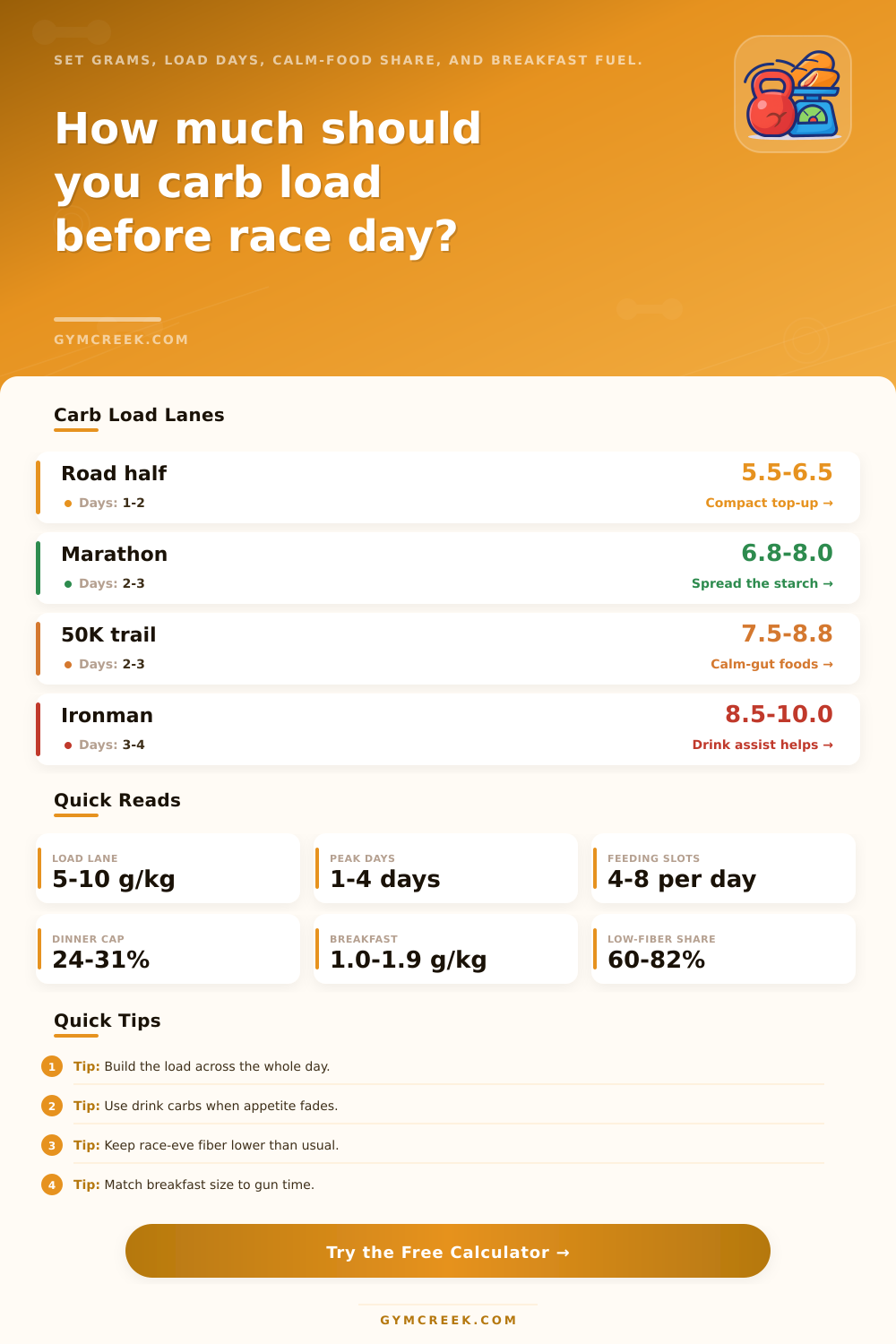
| Road half | 1 to 2 | -0.2 g/kg | Fast races still rely more on breakfast and in-race fuel than a giant taper load. |
| Marathon | 2 to 3 | Base lane | The benchmark setup for most carb-loading plans. |
| Trail 50K | 2 to 3 | +0.4 g/kg | Longer uphill time rewards a fuller glycogen tank. |
| Ironman | 3 to 4 | +0.8 g/kg | Long all-day demands make both density and gut calm more important. |
| Stage race | 3 to 4 | +0.5 g/kg | You are stocking both the opening day and the recovery gap after it. |
| Food block | Typical serving | Carbs | Why it helps |
|---|---|---|---|
| Cooked white rice | 2 cups | 88 to 90 g | High carb return with low chewing stress and modest fiber. |
| Bagel plus jam | 1 bagel plus 2 tbsp | 65 to 70 g | Easy snack anchor when the whole day needs structure. |
| Sports drink | 24 fl oz | 35 to 40 g | Useful when solid food starts feeling like work. |
| Rice cereal plus banana | 2 bowls plus fruit | 80 to 85 g | Fast-digesting choice for race eve or race morning. |
| Potatoes and toast | 400 g plus 2 slices | 75 to 80 g | Savory option when sweet foods start getting old. |
| Schedule row | Carb target | Meal split | Session note |
|---|---|---|---|
| Day -4 | --- | --- | Calculate to build your taper script. |
| Day -3 | --- | --- | Earlier meals should carry part of the load. |
| Day -2 | --- | --- | Drink carbs can reduce chewing late in the taper. |
| Day -1 | --- | --- | Race-eve dinner matters, but it should not do all the work. |
| Event morning | --- | --- | Breakfast size changes with start time. |
💡Coach Notes
Carbohydrate loading is a process that can be use to increase the amounts of glycogen that can be store within an athlete’s muscle. Glycogen is the fuel that the bodies use during endurance activities that last for longer than ninety minutes. A person normaly contains between three hundred and five hundred gram of glycogen within their muscles under normal circumstance.
However, an athlete can load glycogen into their muscles by follow a loading plan. By loading glycogen into an athlete’s muscles, the individuals will be able to last more longer during endurance activities due to having more fuel to burn. However, the body will not be able to benefit from the glycogen load if the athlete continue to perform training activities during the load period.
Simple Guide to Carbohydrate Loading for Long Races
The athlete’s muscle will burn the glycogen during these training activity. The length of the endurance activities that are to be performed will play an important role in determine how an athlete should load carbohydrate. Athletes who are competing in half marathons will require fewer carbohydrate to be loaded into their muscles compared to those who are competing in events like Ironman triathlons.
Short period of loading (twenty-four to forty-eight hour) of carbohydrates can lead to gastrointestinal problem due to the highly density of carbohydrates that must be consumed during this time period. An alternative approach would be to load carbohydrates over a longer period of time. The length of the endurance activity will impact how much carbohydrates an athlete requires, so that athlete can adjust the carbohydrate density in their diet according to the length of the event that they are to compete in.
The body weight of an athlete will play a major role in the total amount of carbohydrate that must be loaded into their muscles. Athletes can calculate the amount of carbohydrates they need by multiplying the body weight of the athlete in kilograms by the number of gram of carbohydrates per kilogram that an athlete requires. The heavier an athlete is, the more gram of carbohydrates they will require.
However, the ratio of gram of carbohydrate per kilogram of body weight will remain the same for each athlete. Carbohydrates can be loaded in a variety of ways. An athlete who is significantly increase their carbohydrate intake may choose to incorporate carbohydrates like sports drink into their diet in order to avoid feeling too full.
An athlete’s carbohydrate loading program should include adjustments in the amount of fiber that an athlete consumes. Many diet that include high amounts of fiber are used to provide the benefit to the athlete’s digestive system. However, during the loading period of carbohydrates, an athlete should consume less fiber products.
Examples of low fiber carbohydrates include white rice, pretzels, jam on toast, and low fiber cereal. An athlete should aim to consume sixty to eighty percent of their total carbohydrate load from these low fiber food in order to minimize the risk of experiencing gastrointestinal issue during endurance activity. Another way that athletes can increase their carbohydrate intake is by consume liquid carbohydrates.
Liquid carbohydrates like sports drink and gels provide eighteen to twenty-eight percent of an athlete’s required carbohydrate per day. For instance, if an athlete weighs seventy kilogram, they will require six hundred gram of carbohydrates per day. Thus, an athlete can meet their carbohydrate loading requirement for endurance activities by meeting the carbohydrate requirement of an athlete who weighs seventy kilogram from liquid source alone.
Additionally, an athlete should limit their runs that include easy training for twenty minute or less during the carbohydrate loading period. Athletes should avoid these type of training runs because they will burn the glycogen that is being loaded into their muscle. During the loading period for carbohydrates, an athlete should not attempt to consume all of the required carbohydrate during one dinner.
Instead, an athlete should begin to increase the amount of carbohydrates that are consume several day prior to the endurance activities that are to be performed. For example, an athlete can consume ninety percent of the total amount of carbohydrate required by an athlete three day before an endurance activity, and then increase the amount of carbohydrates to one hundred and ten percent of the required carbohydrate on the day prior to the endurance activity. By loading the carbohydrates over a period of several day, an athlete will feel fueled during endurance activities, but will not feel uncomfortabel with consume so many carbohydrates.
An athlete should account for the need to drink additional liquid during the carbohydrate loading period. Glycogen requires water in order to be store within an athlete’s muscle. For every two gram of carbohydrates that an athlete loads, an athlete should drink approximately six hundred milliliters of water.
If an athlete does not drink enough water, the carbohydrate loading program will not be as effective as possible. Finally, athletes should always experiment with the types of food that are loaded with carbohydrates during training programs to ensure that the athlete does not experience any digestive upset during the endurance activity.