⏰ Intermittent Fasting Calculator
Set your fast, feeding window, and meal timing around training, sleep, and your daily calorie target.
Fasting Snapshot
Calories, protein, feed hours, and meal timing are estimated from your size, activity, and selected fasting window.
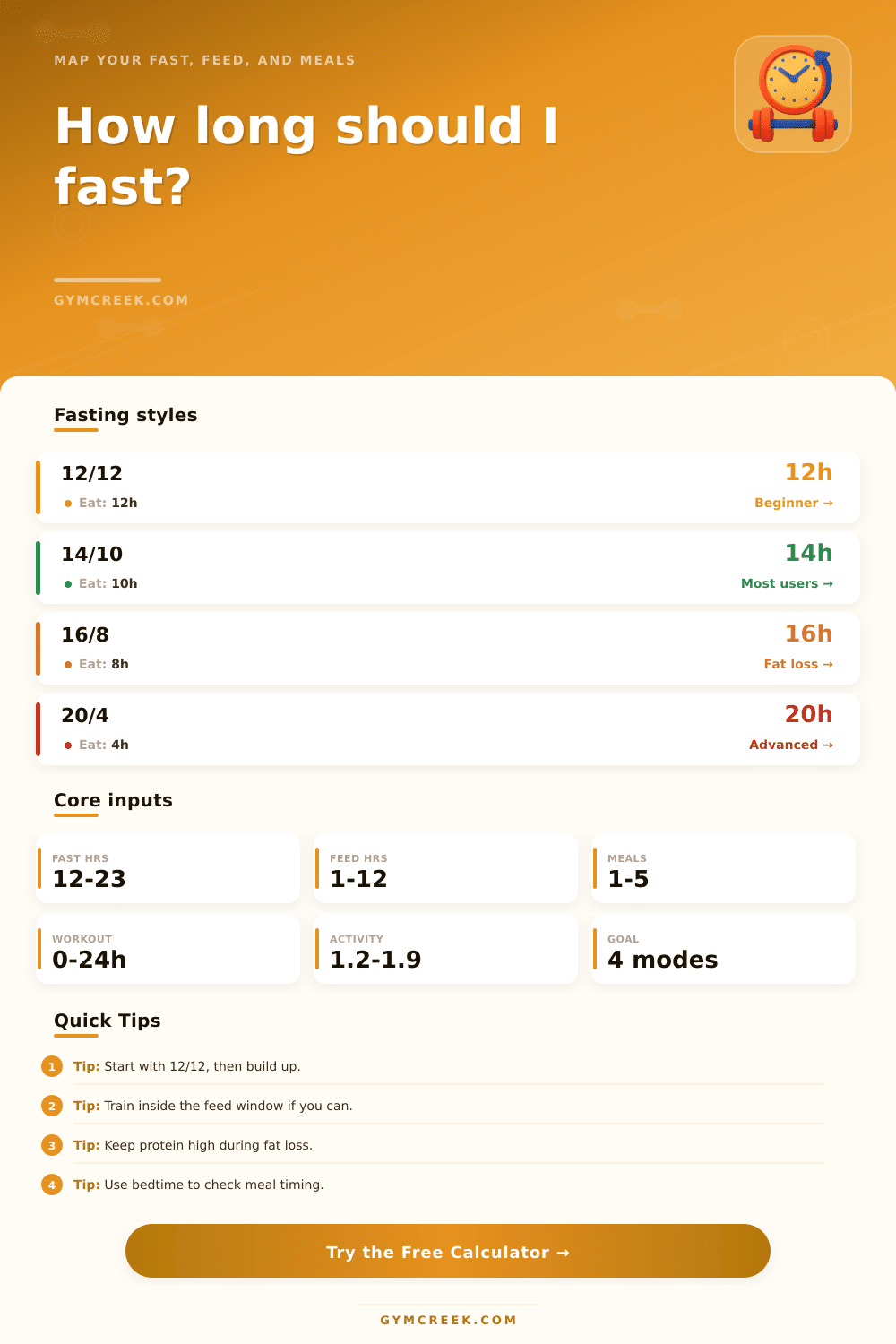
| Protocol | Fast | Feed | Best for |
|---|---|---|---|
| 12/12 | 12 h | 12 h | Easy start |
| 14/10 | 14 h | 10 h | Steady routine |
| 16/8 | 16 h | 8 h | Fat loss |
| 18/6 | 18 h | 6 h | Advanced cut |
| Scenario | Break-fast | Workout | Note |
|---|---|---|---|
| Morning trainee | 07:00-09:00 | After meal | Good lift fuel |
| Desk worker | 11:00-13:00 | Mid-afternoon | Simple rhythm |
| Night shift | 14:00-18:00 | Before meal | Watch sleep |
| OMAD day | 17:00-19:00 | Near meal | Very tight feed |
| Profile | Protocol | Meals | Note |
|---|---|---|---|
| Fat loss phase | 16/8 | 2-3 | Strong control |
| Maintenance | 14/10 | 3 | Balanced intake |
| Muscle gain | 12/12 | 3-4 | More fuel |
| Performance block | 12/12 | 4 | Best recovery |
| Formula | Inputs | Output | Use |
|---|---|---|---|
| Mifflin-St Jeor | Age, wt, ht | BMR | Body fat unknown |
| Katch-McArdle | Lean mass | BMR | Body fat known |
| TDEE | BMR x act | Maint. | Daily target |
| Meal split | Calories/meals | Per meal | Portion guide |
Intermittent fasting is a eating mode with cycles between short times without food or with few calories followed by periods of free meals. This pattern alternates between times to eat and times to fast, usually to help health and control weight. In short, it limits when you eat, commonly according to a daily or weekly plan.
Some plans have two days of fasting in a week or allow eating only in set hours. The most used are 16:8, 5:2 and 1:1 methods. Time-restricted meal involves restriction of eating to separate hours daily, which extends the time in a fasted state.
Intermittent Fasting: What It Is and How It Helps
Another variant: fasting every second day.
Intermittent fasting proved safe and useful. Among its advantages are weight loss, better metabolic health, prevention of diabetes and longer life. Analysis of several studies shows that it lowers insulin resistance and levels of insulin during fasting, espesially when you lose weight.
Insulin resistance can lead to type 2 diabetes, polycystic ovary syndrome and fat in liver.
Research also points that groups with time-restricted meals reduced body fat, kept muscle and improved markers for metabolism and thyroid function. Additional good impacts are in regulation of glucose, blood pressure, heart rate, inflammation, endurance during training and decrease of belly fat.
Fasting forces the body use stored fat as fuel. The stress of burning fat helps cells adapt and grow strong, which helps health and longevity. It also helps weight loss and avoiding junk food, if the whole diet is not too fixed.
It simply cuts the time to eat flour.
Even so intermittent fasting can be hard. It is not for folks with severe diabetes, pregnant women or those with eating disorders in past. It risks causing eating problems and raising cortisol, which helps to keep fat and destroy muscle.
During long fasts of 24+ hours happens hunger, dizziness, headaches, weakness and fatigue, commonly because of lack of electrolytes.
Fasting of 16 hours daily does not harm gym results, which is a good start. Training while fasted seems hard, some drink BCAAs before exercise. Best results come when you combine it with a good workoutplan.
Consult a health expert before trying is a wise move.