🧆 Macro Calculator for Women
Calculate your personalized daily protein, carbohydrates & fat targets based on your goals and activity level
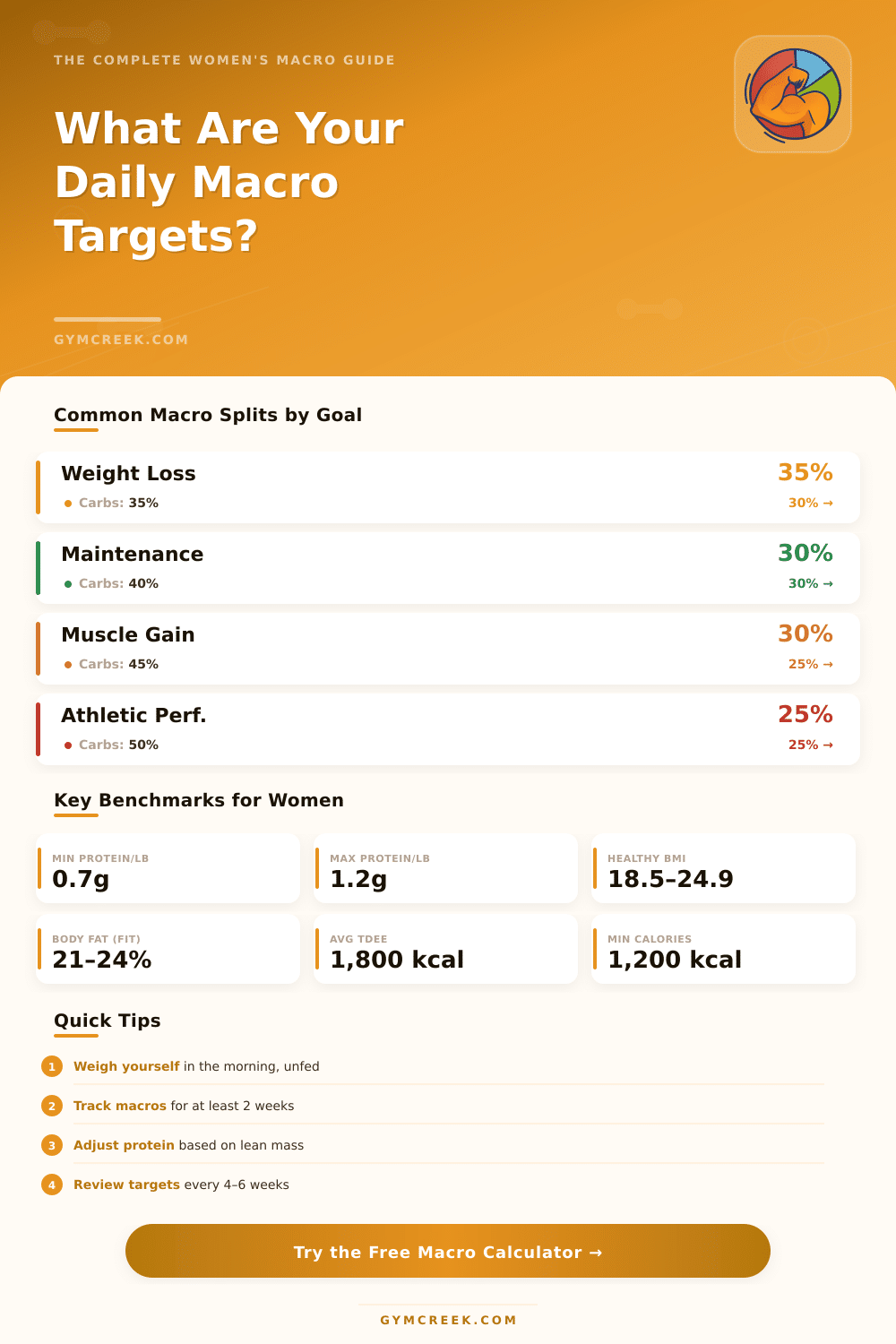
| Goal | Protein % | Carbs % | Fat % | Notes |
|---|---|---|---|---|
| Aggressive Fat Loss | 35–40% | 25–30% | 25–30% | High protein preserves muscle |
| Moderate Fat Loss | 30–35% | 30–35% | 25–30% | Sustainable deficit |
| Maintenance | 25–30% | 40–45% | 25–30% | Flexible approach works well |
| Muscle Building | 28–32% | 40–50% | 20–25% | Surplus supports hypertrophy |
| Athletic Performance | 20–25% | 50–55% | 20–25% | Carbs fuel training |
| Ketogenic | 25–30% | 3–5% | 65–70% | Strict carb limit (<50g/day) |
| Goal / Situation | Protein (g/lb) | Protein (g/kg) | Example (140 lbs) |
|---|---|---|---|
| Sedentary / General Health | 0.6–0.7g | 1.3–1.5g | 84–98g |
| Moderate Fat Loss | 0.7–0.9g | 1.5–2.0g | 98–126g |
| Active + Body Recomposition | 0.9–1.0g | 2.0–2.2g | 126–140g |
| Lean Muscle Building | 0.9–1.1g | 2.0–2.4g | 126–154g |
| Competitive Athlete | 1.0–1.2g | 2.2–2.6g | 140–168g |
| 50+ (preserve lean mass) | 0.9–1.1g | 2.0–2.4g | 126–154g |
| Age Range | Avg BMR (kcal) | Typical TDEE Range | Activity Factor Used |
|---|---|---|---|
| 18–25 years | 1,380–1,530 | 1,650–2,380 | 1.2–1.9 |
| 26–35 years | 1,310–1,470 | 1,570–2,290 | 1.2–1.9 |
| 36–45 years | 1,250–1,410 | 1,500–2,190 | 1.2–1.9 |
| 46–55 years | 1,200–1,350 | 1,440–2,090 | 1.2–1.9 |
| 56–65 years | 1,150–1,290 | 1,380–2,000 | 1.2–1.9 |
| 65+ years | 1,080–1,230 | 1,300–1,900 | 1.2–1.9 |
| Category | Age 20–39 | Age 40–59 | Age 60+ |
|---|---|---|---|
| 🏆 Essential Fat | 10–13% | 10–13% | 10–13% |
| 💪 Athletic | 14–20% | 14–20% | 14–20% |
| ✅ Fit | 21–24% | 24–27% | 24–27% |
| 🟡 Average | 25–31% | 28–35% | 29–36% |
| 🔴 Obese | 32%+ | 36%+ | 37%+ |
Track macros for at least 2–4 weeks before adjusting. If weight stalls for 2+ weeks, reduce calories by 5%. If energy is low and you are losing too fast, increase by 5%. Recheck your TDEE every 4–6 weeks as your weight changes. Protein targets keep you full and preserve muscle — prioritize hitting this number first.
Every woman’s body has unique nutritional needs throughout her lifetime. Whether she is in the prime of her reproductive years, struggling with pregnancy, or past the age of menopause altogether, each phase of a womans life can brings with it unique considerations regarding her nutritional needs. As such, a macro calculator for women takes into consideration these differences from the male body, as well as each womans unique health factors.
If you are looking to improve the energy that you feel throughout the day or even if you are looking to enhance your general feeling of wellbeing, determining the appropriate macronutrient ratio for your body can make a significant difference in how you feel and perform each day.
Why Women Need Their Own Macro Calculations
Due to the fact that most macro calculators are created from studies of mens bodies, it is essential that each woman understand that her needs can be different than the recommendations from those calculators. Womens bodies feature monthly hormones that alter a womans metabolic rate. Additionally, a womans body changes in response to pregnancy, menopause, and even while in the postpartum phase of her reproductive cycle.
Furthermore, women requires a different amount of protein than men. While many men desire increased protein intake to support the gain of muscles, women actualy require a higher intake of protein to support the loss of muscle. As such, a woman who is attempting to lose weight needs to ensure that she consumes enough protein to prevent her muscles from deteriorate.
Additionally, a womans carb requirement is different from the male body. Some women require lower carbohydrate in their diet than men, but others actually benefit more from a diet that features more carbohydrates to enhance their metabolism.
Another key factor for women is the need for fat to enhance the production of hormones like estrogen, progesterone, and testosterone. Going too low in fat intake can have a negative impact on a womans hormonal cycle and her overall mood.
The age of a woman also creates a difference in the amount of macronutrients that she requires. Women in their twenties have higher metabolic rates than women in their forties or fifties. Additionally, the drop in estrogen during perimenopause can alter how a womans body reacts to carbohydrates and how she deposits body fat.
The activity level that a woman performs each day can have an impact on her macronutrient needs. Women who perform weightlifting three time each week have different needs to women who walk for exercise alone. Endurance athletes will require more carbohydrates to fuel their bodies for endurance activities, while women who perform strength training will have different needs for protein.
An additional factor that can alter the macronutrients needs for a woman is her body composition. Two women who weigh the same amount will have different macronutrient needs depending upon the amount of muscle and body fat that they possess. Consequently, using body fat measurements allows for more accurate calculation of the macronutrients that a woman needs to support her body composition.
Finally, some women have health conditions that alter the macronutrients that they require. For instance, women with PCOS may have the best results with diets high in protein and medium in fat content. Women with Hashimoto’s thyroid disease may need to take care when implementing diets with very low carbohydrate content.
Using a macro calculator that is specifically created for women allows for each woman to have an understanding of the needs of her body. Rather than counting calories according to the suggestion of a friend, using a macro calculator for women will allow a woman to understands what works best for her body.
Tracking macros will allow a woman to avoid counting her calories too closely to her body, as well as will avoid either undereating or overeating her meals. By understanding the needs of her body in terms of protein, for instance, she can avoid muscle breakdown when she prepares her meals.

It is important to understand that the macro tracking of a woman is just one component of her health and overall wellbeing. Along with ensuring that a woman is getting enough sleep, managing her stress, performing strength training exercises, and consuming the correct amount of vitamins and minerals from her foods, she can maximize her health.
One of the main benefits that can result from ensuring that a womans macronutrients are balanced appropriately is that her food cravings will decrease. Additionally, her energy throughout the day will be more stable than it would be without a proper balance.
As a womans body composition and activities change, she will need to recalibrate the amount of macronutrients that she consumes. By periodically recalibrating the macronutrients that are calculated for a woman, she can ensure that she remains in the range that helps her accomplish her goals.
Overall, a macro calculator that features womens bodies as the basis for its calculations will allow for the woman to have an understanding of the needs of her body. Some women will feel best with higher amounts of carbohydrates and protein than fat, while others will feel best with fat as a primary macronutrient and carbohydrate intake to the minimum required to support their metabolism. Each womans body is unique, and a macro calculator for women will provide the numbers to each woman for her to test and adjust accordingly.
Whether a woman is just beginning her health journey or is looking to overcome plateaus in her progress, understanding the needs of each womans body will allow her to make the best possible decisions for her health and general wellbeing. Furthermore, by considering each of these factors that relate to the difference between mens and womens physiology, each woman can find an approach to her health and fitness that works with her body itself.