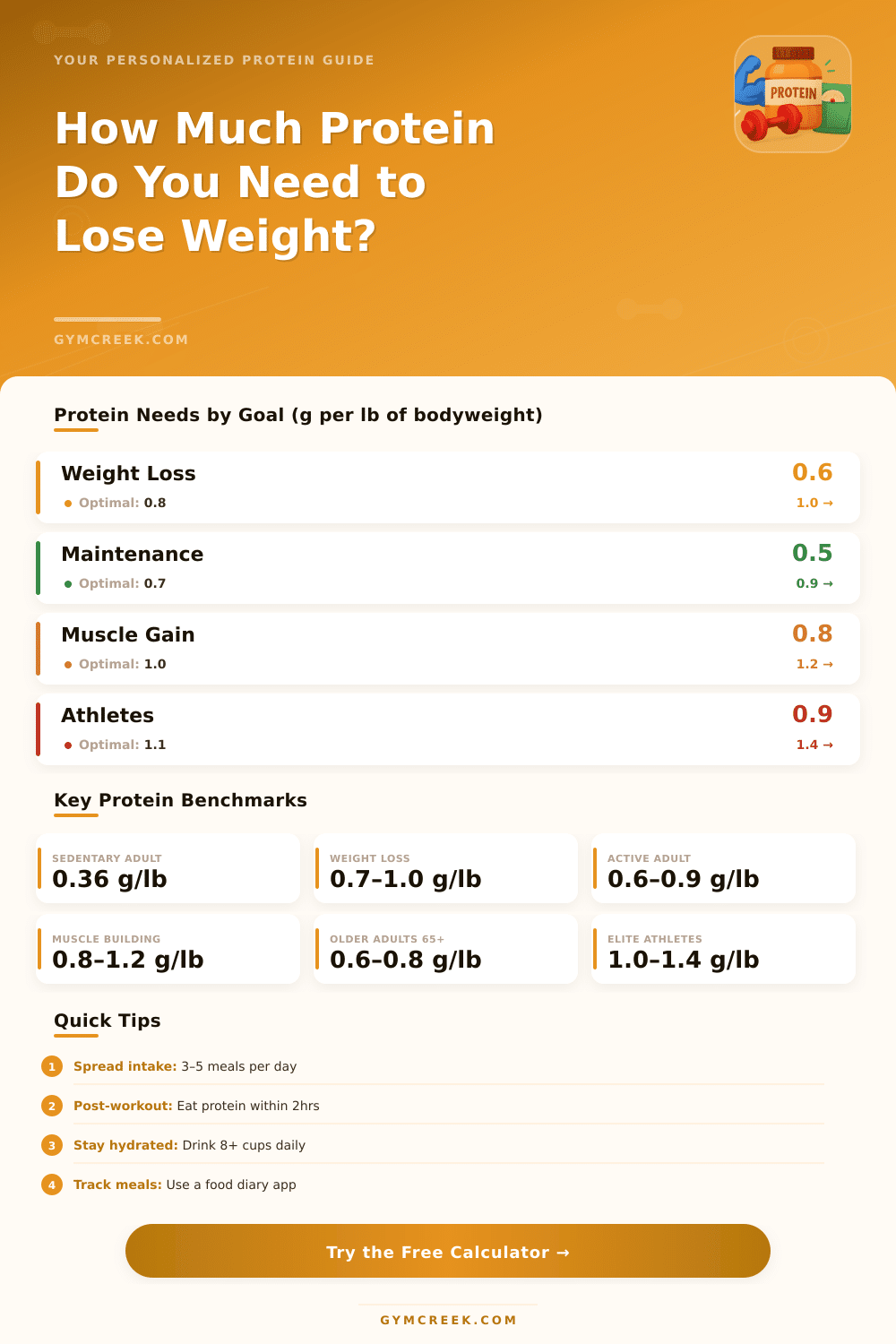
🥩 Protein Intake Calculator for Weight Loss
Get your personalized daily protein target based on your body, activity level & weight loss goal
| Food Source | Protein (per 100g) | Calories (per 100g) | Category |
|---|---|---|---|
| Chicken Breast (cooked) | 31g | 165 kcal | Animal |
| Turkey Breast (cooked) | 29g | 135 kcal | Animal |
| Canned Tuna (in water) | 25g | 116 kcal | Animal |
| Salmon (cooked) | 25g | 208 kcal | Animal |
| Egg Whites | 11g | 52 kcal | Animal |
| Greek Yogurt (0% fat) | 10g | 59 kcal | Dairy |
| Cottage Cheese (low fat) | 11g | 72 kcal | Dairy |
| Lentils (cooked) | 9g | 116 kcal | Plant |
| Chickpeas (cooked) | 9g | 164 kcal | Plant |
| Tofu (firm) | 8g | 76 kcal | Plant |
| Edamame (shelled) | 11g | 121 kcal | Plant |
| Whey Protein Powder | 80g | 352 kcal | Supplement |
| Goal | g per lb BW | g per kg BW | Priority |
|---|---|---|---|
| RDA Minimum (sedentary) | 0.36 g/lb | 0.8 g/kg | Baseline |
| General Weight Loss | 0.6–0.8 g/lb | 1.3–1.8 g/kg | High |
| Aggressive Weight Loss | 0.8–1.0 g/lb | 1.8–2.2 g/kg | Very High |
| Preserve Muscle While Cutting | 0.9–1.1 g/lb | 2.0–2.4 g/kg | Critical |
| Active Adult / Athlete | 0.8–1.2 g/lb | 1.8–2.6 g/kg | High |
| Senior Adult (65+) | 0.6–0.9 g/lb | 1.3–2.0 g/kg | High |
| Plant-Based / Vegan (+15%) | 0.7–1.0 g/lb | 1.5–2.2 g/kg | High |
| Postpartum / Breastfeeding | 0.7–0.9 g/lb | 1.5–2.0 g/kg | High |
| Diet Type | Protein % | Carbs % | Fat % |
|---|---|---|---|
| Standard / Balanced | 25–35% | 40–50% | 20–30% |
| High Protein Focus | 35–45% | 30–40% | 15–25% |
| Ketogenic / Low Carb | 25–35% | 5–10% | 55–70% |
| Plant-Based | 20–30% | 45–55% | 20–30% |
| Mediterranean | 20–25% | 40–50% | 25–35% |
Protein is important in teh process of losing weight. While many peoples focus on reducing the number of calories they consume each day, getting enough protein in the diet is also critical for losing fat. Protein intake for weight loss calculator make this a more personalized experience for those seeking to lose weight.
These calculators takes into account a variety of factor for each individual, such as age, sex, weight, and activity level. The result is not just an arbitrary number for daily protein intake, but one that is more accurate to the bodys need. With a better understanding of the science behind these calculators, individuals can make better dietary choice.
Why Protein Intake Matters During Weight Loss
Protein intake during weight loss is essential for preserving muscle. When you are restricting the calories you consume, your body will begin to break down various component of the body for fuel. If the protein level are too low in the diet, your body will break down muscle protein for energy. This will slow your metabolism, which makes it harder to continue losing weight.

Protein has a thermic effect on the human body, burning more calories digesting protein than carbohydrates or fats. The percentage of calories burned from protein range from 20 to 30 percent of the total calories consumed from protein. Additionally, protein help to control appetite. By including more protein in the diet, individuals feel fuller for longer period. This helps to naturally reduce the number of calories consumed.
For those who incorporate resistance training into their routine along with a weight loss diet, the importance of protein increase again. The exercise that is performed creates micro damage to the muscles. These muscles grow back to their former size when supplied with the proper nutrient, particularly protein. Without enough protein, the body cannot recover as well from the workouts.
Studies show that the Recommended Dietary Allowance (RDA) of 0.36 gram of protein per pound of body weight is insufficient for those who are restricting their calorie intake. The amount that most dietitian recommend for those who are losing weight is between 0.6 and 1.0 gram per pound of body weight. Athletes, those over the age of 60, and those with significant muscle mass may require even more protein.
The amount of protein that an individual require will differ from another individual. For instance, a 180 pound man who is moderately active may require a different amount of protein than a 130 pound woman who strength train three times per week. A protein intake calculator can help determine individual needs. Use the calculator above to determine what your body needs in terms of protein intake.
Age play a critical role in the amount of protein that should be consumed per day. Seniors may require more protein than younger individuals due to anabolic resistance, which is when the body become less efficient in utilizing protein after the age of 40. Additionally, women who have just given birth to a baby or who are breastfeeding require more protein to support their bodies after birth.
Individuals following plant-based diet may need to consume more protein than omnivores. This is due to the lower digestibility of plant protein compared to the protein from animals. The protein calculator account for dietary preference.
Protein should be consumed throughout the day in meals with between 20 and 40 grams of protein per meal. Consuming protein in this manner will maximize the muscle protein synthesis process by the body while minimizing the use of protein to produce energy.
Combining a high protein diet with the inclusion of resistance training will provide the best results for body composition. The combination of training with weight and high protein supply will allow an individual to both preserve and even increase their muscle mass while burning body fat.
There is a myth that high protein diet can harm the kidneys. However, this is only true for those with existing kidney problem. Healthy individuals can consume up to 1.2 gram of protein per pound of body weight.
As an individual loses weight, their protein need will change. As their body weight decrease, they will require less protein. Recalculating protein needs every four to six week or every time an individual loses ten pounds will allow them to adjust their diet accordingly.
Ensuring that protein is obtained from lean sources is essential to maintaining a healthy diet during weight loss. Include lean meat, poultry, fish, eggs, dairy product, legumes, and dietary supplements to provide the protein needed for the body each day. These food also provide the vitamins, minerals, and fats that the body require to function normally.
The relationship between protein, calories, and macros is essential for those who wish to lose weight. For weight loss, the percentage of calories from protein should be between 25 and 40 percent of the total calories consumed in a day. This percent may change according to individual need or dietary preference for carbohydrates.
Focus on creating healthy eating habit that you can maintain for the long-term. Include dietary supplement that aid in weight loss, high protein diets, and food that you enjoy eating. These supplement and diets will provide the body with the protein it need while providing the body with the motivation to continue with the diet. The protein calculator is just one of the supplement that can aid in