Watermelon Carb Calculator
Estimate total carbs, net carbs, fiber, sugar, water volume, hydration share, serving fit, and carb target guidance from fresh, juiced, blended, frozen, or dried watermelon portions.
📌Watermelon Carb Presets
Presets use edible pink flesh weight. The calculator treats watermelon as high water, low fiber fruit, then adjusts for form, draining, rind trim, and serving targets.
⚙Calculator Inputs
Watermelon carb snapshot
Enter a portion, form, water-loss level, and target to estimate your serving.
📊Watermelon Metrics
📑Reference Tables
| Serving | Edible Weight | Total Carbs | Water Estimate |
|---|---|---|---|
| 1/2 cup diced | 76 g | 5.7 g | 69 ml |
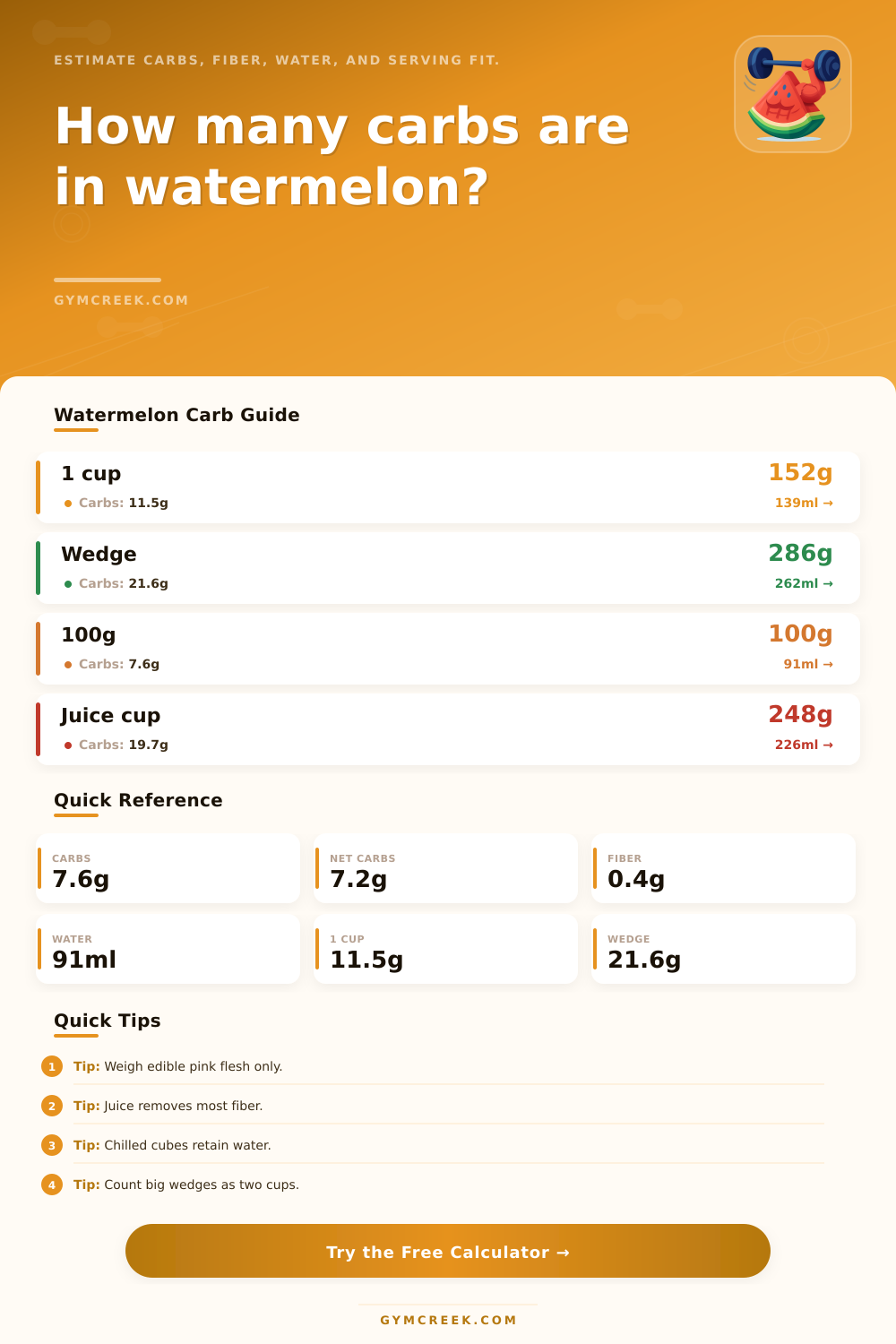
| 1 cup diced | 152 g | 11.5 g | 139 ml |
| 2 cups diced | 304 g | 23.0 g | 278 ml |
| Small wedge | 160 g | 12.1 g | 146 ml |
| Large wedge | 286 g | 21.6 g | 262 ml |
| Form | Carb Factor | Fiber Factor | Hydration Note |
|---|---|---|---|
| Fresh chunks | 1.00 | 1.00 | Best baseline |
| Blended puree | 1.00 | 1.00 | Same edible mass |
| Juice | 1.05 | 0.25 | Less pulp fiber |
| Grilled | 1.12 | 1.00 | Water cooks off |
| Dried | 8.30 | 6.50 | Very concentrated |
| Context | Common Target | Serving Fit | Watch Point |
|---|---|---|---|
| Snack | 10-25 g carbs | 1 to 2 cups | Count seconds |
| Hydration | 150-300 ml water | 1 to 2 cups | Still drink fluids |
| Pre-workout | 20-40 g carbs | 2 cups or wedge | Low fiber fuel |
| Low net check | Under 15 g net | About 1 cup | Portion matters |
| Formula Piece | Baseline | Adjustment | Used For |
|---|---|---|---|
| Total carbs | 7.55 g/100 g | Form factor | Main card |
| Fiber | 0.40 g/100 g | Pulp factor | Net carbs |
| Water | 91.45 ml/100 g | Drain factor | Hydration card |
| Sugar | 6.20 g/100 g | Form factor | Breakdown |
💡Tips
Watermelon can be tricky: not necessarily for its flavor, but for portion sizes. When you cut open the melon and find it is sitting on countertop intact, there are no easy clues about how many servings it contains. Each wedge contain about two cups of juicy flesh, which can double your intake without notice.
The only way to know whether this is too much food (or water!) for your day is to weigh the edible flesh first; measurements is always better than eyeballing things. To use it, simply weigh the edible part of the fruit you plan to eat before you do any juicing prep work; or however else you want to prep it. Plug in how many grams of pink meat you just weighed. It will spit out everything you need to know. All the science happen inside the calculator itself. No more guessing about whether your food is measuring out correctly, there’s no room for error when all you’re entering is number from a scale.
Why You Should Weigh Your Watermelon
Enter the number of grams of pink meat you intend to consume; then tell the calculator how you plan on preparing the food. If you juice it (and don’t strain the pulp), your diet will have changed slightly since you’ve lost all the fiber contained in the pulp. Even though the sugar content will be the same between juiced and whole fruits/veggies, the fiber profile won’t be different than before. If you’re counting net carbs, this makes a big difference.
Turning fresh fruit and vegetables into a drink strip away most of their dietary fiber. This leaves you with something that hits your system quicker then eating a solid chunk would. The other factor here is water: watermelon is about ninety percent water by weight (fresh), which make it among the most hydrating foods around. That’s accounted for in the tool when you choose options that will be dried/grilled. If there’s any evaporation/concentration going on, the tool takes care of it.
For example, dried watermelon loses all its water while remaining a carb-rich snack that’s closer in character to candy than to fresh fruit. Because it’s dehydrated, you can easily scarf down handfuls of dried slices thinking, “No big deal! I just had a little bit.” But without the water, those few bites contains concentrated sugars with none of the volume to fill you up. It’s clear from the reference table on the page how shape changes the nutritional density dramatically.
It’s all about portion control, awareness, and geometry. Many people thinks they’re only eating one serving when they eat a big ole’ wedge, yet that might be two-plus cups of chopped-up equivalents. Depending on how ripe your chosen fruit is, consuming a whole large wedge might add up to ten to fifteen grams more then your goal of twenty-five grams of carbs for a pre-workout energy boost.
You can input your desired carb count into the tool, and it will display how much fruit equals that number in servings. Plus, it takes into account any rind-trimming. This is important since white pith adds weight without adding the sugars or other good-for-you stuff you’re actualy interested in. The tool calculates solely based off pure flesh. Factoring in rind weight will inflate your estimated consumption. This will confuse you when your blood sugar response isn’t what you expected.
Digestion: It’s worth mentioning that our sense of temperature also subtly impacts perception. Filling up on cold foods like watermelon is more satisfying because they trigger signals in the brain associated with feeling full. When room temp fruits are eaten, the lack of shock doesn’t has the same sensory response, which may make us more prone to mindless overconsumption. The calculator lets you adjust for serving temp (which won’t alter the chemistry, but will help you understand the context of how it makes you feel when ingesting).
You’ll also notice the hydration targets can be changed, allowing you to gauge what percent of your daily fluid intake this snack will provide. It provides A LOT of water, but should of still be complemented by pure water instead of used as a replacement during strenuous workouts. Treat watermelon as a versatile fuel: With high carbohydrate content but low fiber, this is a perfect pre-workout food (for fast-acting fuel) or a post-lift snack (for rapid nutrient absorption).
The error occur when we forget about how much of it is… well, what it’s made of. We judge portions by sight rather than heft. Weighing your serving and picking the proper preparation method transforms an ambiguous fruit into a controllable component of your diet plan. So next time you grab a wedge, go ahead and tare the scale to see how much you’re really getting before you bite.
When you know exactly what sweet stuff you have in hand, you can easily incorporate it into your plan.