Water Weight Calculator (Gallons to Pounds)
Convert gallons, liters, and containers into water weight with temperature-aware density, fill level, tare weight, and unit conversions.
📌Presets
Presets load common water volumes, containers, fill levels, and density assumptions for fast gallon-to-pound estimates.
⚙Calculator
Water weight snapshot
Enter a volume and calculate pounds, kilograms, density, and loaded container weight.
📊Conversion Snapshot
📑Reference Tables
| US Gallons | Fresh Water | Liters | Use Case |
|---|---|---|---|
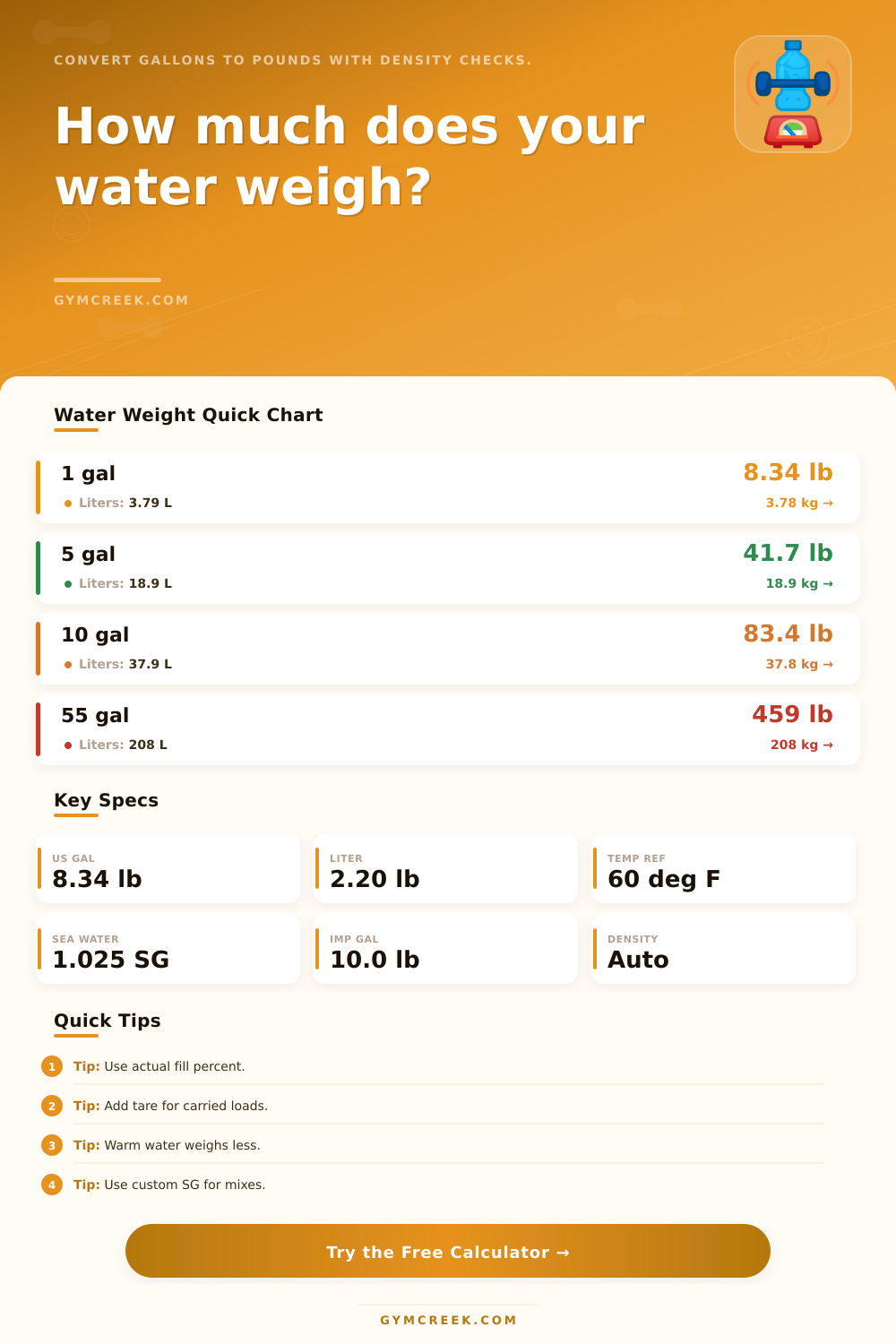
| 1 gal | 8.34 lb | 3.785 L | Jug |
| 2.5 gal | 20.9 lb | 9.46 L | Small can |
| 5 gal | 41.7 lb | 18.9 L | Bottle |
| 10 gal | 83.4 lb | 37.9 L | Tank change |
| 55 gal | 459 lb | 208 L | Drum |
| Temperature | Density | Per US Gal | Note |
|---|---|---|---|
| 32°F / 0°C | 0.9998 kg/L | 8.343 lb | Near freezing |
| 39°F / 4°C | 1.0000 kg/L | 8.345 lb | Maximum density |
| 60°F / 15.6°C | 0.9990 kg/L | 8.337 lb | Common reference |
| 86°F / 30°C | 0.9957 kg/L | 8.309 lb | Warm water |
| 140°F / 60°C | 0.9832 kg/L | 8.205 lb | Hot water |
| Liquid Type | SG | lb/US gal | When To Use |
|---|---|---|---|
| Fresh water | 1.000 | 8.34 | Default |
| Tap water | 1.001 | 8.35 | Minerals |
| Seawater | 1.025 | 8.55 | Marine tanks |
| Brine mix | 1.100 | 9.18 | Dense solution |
| Custom SG | Input | Calculated | Known mix |
| Container | Nominal Size | Water Weight | Planning Note |
|---|---|---|---|
| Jug | 1 gal | 8.3 lb | Hand carry |
| Carboy | 5 gal | 41.7 lb | Add tare |
| Drum | 55 gal | 459 lb | Check floor |
| IBC tote | 275 gal | 2293 lb | Use pallet |
| Pool water | 1000 gal | 8345 lb | Structure load |
💡Tips
When you hold a five gallon jug of water, your back feel the weight instantly. The weight varies by salinity and temperature and it’s heavy. For no reason, most folks don’t consider the weight to be variable. They guess. Guessing strain shoulders or floors. Filling an aquarium or moving that water for emergency purposes require precision. You input the volume and the calculator do the rest.
Because warm water is less dense (expands), it considers more than raw gallons. Tap hot water is actualy lighter then cold well water, but that will make a difference when you’ve stacked hundreds of gallon onto a deck whose weight limit you’re pushing. You can even put in the “tare” or engineering talk for empty container. That’s right, a plastic bottle has mass and each time you don’t account for it you’ll underestimate total weight.
Why Water Weight Changes
For example, when we think of the US gallon (a basic unit), we have a weight of 8.34 pounds per gallon at room temperature. This is our starting point, and all other variables alters that figure, sometimes up or down. If you are using saltwater in a reef tank, then that water are heavier due to its higher specific gravity. Brine used for ice melt or industrial cleaning is even denser. If you treat saltwater as freshwater, you’ll underestimate the load your equipment will need to bear.
Because this data is important, it also shows the shift in density from a freezing point to a boiling point, as shown on the chart/table located on the page. This one gets overlooked a lot too: Fill percentages. When you buy that 55-gallon drum, how much of it do you fill? Typically not all the way. There’s some room for splash or expansion, right? It’s better to know that you’re carrying around forty pounds than think its fifty.
Whether it be big IBC totes in the warehouse or rain barrels on the porch, knowing the fill percent will give you a more accurat idea of what’s moving. And accounting for container weight at the same time reduces margin for error. The other issue is that there is no such thing as just “a gallon”. There is a difference between an Imperial gallon and a US gallon. If you’ve come across any international literature/manuals/tanks etc, they may have used one over the other which will throw off your calculations ~20%. That’s a pricey error to commit on your initial attempt, but this tool allows you to toggle back and forth without having to worry about which factor you should of being using. The output can be trusted no matter where it came from. All you have to remember is whether or not the input matches same system.
To understand water weight is to respect its mass. That’s water in a clear bottle. It may appear light, but it has force that pushes back against those holding or moving it. It also push back against those holding what it is being poured into. Adjusting for density, temperature and tare weight of the container eliminates guess work and allows you to plan accordingly. You’ll know exactly why that five-gallon jug feels heavy so you can pick it up comfortabley instead of hesitantly.