Protein for Vegans Calculator
Estimate adjusted vegan protein grams, per-meal targets, source servings, and amino acid coverage from weight, goal, training, protein mix, digestibility, calories, and leucine target.
📌Vegan Protein Presets
Presets load realistic vegan eating patterns. Edit the digestibility and source mix if your plan uses a tested protein blend or a dietitian target.
⚙Calculator Inputs
Adjusted vegan protein target
Enter your inputs to calculate daily grams, meal targets, servings, and amino acid coverage.
📊Vegan Protein Metrics Grid
📑Vegan Protein Reference Tables
| Goal | Base range | Training note | Vegan adjustment |
|---|---|---|---|
| Maintenance | 1.2 to 1.6 g/kg | Works for steady activity | Small buffer when sources vary |
| Muscle gain | 1.6 to 2.2 g/kg | Use higher end with hard lifting | Raise if PDCAAS is below 0.85 |
| Fat loss | 1.8 to 2.4 g/kg | Supports satiety and lean mass | Watch calories from dense sources |
| Endurance | 1.2 to 1.8 g/kg | Balance with carbohydrate needs | Keep meals digestible around sessions |
| Source mix | Typical quality | Leucine density | Planning cue |
|---|---|---|---|
| Soy-forward | High digestibility | About 7.8% of protein | Useful for smaller meals |
| Pea/rice blend | Good complementary profile | About 7.6% of protein | Easy leucine support |
| Legume-heavy | Moderate digestibility | About 6.8% of protein | Pair with grains or seeds |
| Seed-heavy | Lower lysine coverage | About 6.0% of protein | Add legumes or soy-free isolate |
| Serving type | Protein used | Common example | Best fit |
|---|---|---|---|
| Soy food serving | 18 to 22 g | Tofu, tempeh, edamame | Soy-forward or balanced plans |
| Legume serving | 14 to 18 g | Beans, lentils, chickpeas | Bowls, chili, curry, soups |
| Protein powder serving | 22 to 28 g | Pea, rice, soy, blended powders | Higher targets or low appetite |
| Seitan serving | 20 to 26 g | Wheat gluten based foods | Soy-free high protein meals |
| Coverage score | Meaning | Likely fix | Watch point |
|---|---|---|---|
| 85 to 100 | Strong coverage | Keep variety steady | Calories and digestion |
| 70 to 84 | Usable plan | Add a higher quality source | Low leucine meals |
| 55 to 69 | Needs support | Pair legumes and grains | Too many low-density sources |
| Below 55 | Rebuild mix | Use soy, seitan, or blends | Targets may feel bulky |
💡Vegan Protein Tips
Getting enough protein on an plant-based diet isnt about reaching one single number. Getting enough protein on a plant-based diet is about understanding how the different protein sources that you use will behave once they enters your body. You must understand how much of that protein source your body can digest and absorb from that particular protein source, and you must also understand how your bodys protein needs changes with different factors.
The calculator can calculate for you the mathematical problems associated with determining your protein needs once you have entered your weight, your goal, your training loads, and your protein sources of choice into the calculator. Furthermore, the calculator perform these math problems itself, to avoid the guess work for how much protein your body can digest from the sources that you choose. One of the first calculations of the protein needs for plant-based diets is the target amount of protein that you should consume daily based off your body weight.
How the Plant-Based Protein Calculator Works
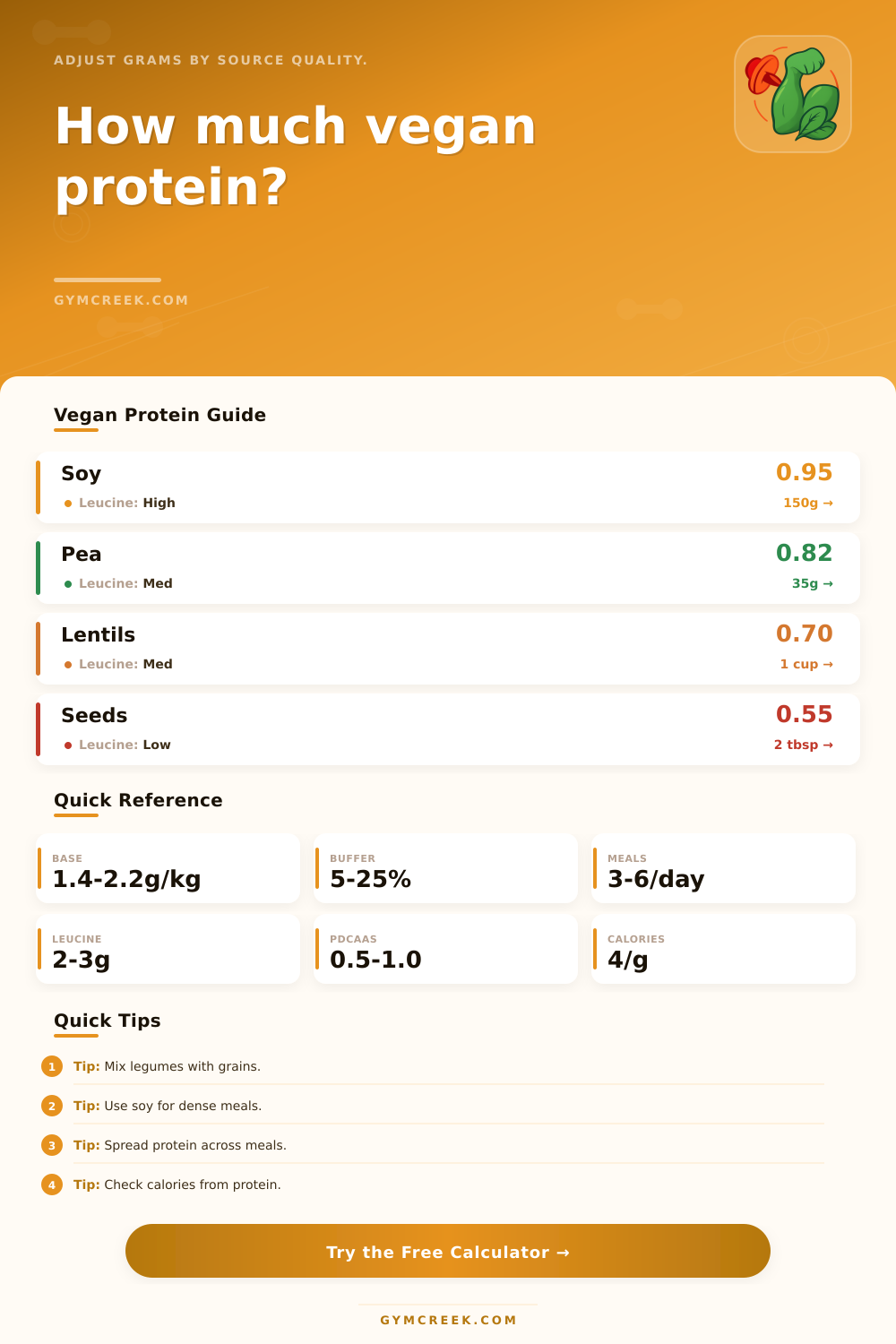
However, protein intake based upon body weight dont account for the fact that different forms of protein from plants has different levels of effectiveness for the body. For instance, soy contains more digestible protein than many other plant protein sources that contain heavy amounts of seed. Thus, the calculator increases the amount of protein that the body must digest if the protein sources that are chosen has low digestibility, which is why one plant-based person may have a different protein target than another individual.
Another of the factors that can influence the protein needs for an individual is the training load that they perform. An individual that lift weights four or five days a week will require more protein than an individual that only performs physical activity in the walking category for the majority of there day. Furthermore, the calculator recognize that providing extra protein to an individual is only beneficial if the individual is able to digest that amount of protein.
For example, spreading the protein load into four or five meals is more beneficial then two meals due to the bulky nature of plant proteins compared with animal protein source. One of the essential amino acid to consume in sufficient amounts is leucine, which relates to muscle repair. Because most plant foods contain less leucine per gram of protein compared to meat and dairy products, the calculator also estimate the amount of leucine the body consumes per meal.
The calculator identifies any potential “leucine gap,” which will indicate that the body is not receiving enough of that essential amino acid. To fix the leucine gap, one or two meals can be enriched with a high-leucine protein source, rather than adding more protein to every single meal. Thus, this adjustment help to avoid increasing the number of calories consumed by the individual, as well as limits the amount of protein that must be consumed daily.
Another consideration to protein intake is how much of the total calories that are consumed by the body is provided by the protein. Because protein contains four calories per gram, increasing the amount of protein that must be consumed increases the number of total calories that are consumed by the body. If the individual has a low target for total calories intake per day, the calculator will flag that the protein requirement of the individuals body will take up the majority of those calories.
This allows the individual to decide whether they need to change their protein sources, or if they are willing to increase the size of their meals. The reference tables located on the calculator provide information about the protein needs and sources of protein for plant-based diets. One table shows the protein intake range required for individuals with certain goals and training loads.
Another table list information about various vegan protein mixes and blends, and how much protein is contained within each of those products. Additionally, the third table list the amount of protein that is contained in various food product. These tables can assist the individual in planning their meals appropriately to meet their protein requirement.
Many individuals make mistakes with their plant-based diets by treating all form of protein as the same. Furthermore, they may also make mistakes with consuming the majority of their protein within one meal. The calculator avoids both of these problems by using the information and recommendations provided.
Beyond the benefits of the protein calculator is its ability to provide an individual with a suggestion for total protein intake per day, the value of the tool exist in its ability to show how adjustments to protein sources can impact the needs for protein per day. Thus, this calculator will assist an individual in adjusting their diet plan in response to changes in their life. You should of used this tool to find the best results for your goals.
It is actually alot more helpful than most people realize, especially when you want to avoid feeling uncomfortabley full after every single meal.