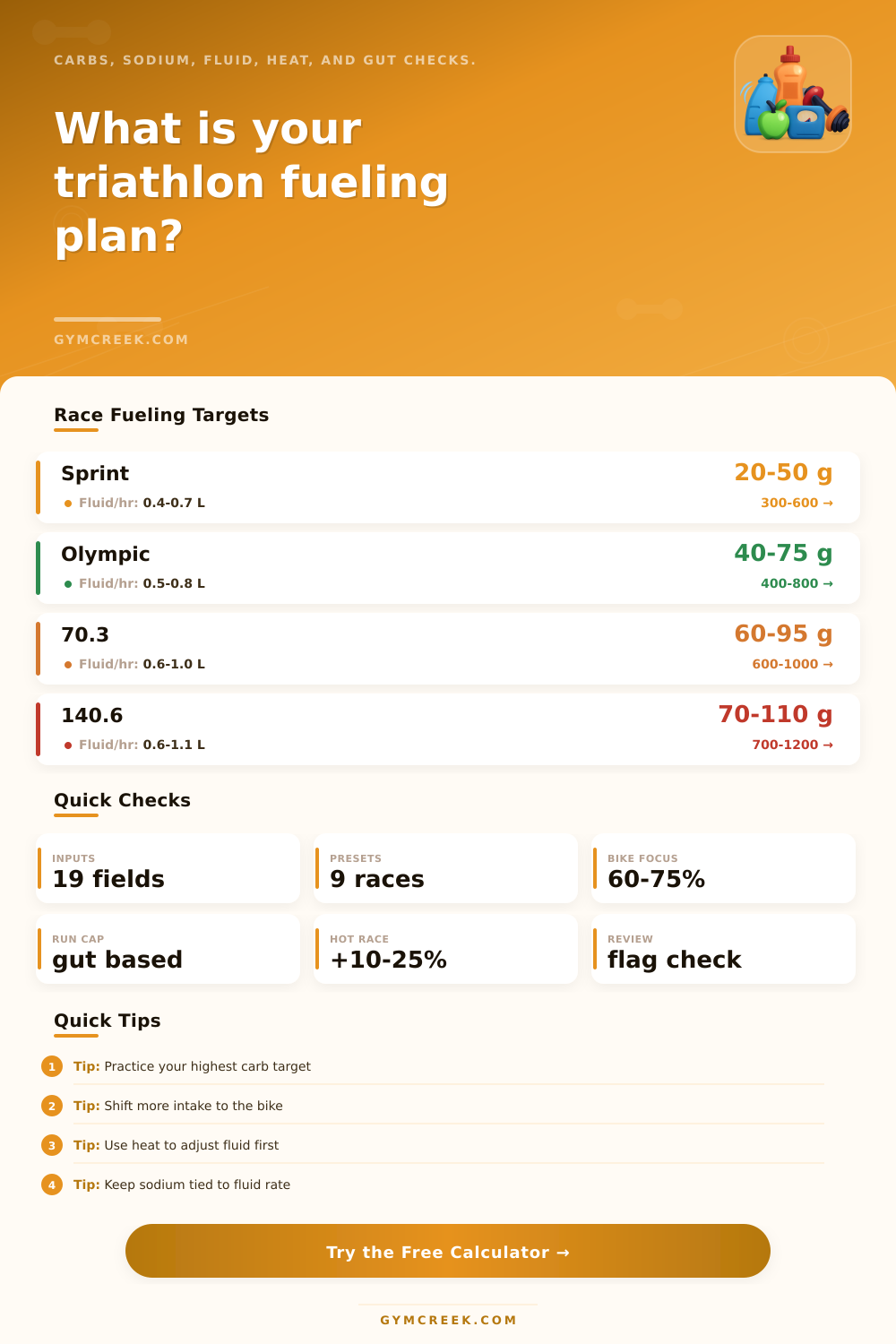
Triathlon Nutrition Calculator
Build a race fueling plan from swim, bike, run, transition times, race distance, body weight, heat, gut tolerance, carb target, sodium target, and fluid rate.
📌Race Presets
Presets load realistic race times, heat conditions, and intake targets. Edit any field to match the course, weather, aid layout, and gut tolerance you have practiced.
⚙Calculator Inputs
Triathlon fueling plan
Enter race duration, segment times, carb target, sodium target, fluid rate, body weight, heat, gut tolerance, and distance.
📊Fueling Metrics
📘Reference Tables
| Distance | Typical duration | Carb range | Fluid and sodium cue |
|---|---|---|---|
| Sprint | 0.9 to 2 hours | 20 to 50 g/hr | Mostly heat-driven; sodium may be modest. |
| Olympic | 2 to 4 hours | 40 to 75 g/hr | Fluid timing matters once bike starts. |
| 70.3 half | 4 to 8 hours | 60 to 95 g/hr | Bike fueling anchors the run plan. |
| 140.6 full | 8 to 17 hours | 70 to 110 g/hr | Use conservative run caps and frequent checks. |
| Setting | Global carb cap | Run cap | Density warning |
|---|---|---|---|
| Low | 55 g/hr | 35 g/hr | Above 70 g/L |
| Medium | 80 g/hr | 55 g/hr | Above 90 g/L |
| High | 105 g/hr | 75 g/hr | Above 110 g/L |
| Elite | 125 g/hr | 90 g/hr | Above 130 g/L |
| Condition | Temperature | Fluid effect | Execution note |
|---|---|---|---|
| Cool | Below 60°F / 16°C | 0.90 x | Do not force high fluid if sweat is low. |
| Mild | 60 to 74°F / 16 to 23°C | 1.00 x | Use practiced race target. |
| Warm | 75 to 84°F / 24 to 29°C | 1.12 x | Check bottle access before race day. |
| Hot | 85°F / 29°C plus | 1.25 x | Flag plans that exceed body-weight ceiling. |
| Formula | Inputs | Output | Use |
|---|---|---|---|
| Race duration | Segments or override | Total hours | Fueling total |
| Heat fluid rate | Fluid x heat factor | L/hr or oz/hr | Drink target |
| Carb cap | Target and gut setting | Allowed g/hr | Gut check |
| Bike allocation | Total carbs x share | Bike grams | Execution split |
| Sodium total | mg/hr x duration | Total mg | Hourly target |
💡Planning Notes
The calculator is an tool that an athlete can use to create a nutrition plan for a specific race. Athletes uses a nutrition plan to control the amount of carbohydrates, sodium, and fluids that they consume during the race. To utilize the calculator, the athlete must enter information about there expected race finish time, their split times for each portion of the race, their body weight, and the target amount of carbohydrates, sodium, and fluids that they would like to consume during the race.
The calculator will calculate the total amount of nutrition that they need for the race, as well as display the difference between the amount of nutrition needed for the bike portion of the race versus the run portion of the race. If the targets that the athlete sets for themselves are above the amounts that they are able to consume during training, the calculator will display a flag to alert the athlete of the difficulty in following such a nutrition plan. The inputs that the athlete enters into the calculator will impact the nutrition plan that the calculator creates for them.
Using the Race Nutrition Calculator
The duration for which the athlete will be competing in the race is one of the most important parameters that they enter into the calculator. The segment times that the athlete enters will allow the calculator to determine how much nutrition they should consume during the bike versus the run portion of the race. Most athletes are able to consume more carbohydrates during the bike portion of the race, but can consume fewer carbohydrates during the run portion due to the physical movement required for this portion of the race.
Additionally, the athlete’s body weight will impact the amount of fluids that they are able to replace in their body. Finally, the temperature at which the athlete will be racing will impact the amount of fluids that the athlete needs to consume during the race. If the temperature during the race is higher than room temperature, the athlete will naturaly sweat more and therefore need to drink more fluids.
Within the calculator, there are settings regarding the athlete’s gut tolerance to the nutrition. The athlete can select the amount of nutrition that they can consume during the race. The amount that they select will set a limit to the amount of carbohydrates that they can consume each hour during the race, as well as the total amount of carbohydrates that they will consume during the run portion of the race.
If the athlete sets their gut tolerance to a lower level than an elite athlete’s capabilities, the calculator will generate numbers that reflect the athlete’s lower capabilities. However, the calculator does not know if the athlete has trained their bodies to possess such high levels of gut tolerance, so they must ensure that their setting correlate with their training. In addition to the settings regarding the athlete’s body and their gut, the calculator also incorporates rules regarding fluids and sodium levels.
For example, if the athlete selects a higher temperature for their race, the calculator will adjust the rate at which the athlete should consume fluids. However, it will also take into consideration the athlete’s body weight. If the athlete tries to consume more fluids than their body weight can handle, the calculator will alert them to this.
Additionally, the athlete must consume the sodium levels with enough liquid to allow their bodies to move the sodium out of their systems. Within the text of the calculator, there are reference tables that show the different numbers regarding carbohydrate and fluid intake that many athletes uses during their races of different distances. Additionally, these tables show the heat bands within which the athlete should consume fluids.
For instance, if the athlete is racing on a day when the temperature will be 78 degrees, they will need to consume more fluids than on a 62-degree day. Finally, the reference tables show that the athlete will consume more fluids during the bike portion of the race than during the run portion of the race. The calculator contains the mathematical information necessary to create a nutrition plan for the athlete.
However, it cannot take into account all of the variables that may exist during the race. For instance, the calculator cannot take into account the distance between aid stations during the race. Additionally, it cannot take into account the difficulty of the athlete in accessing a water bottle while riding their bike.
Finally, the calculator cannot take into account the athlete’s physical reaction to the products that they consume during the race. An athlete must use their training to learn what products will work best for their bodies, and how much of each product they can consume. If an athlete makes even the smallest changes to the variables that they enter into the calculator, the nutrition plan that is created for them will change.
For instance, increasing the athlete’s fluid target will also increase the carbohydrate concentration of that fluid. If the athlete’s fluid target increases to such a level that the carbohydrate concentration exceeds their gut tolerance setting, the calculator will change the amount of fluid that they should consume during the bike portion of the race, or during the run portion of the race. If the athlete selects too low of a target for the athlete’s carbohydrate intake during the bike portion of the race, they may not have enough carbohydrates for the run portion of the race.
A successful nutrition plan is one that remains within the limits of what the athlete has trained their bodies to handle. While the calculator will ensure that the athlete’s nutrition plan is feasible, it cannot ensure that the athlete will be able to handle the plan during the race. To guarantee that the athlete’s nutrition plan will work during the race, they must continue to practice the nutrition plan during training.
As long as the athlete can successfully consume the amount of carbohydrates, fluids, and sodium that the calculator calculates for them during the race, their nutrition plan will work for them during their upcoming race.