Swim Taper Calculator
Plan a meet taper from event distance, days out, weekly yardage, race intensity, stroke specialty, fatigue, age group, taper style, sessions, dryland, and sleep.
📌Named Swim Taper Presets
Presets load realistic meet profiles across sprint, middle-distance, IM, distance, masters, triathlon, and championship taper situations.
⚙Swim Taper Inputs
Swim taper snapshot
Enter your event, days out, yardage, intensity, stroke, fatigue, age group, and taper style to calculate a plan.
📊Swim Taper Metrics Grid
📑Swim Taper Tables
| Phase | Window | Volume Target | Training Focus |
|---|---|---|---|
| Start | --- | --- | --- |
| Race Type | Usual Taper | Final Volume | Intensity Priority |
|---|---|---|---|
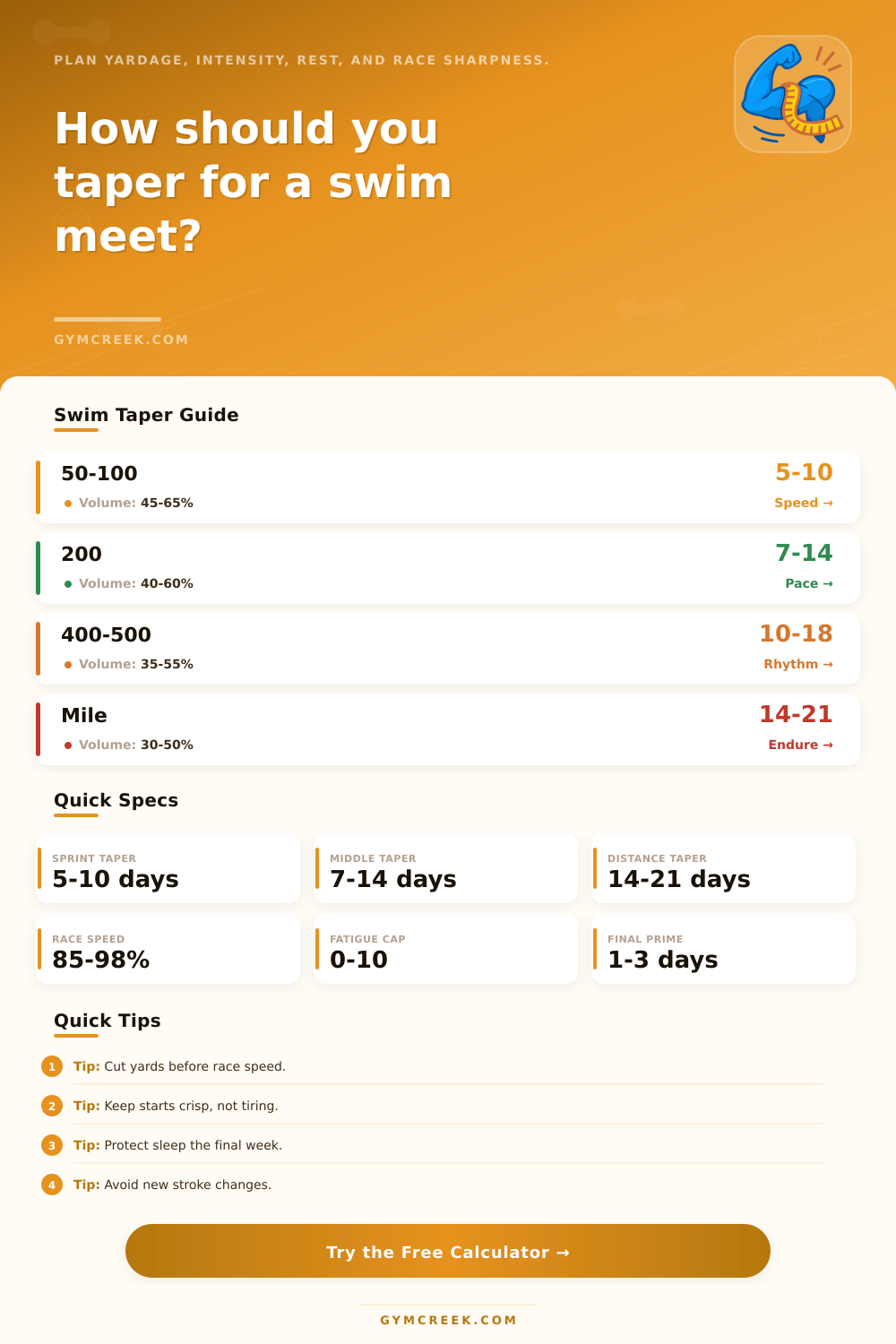
| 50 or 100 sprint | 5-10 days | 45-65% of normal | Starts, breakouts, race-speed 15s |
| 200 race | 7-14 days | 40-60% of normal | Race pace with full recovery |
| 400, 500, or IM | 10-18 days | 35-55% of normal | Broken pace, turns, relaxed rhythm |
| 800, mile, or open water | 14-21 days | 30-50% of normal | Aerobic feel plus controlled speed |
| Signal | Smaller Cut | Normal Cut | Larger Cut |
|---|---|---|---|
| Stroke specialty | Freestyle distance | Back or IM | Fly or breast power |
| Age group | Age group 10-14 | High school or college | Masters 50+ or high fatigue |
| Fatigue score | 0-3: hold rhythm | 4-6: normal taper | 7-10: recover first |
| Meet length | One-day meet | Two or three days | Four days or more |
| Session Type | Best Window | Volume | Purpose |
|---|---|---|---|
| Race primer | --- | --- | --- |
💡Swim Taper Tips
The last lap before the race: Swim taper, On purpose reducing your training volume at the end of practice to allow for body recovery and maintain the speed that you’ve trained so hard for.
Why? Your body still wants some stimulus to stay sharp on race day, but it also needs time to rest and allow nervous system to relax and fire cleanly. Get either side wrong and you either arrive flat or arrive tired. Every season most swimmer wrestle with this tension. This is especially true if their meet schedule, their fatigue level, and the distance of their events are all pointing in slightly different directions.
How to Taper for a Swim Race
How long that taper lasts depends on several factors: How much do you train? How far are you racing? Generally speaking, sprint events tends to take less time to sharpen (the energy system recovers quicker). Distance event will require more days of lower yardage. This allows the aerobic base to settle down without losing ability to hold pace. Typically individual medley swimmer fall somewhere in the middle as they need rhythm and some power with all four stroke.
Once you plug in what event you are swimming, what is your typical week of volume, and how many days until your key swim, the calculator do the rest for you. This takes out a lot of the guesswork that coaches and athletes carries into final few weeks. The plan also accounts for fatigue and readiness. The calculator will dial down the final week’s volume if you’ve entered the taper with legs that are dragging or if you’re sleeping poorly. You don’t want to be battling built-up stress come race day.
Or it could of be more aggressive if you’re feeling ready (high readiness score) and your stroke is sharp. It will still leave plenty of energy to make it feel like a race. Masters athletes tend to take longer to recover then age group swimmers, so selecting the right age group can result in different final-week targets based off simply on event distance. Stroke specialty counts as well. Since butterfly and breaststroke puts more strain on the hips and shoulders, these events may require an earlier taper for reducing dryland work.
Looking at reference tables on the page, you can see how volume generally drops through beginning, middle, and end of any taper. You can also see which event focus more on endurance than intensity, or vice versa, during those final days. That’s because cutting back mileage reduces junk miles but maintains some of the touches that matter for the race. And all the calculator do is take your numbers and apply them to what works for you rather than having to average several generic taper plans.
The danger with taper is thinking it’s an all-out holiday from speed. Short, quality effort with ample recovery maintain the nervous system without fatiguing you. And another risk with taper is significantly changing your stroke mechanics during the final 10 days. The body will have adjusted to what it’s doing now and new cues usually cause more hesitation than improvement.
When yardage comes down, sleep becomes the performance variable. Most swimmers find they get a bigger freshness benefit from consistently resting in the final week then another day or two of easy swimming. You want to avoid a last-minute fitness test by getting on the blocks feeling a little sharper in terms of water feel than you did three weeks ago.
Your inputs should reflect what’s really going on in your body, such as fatigue, training load, or demands of the event. Your output will then provide session structure and volume target that matches where you are as an athlete instead of some textbook ideal.