Stride Frequency Calculator
Estimate stride frequency from pace, speed, stride length, cadence, terrain, grade, height, fatigue, and session type, then compare step timing, frequency in hertz, and stride mechanics.
📌Stride Frequency Presets
Presets fill realistic pace, stride, cadence, surface, grade, height, fatigue, and workout context. You can edit any value after loading a preset.
⚙Stride Inputs
Stride frequency profile
Enter pace, cadence, stride length, height, terrain, grade, effort, and fatigue to calculate stride frequency and mechanics context.
📊Frequency Metrics Grid
📑Stride Frequency Tables
| Component | Input | Formula / Factor | Result |
|---|---|---|---|
| Cadence | --- | --- | --- |
| Band | Cadence Range | Frequency | Common Context |
|---|---|---|---|
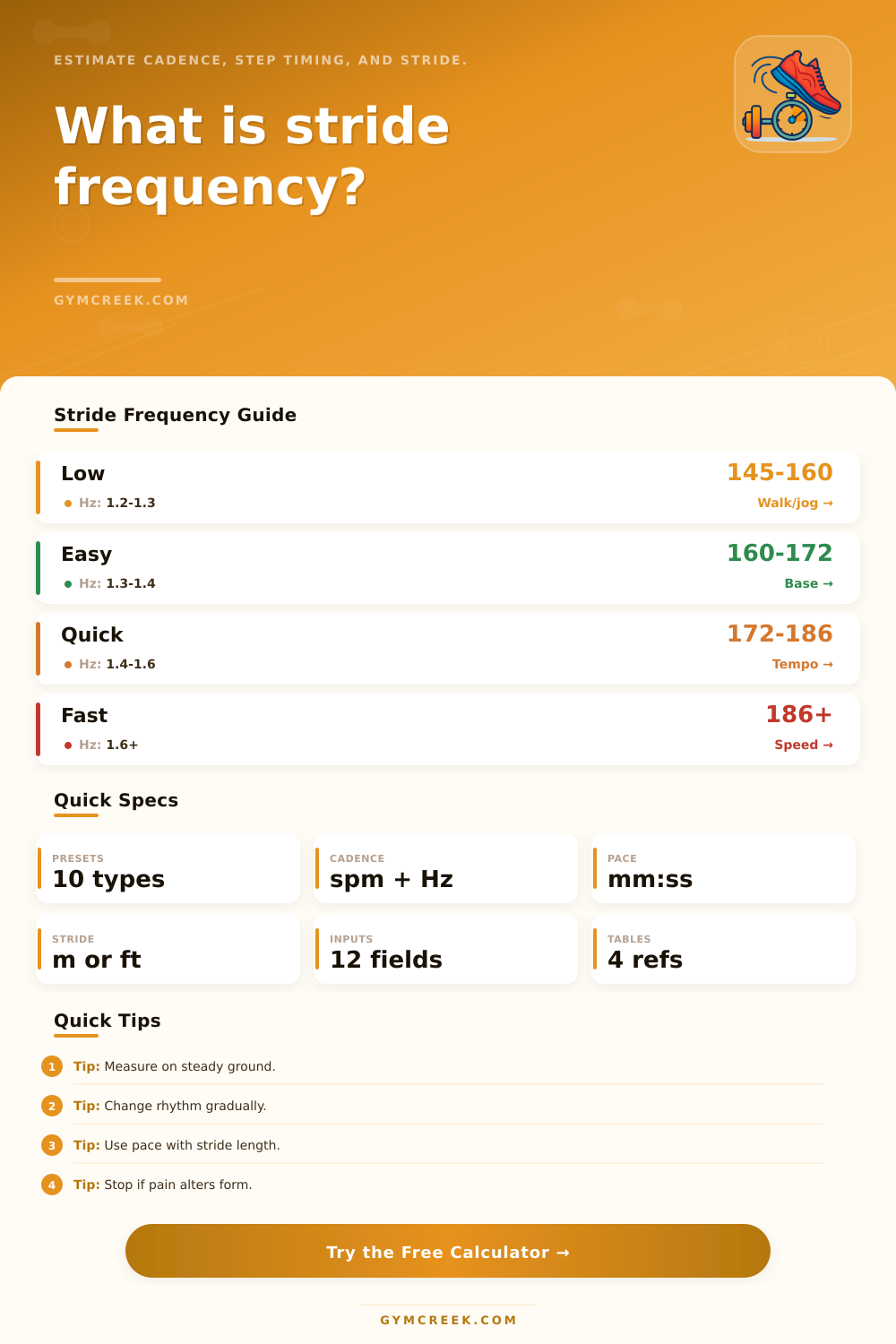
| Low turnover | 145-160 spm | 1.21-1.33 Hz | Walking, easy jogging, tall runners, fatigue |
| Relaxed run | 160-172 spm | 1.33-1.43 Hz | Base running, long runs, steady roads |
| Quick rhythm | 172-186 spm | 1.43-1.55 Hz | Tempo work, shorter ground contact, hills |
| Speed rhythm | 186+ spm | 1.55+ Hz | Intervals, racing, sprints, compact steps |
| Condition | Expected Change | Calculator Use | Watch Signal |
|---|---|---|---|
| Track | Quick, even | Higher target | Stable lap splits |
| Scenario | Typical SPM | Hz Range | Practical Read |
|---|---|---|---|
| Easy run | 160-172 | 1.33-1.43 | Comfort first |
💡Stride Frequency Tips
Running cadence is a little-known factor that affects how running feel. It is usually measured by number of strides you take per minute but you will only notice if it seems off.
It lies at the heart of the interaction between stride length, pace, and terrain. Enter a recent count of your cadence into this calculator along with your other measurements (stride length or your measured pace). Then see if your cadence match your speed.
How to Check Your Running Cadence
Two runners might share same split but be doing entirely different things. Because of this pace by itself isn’t always the whole picture. One runner might take long strides at a slow pace, while the other take short strides at a fast pace. Does one runner bounce up and down a lot more then the other? How does each handle fatigue as they go further? Those clues show up in ground contact time, how much vertical bounce appear, and how quickly fatigue builds on longer efforts.
When you add measured stride length plus pace, it’s a good way to see if what you’re doing on any given run correlates with what your watch says you’re running. It’s less chasing the magic number and more finding where your mechanics has strayed. What is “reasonable” varies based off height and terrain. In general, shorter runners must increase their step rate to stay efficient. Taller runners can absorbs bigger steps with less effort. Even with equal effort, soft grass or technical trails will force up cadence while reducing stride length (meaning your naturaly cadence becomes lower than it would be on other surfaces).
The calculator incorporates all of this into its target range, so you can eyeball if your existing numbers falls within the window of what makes sense given the grade and surface. Another level is added with session type: easy recovery runs tolerate lower turnover because the goal is relaxed movement and recovery. With interval or tempo work you’re asking for higher turnover and shorter ground contact to sustain pace without overstriding. So as you choose the focus of your session the estimate will shift according to those different demands, not applied universaly.
The volume and week-to-week change picture also matters, as longer ground contact and dropped cadence due to high soreness will do it even if you’re holding your form. Sometimes very high mileage per week push runners towards just a little lower cadence on their easy days just because they need to manage total load in the body. Those are real world constraints that the fatigue and volume fields let the estimate account for rather than assume all run is on a fresh day. You should of considered those factors too.
What’s the practical payoff? You take that number and then decide whether or not to make an adjustment based off the output. Is your measured pace much slower than it should of be for the ground and speed? Then making slight tweaks (a couple extra steps a minute) in short blocks may help bring you into range without switching gears entirely. Are the numbers all aligned? Then you realize the running pace you’re settling into is already working. It’s time to relax and enjoy the run. Either way, it is another piece of data to look at along with how the run felt.