Strawberry Carb Calculator
Estimate strawberry total carbs, fiber, net carbs, sugar, ripeness shift, hull loss, prep density, sweetener add-ins, and serving fit from a weighed or counted portion.
📌Strawberry Carb Presets
Presets use hulled edible strawberry weight unless noted. Ripeness changes sugar share, hull handling changes edible mass, and dried or cooked forms change carb density per gram.
⚙Calculator Inputs
Strawberry carb snapshot
Enter berry count, weight, ripeness, hull handling, prep form, and targets to estimate your strawberry serving.
📊Strawberry Carb Metrics
📑Reference Tables
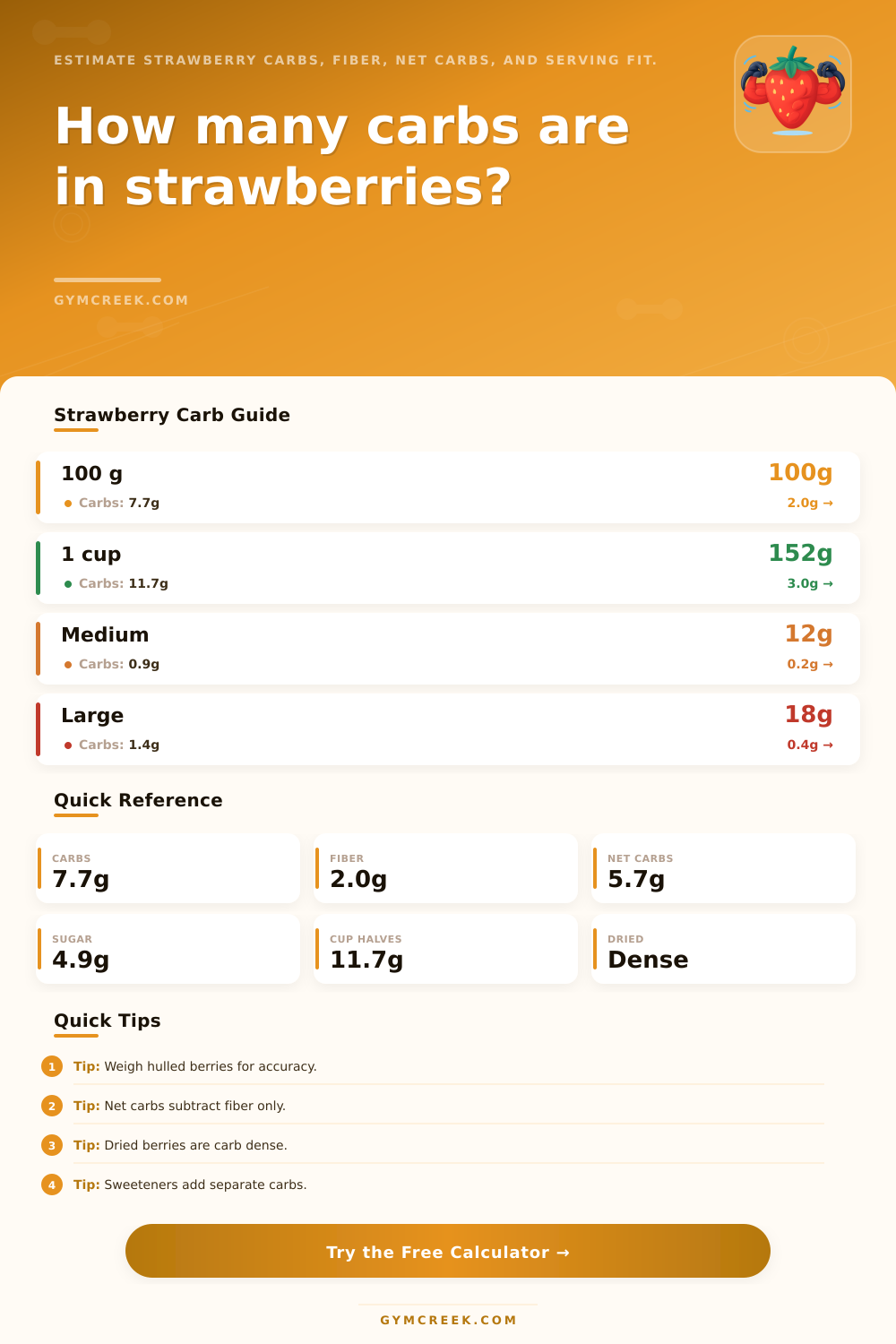
| Strawberry Serving | Edible Weight | Total Carbs | Net Carbs |
|---|---|---|---|
| 100 g hulled | 100 g | 7.7 g | 5.7 g |
| 1 cup halves | 152 g | 11.7 g | 8.6 g |
| 1 cup whole | 144 g | 11.1 g | 8.2 g |
| 8 medium berries | 96 g | 7.4 g | 5.5 g |
| 6 large berries | 108 g | 8.3 g | 6.1 g |
| Prep Form | Carb Factor | Fiber Factor | Watch Point |
|---|---|---|---|
| Fresh raw | 1.00 | 1.00 | Baseline |
| Frozen unsweetened | 0.98 | 1.00 | Drain liquid |
| Pureed | 1.00 | 1.00 | Weigh puree |
| Cooked compote | 1.12 | 0.95 | Water loss |
| Dried berries | 7.20 | 5.80 | Very dense |
| Ripeness Or Hull | Carb Effect | Fiber Effect | Accuracy Note |
|---|---|---|---|
| Firm berries | Lower sugar | Slightly higher | Tarter profile |
| Ripe red | Baseline | Baseline | Best default |
| Peak sweet | Slightly higher | Similar | More sugar |
| Whole entered | Caps removed | Mass reduced | Use 94% edible |
| Deep trim | Less edible | Small loss | Use 90% edible |
| Serving Context | Typical Portion | Carb Target | Best Check |
|---|---|---|---|
| Low net snack | 80 to 120 g | 10 to 15 g | Net carbs |
| General snack | 1 cup halves | 15 to 25 g | Total carbs |
| Pre-workout | 1 to 2 cups | 25 to 45 g | Carbs per kg |
| Recipe math | Weighed grams | Per serving | Edible yield |
| Fiber focus | With chia | 4 to 8 g fiber | Fiber share |
💡Tips
A plastic clamshell of shiny red berries sits in your hand as you hover before produce aisle. Crisp and sweet, they seem harmless, until you’re counting carbs to manage your blood sugar, follow a particular diet regimen, and recognize that the uncomplicated appearance hides all kinds of assumptions about nutrition. How ripe is it? Are you prepared? Even the hull itself change how much you actualy eat without you knowing it. Before you know it, a handful is a snack; or half of your daily carbohydrates, depending on whether you counted those factor.
Enter this calculator, which does the hard work for you after you input your unique variables; and learn which ones matter so that your guesswork becomes more strategy. A strawberry isn’t a constant amount of anything. How much water is inside depend entirely on when the berry was harvested and how long it’s been sitting around since then. If you dehydrate your strawberries, you’re going to lose all that water but retain all those carbs. This concentration effect mean a small handful of dried berries will have much higher carb density then a giant bowl of fresh berries.
How to Count Strawberry Carbs Accurately
The calculator adjust its baseline numbers accordingly, taking into account if you’re using dried versus fresh (or even frozen) fruit. Keep in mind that weight and volume can show very different results depending on moisture content. And then we have the question of the weight of food vs. This refers to weight of whatever it is you’re eating. When you weigh all those berries on the scale (along with their green stems and caps), and then pick them off and leave only the fruit flesh, you’re counting plant material which doesn’t end up in your digestive tract as part of your carbohydrate load.
So the calculator allow you to indicate whether your weight reading includes berry hulls (non-edible plant material) or just represents the edible flesh. By using a reduction factor to remove the non-food portion, your carb count will reflect only that portion of the food you eat. That’s a tiny tweak by itself, but when you do this every day for a week it adds up, the more accurate you can be about what mass you are recording the better.
There is another factor here that is quieter but just as important: ripeness. Strawberries becomes sweeter as they get softer and deeper-colored. Early-summer berries is still starchier (and thus firmer, and slightly more tart). These berries has fewer simple sugars than a ripe-and-ready strawberry picked in late July. By choosing a level of ripeness, the tool adjust the mix between sugar and fiber in the overall carbs. That makes a difference to how quickly it causes a spike in blood glucose; because sugar does this much more rapidly then fiber or other complex carbs. Notice how that change show up in the output, and how the variation of nature affects your own nutritional goals.
It gets trickier when we add additional ingredient. A dollop of yogurt or spoonful of honey adds other carbs that are unrelated to the actual fruit. To help with this, the calculator break out those additions from the base ingredient (the strawberries) so you can see how much sugar comes from the fruit versus your added extras. This also lets you know whether you’d rather cut back on the sweetener than on the portion size. Perhaps you’ll find you’re happier with just as many berries but less syrup to get you where you need to be.
There are also handy preset measurements (like eight medium berries, one cup of halves) built into the reference table that you can use as sanity checks on any measurements you enter manually. If you’re way off base with what you’ve measured versus their standard averages, it might of been time to double check what kind of fruit you chose to weigh, or how ripe it was. The key to making this work well is considering the presets as anchors and the custom field as something that can help you fine-tune your own information.
It connects the dots between the generalized info available to us about nutrition and what’s actualy on our plates. So yes, there are carbs in strawberries. But knowing them doesn’t have to be perfect. You can just be aware: knowing how they change based off ripeness, hulling, add-ins, and water loss lets you ditch the guesswork and take control of things. That’s where the calculator up top comes in: it provides precision instead of vagueness. These numbers aren’t guesses. Instead, they represent what is on your plate, which lets you enjoy the sweetnes without any surprises.