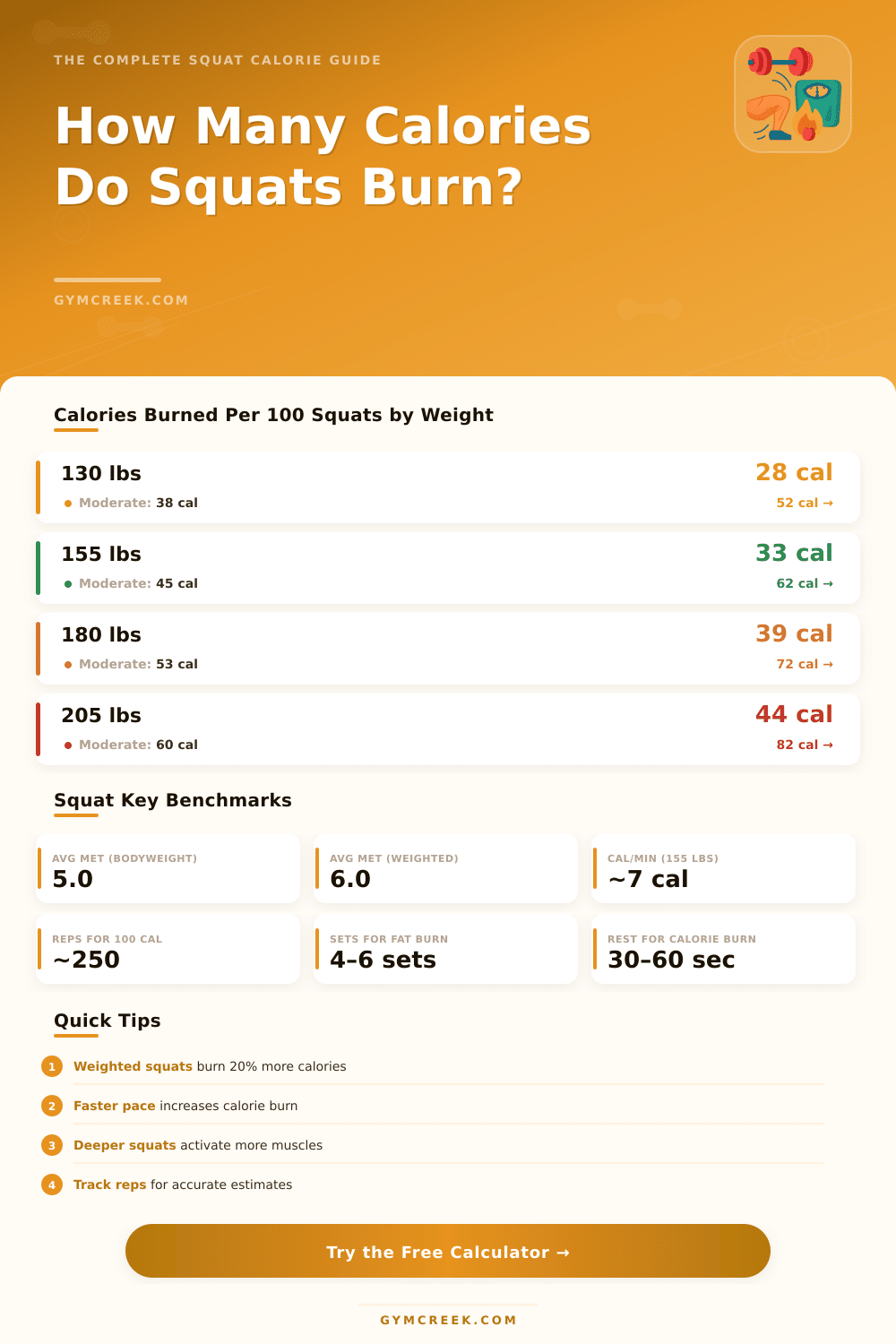
🏋 Squat Calories Burned Calculator
Estimate how many calories you burn doing squats based on your weight, reps, sets, and intensity level.
| Body Weight | Bodyweight (MET 5.0) | Weighted (MET 6.0) | Jump Squat (MET 8.0) |
|---|---|---|---|
| 120 lbs (54 kg) | 26 cal | 31 cal | 41 cal |
| 140 lbs (64 kg) | 30 cal | 36 cal | 48 cal |
| 155 lbs (70 kg) | 33 cal | 40 cal | 53 cal |
| 170 lbs (77 kg) | 37 cal | 44 cal | 58 cal |
| 185 lbs (84 kg) | 40 cal | 48 cal | 64 cal |
| 200 lbs (91 kg) | 43 cal | 52 cal | 69 cal |
| 220 lbs (100 kg) | 47 cal | 57 cal | 76 cal |
| 250 lbs (113 kg) | 54 cal | 65 cal | 86 cal |
| Goal | Sets | Reps per Set | Rest Period |
|---|---|---|---|
| Strength | 3–5 | 1–5 | 2–5 min |
| Hypertrophy (Size) | 3–4 | 6–12 | 60–90 sec |
| Muscular Endurance | 2–4 | 15–25 | 30–60 sec |
| Calorie Burn / Fat Loss | 4–6 | 15–20 | 30–45 sec |
| Athletic Power | 3–5 | 3–6 (explosive) | 2–3 min |
| Beginner / General Fitness | 2–3 | 10–15 | 60–90 sec |
| Level | Men (% of Body Weight) | Women (% of Body Weight) | Example (155 lbs person) |
|---|---|---|---|
| Beginner | 0.75x BW | 0.5x BW | 116 / 78 lbs |
| Novice | 1.25x BW | 0.75x BW | 194 / 116 lbs |
| Intermediate | 1.5x BW | 1.0x BW | 233 / 155 lbs |
| Advanced | 2.0x BW | 1.5x BW | 310 / 233 lbs |
| Elite | 2.5x+ BW | 2.0x+ BW | 388 / 310+ lbs |
Whether you’re looking to gain strength, gain muscle, or even just lose a few pound, one of the best exercises you can include into your fitness routine is the squat. Squats burns the most calories of any exercise due to the fact that it engages the largest muscle groups in the body at once. By understanding how many calories are burned by squats during a session, you can better understand your progress towards your goal of either losing weight or gain muscle, information that a squat calories burned calculator makes available through the use of it.
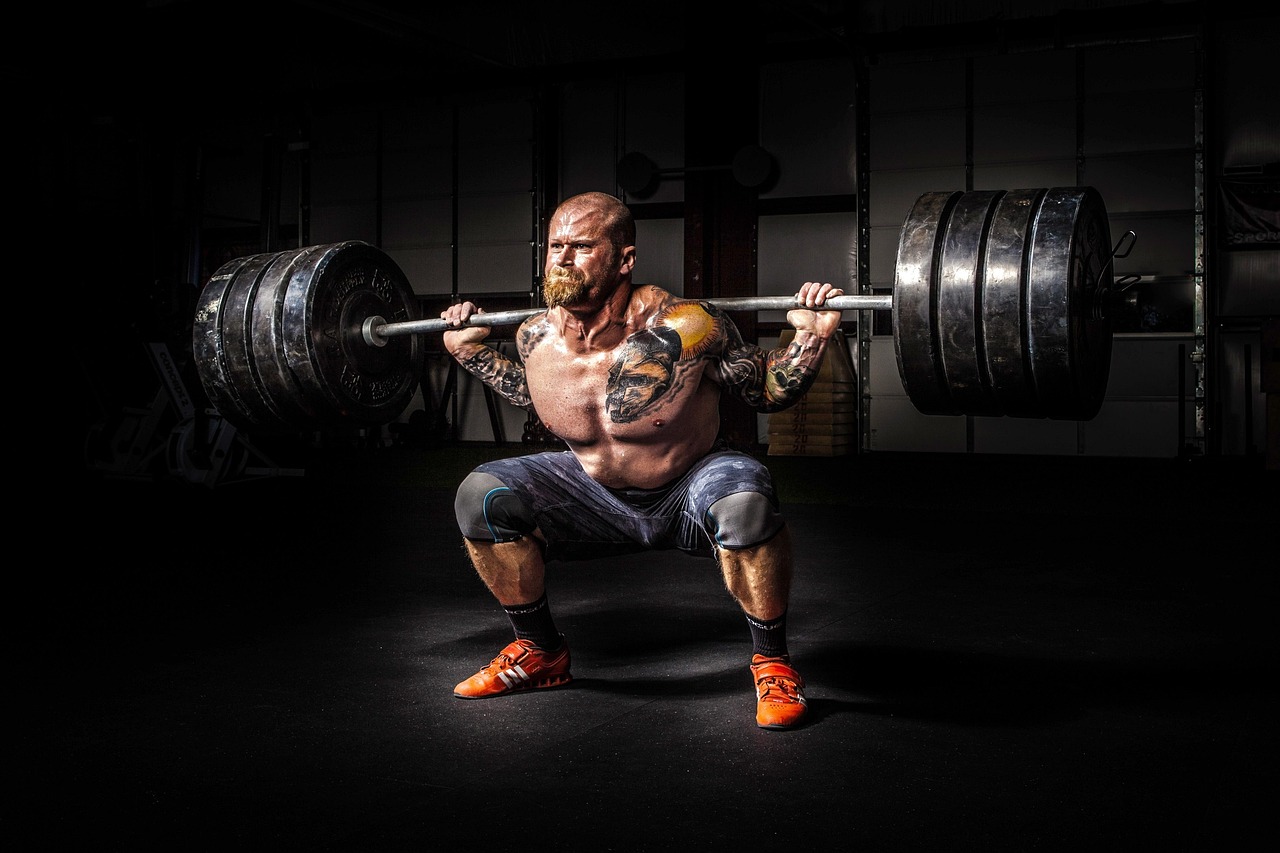
The number of calories burned during squat exercises depends upon a variety of individual factors related to the specific individual that are performing the exercises. Factors related to calories burned during squats include the individual’s body weight, the intensity of the squat exercises, the number of repetitions of those exercises that are performed, and the types of squat that are performed. For instance, an individual that weighs 180 pounds who performs heavy squats will burn more calories than an individual that weighs half that weight who perform body weight squats.
Squat Calories Burned Calculator
How Many Calories Do Squats Actually Burn?You can determine the number of calories burned during squat exercises by calculating the MET (Metabolic Equivalent of Tasks) ratings for each type of squat exercise performed. MET values range from 1 for the most sedentary task to over 8 for the most vigorous exercise types. Body weight squats burn around 5 METs, weighted squats burn around 6 METs, and jump squats burns around 8 METs. MET values for each exercise can help to determine the calorie burn rate for each type of squat exercise.
Factors related to calories burned during squats include the body weight of the individual performing the exercises. Individuals that weigh more pounds will burn more calories than individuals that weigh less pounds. Other factors related to calories burned during squat exercises include age and gender. Men tend to burn more calories than women with similar body weight and ages due to the difference in muscle mass between the genders. Additionally, younger individuals burns more calories than older individuals due to the different metabolic rates of those age groups.
Factors related to the type of squat exercises performed. For instance, traditional barbell back squats burn the most calories due to the number of muscle group engaged during the exercise. Jump squats burn a significant amount of calories due to the intense nature of the exercise. However, static exercises like wall sits will burn the least amount of calories of any squat exercise.
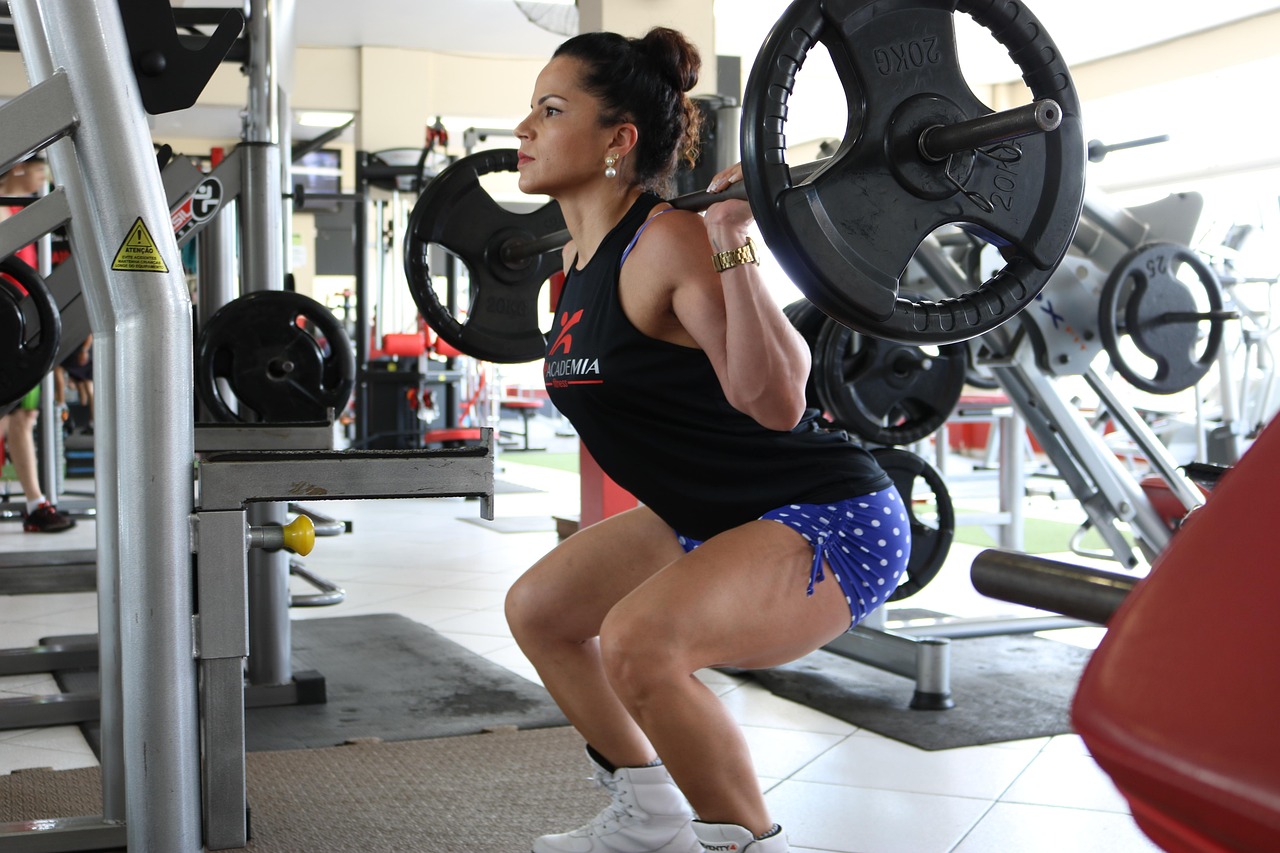
Factors related to the structure and design of the squat exercise routine. A squat routine that burns a higher number of repetitions with shorter rest period between sets will burn more calories than a routine that incorporates heavy squats with longer rests between sets. Therefore, those who are attempting to lose weight may want to use the first routine, while those that are focused upon gaining strength with their squats should utilize the second routine.
Finally, an often-underestimated factor related to the calories that may be burned during squat exercises is the “afterburn” effect (also referred to as EPOC or Excess Post-Exercise Oxygen Consumption). After performing intense squat exercises, the body continues to burn calories after the squat exercises are completed as the body restores itself back to its pre-exercise state. This “afterburn” effect burns between 6 and 15 percent more calories than those performed during the actual squat exercises. As shown in the calculator above, this bonus of calories burned is essential in determining the total amount of calories burned during a squat exercise routine.
While squat calories burned calculators may be helpful in providing an estimate of the number of calories burned after performing a set number of squat exercises, the most important factor related to an individual’s fitness is their level of consistency with performing those exercises. Regardless of the number of calories burned during the performance of squats, an individual will experience the benefits of incorporating squat exercises into their fitness routine. Therefore, tracking the number of calories that an individual burns during their squat routine is not nearly as important as ensuring they are consistently perform those squats.
One method of varying the calories burned during squat exercises is to incorporate different types of squat variations into an individual’s training routine. For instance, an individual performing the squats may perform body weight squats in place of barbell squats to decrease the strength requirement of the body of the individual performing the squats, while exercises like jump squats can be used to increase the number of calories burned during those squat exercises.
To maximize the benefits of squat exercises, an individual should also incorporate proper nutrition into their training routine. For instance, protein will help the body to recover after performing squats, while carbohydrates will provide the body with the energy required to perform those squats. Additionally, ensuring that the body is eating meals at the appropriate times will ensure both the performance and recovery of the body during its training.
For new fitness enthusiasts who are just beginning to establish a fitness program for themselves, the numbers associated with calories burned during squat exercises may seem intimidating. However, it is recommended that beginners begin with body weight squats of their own designed strength. As their strength increase, they can begin to incorporate additional strength into their squat exercises to increase the number of calories that their body burns during those exercises.
For advanced athletes who have developed strength and endurance in their squats, the calories burned calculator can also be helpful in determining their goals for their training program. For instance, competitive athletes may use the calorie calculations to determine the calories that the athlete must burn in order to lose weight or gain muscle. Additionally, athletes of all experience levels can use these calculations to ensure that the calories burned during their squat exercise program matches their caloric intake to ensure that their diet support their squat exercise program.
Beyond the benefits of strength and muscle gain that squats offer to athletes of all levels, few exercises offer the same benefits to the body as squats provide. Few exercises will help to burn as many calories as squats will burn, improve the metabolism of the body, and burn calories at the same time. Furthermore, understanding the number of calories an individual burns during their squat exercises is an important factor in managing their training and nutritional program.
Finally, the calculations related to calories that are burned by squats are estimates only. No individual will burn the same number of calories as another individual due to the body’s metabolism and other factors that may change from day to day. Therefore, while the estimates are of great benefit to athletes of all experience levels, individuals should also use these calculations to make decisions regarding their training program, but should also continue to listen to their bodies.