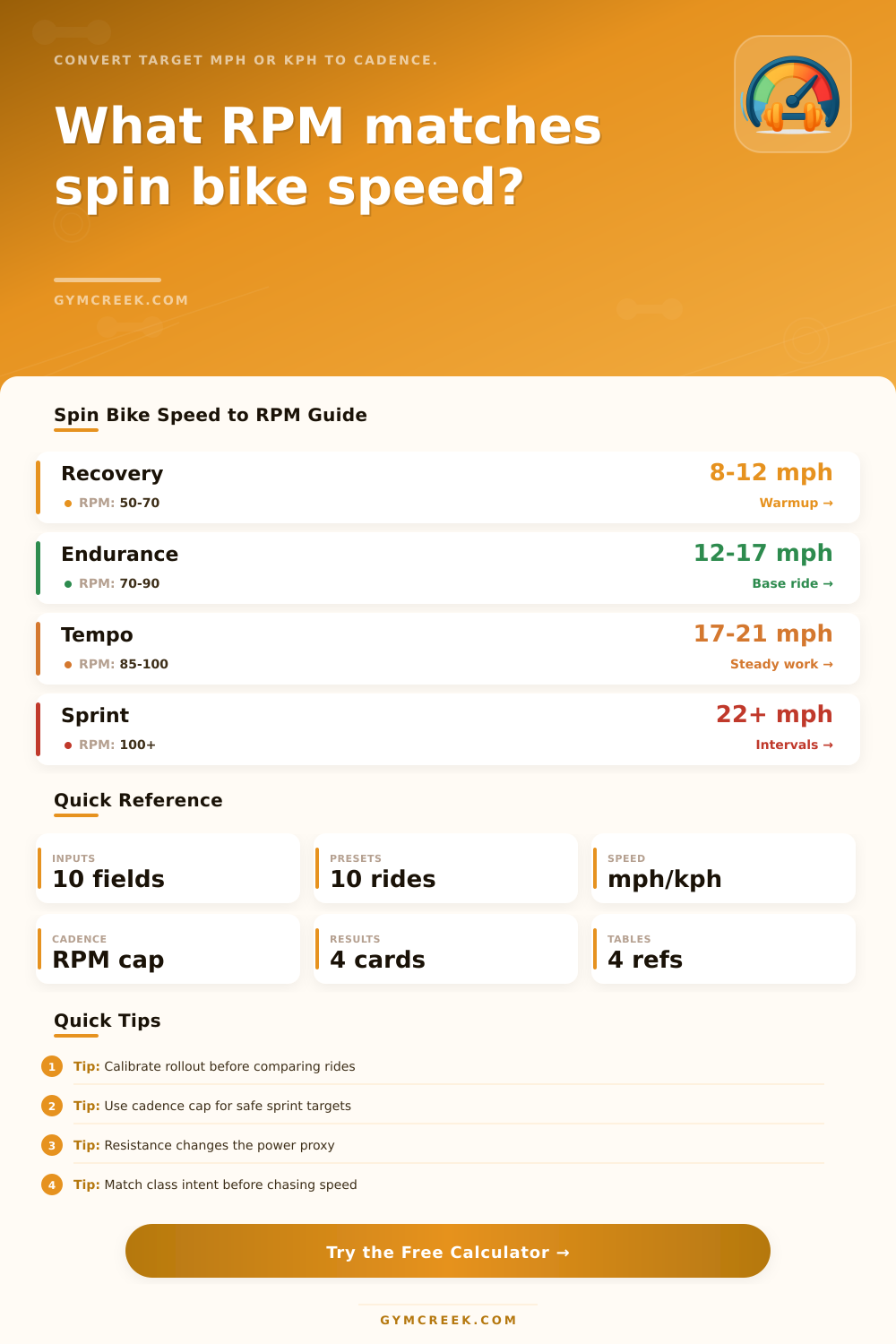
Speed to RPM Calculator Spin Bike
Convert a target spin-bike speed into required cadence RPM using MPH or KPH, wheel circumference, gear ratio, resistance, class type, duration, rider level, and a cadence cap.
📌Spin Presets
Presets are examples for indoor cycles. Replace them with your console speed, effective wheel rollout, resistance scale, class format, rider level, and cadence cap.
⚙Calculator Inputs
Spin-bike speed to RPM result
Enter target speed, rollout, gear ratio, resistance, class type, duration, level, and cadence cap.
📊Metrics Grid
📑Reference Tables
| Rule | Formula | Input | Result |
|---|---|---|---|
| Convert target | MPH x 1.609344 = KPH | Target speed | Metric speed basis |
| Raw cadence | KPH x 1000 / circumference / gear / 60 | Rollout and ratio | RPM before load |
| Load correction | Raw RPM / load factor / calibration | Resistance and bike behavior | Required RPM |
| Distance | Speed x duration hours | Target speed and time | Miles or kilometers |
| Zone | RPM | Class Feel | Best Use |
|---|---|---|---|
| Recovery | 50 to 70 | Light legs | Warmup, cool-down, low-impact days |
| Endurance | 70 to 90 | Smooth aerobic | Zone 2, longer studio rides |
| Tempo | 85 to 100 | Steady pressure | Class blocks and rhythm work |
| Threshold | 95 to 110 | Hard repeatable | Intervals and climbs with control |
| Sprint | 110 plus | Very fast | Short surges only |
| Class Type | Preferred RPM | Resistance Cue | Pacing Rule |
|---|---|---|---|
| Recovery | 50-70 | Light | Keep breathing relaxed |
| Endurance | 70-90 | Light to moderate | Hold steady for the full block |
| Tempo | 85-100 | Moderate | Use small speed changes |
| Climb | 60-85 | Firm to heavy | Favor torque over frantic cadence |
| Sprint | 100-125 | Moderate to firm | Limit to short repeats |
| Setup | Rollout | Gear Ratio | RPM Effect |
|---|---|---|---|
| Compact studio bike | 1.70 m | 0.90-1.00 | Higher RPM needed |
| Typical spin bike | 1.90-2.10 m | 1.00 | Middle reference |
| Road-style console | 2.105 m | 1.00-1.10 | Lower RPM needed |
| Virtual gear bike | 2.10-2.30 m | 1.10-1.40 | Much lower RPM needed |
💡Tips
A spin bike will displays a number on its console that represents the speeds at which the individual is spinning on the bike. However, the number that is displayed on the spin bike console arent always a representation of the workload that the individual is performing. The number that is displayed on the spin bike is calculated using a circumference of the wheel, the gear ratio of the bike, and the resistance level of the bike.
Because each of these factor can impact the calculated number, two individuals can be spinning at the same rate on a spin bike, but experience a different level of effort. This difference in effort is due to the factor of cadence, which is the number of revolutions per minute that an individual complete on the spin bike. If an individual isnt aware of the cadence that they should be achieving while using the spin bike, they may either spin too fast or too slow on the bike.
How to Find the Right RPM on a Spin Bike
To calculate the cadence that an individual should achieve on a spin bike, several different factor must be known and entered into a cadence calculator. These factors include the circumference of the wheel of the spin bike, the gear ratio of the bike, the resistance scale of the spin bike, the type of class that an individual is to be attending on the spin bike, and the length of the class session. Additionally, the cadence calculator must also know the level of the individual that is using the spin bike, as well as the cadence cap for that individual.
Based off these different inputs, the cadence calculator can calculates the required RPMs for that individual, the training zone that they will be in while using the spin bike, the total distance that they will travel during the class, and the power that that individual can produce while spinning the bike. Each spin bike have different training zones within which an individual should rotate their cadence throughout their session on the spin bike. Recovery intervals should occur between 50 and 70 RPMs, endurance intervals between 70 and 90 RPMs, tempo intervals between the mid-nineties RPMs, and sprints should occurs above 100 RPMs.
If the cadence that an individual calculates for their spin bike is outside of these required zones, then that individual can either adjust the resistance that they use while on the spin bike. The cadence calculator allow individuals to understand these differences before there legs begin to feel fatigue. Due to the fact that a spin bike is slightly different calibrated than the others, each bike may produce different result for each individual.
For this reason, individuals should keep the wheel circumference, gear ratio, and resistance level of the spin bike consisten during each spin bike session. If they dont keep these factors the same, the cadence that they calculate for themselves will not be consistent from session to session. Cadence cap are used for spin bikes to allow for individuals to not spin at rates that may create physical strain upon those individuals.
Cadence caps may be lower for beginners on spin bikes than for an advanced rider. If an individual sets a cadence cap for themselves within their spin bike cadence calculator, the calculator will not provide a suggestion for cadence for rates above the cadence cap that the individual has set. Additionally, the power that each spin bike calculator estimate for each individual isnt precise, but it does provide individual an understanding of the relationship between the resistance, cadence, and power for themselves while using the spin bike.
The most common mistake that an individual may make with a spin bike cadence calculator is to treat the number that is displayed on the spin bike as the goal for themselves. The number that is displayed is only one of the output variables for the spin bike. The resistance of the bikes allow individuals to change the type of workout that they are performing on the spin bikes.
Increasing the resistance allow for individuals to increase the intensity of their spin biking workouts. Instead of focusing on achieving the displayed number on the screen, individuals should focus on increase the resistance level of their spin bikes. This removes the guesswork that individuals may feel when using spin bikes.
The cadence calculator allows individuals to understand the relationship between the number on the screen and their physical feelings in their legs. Thus, the individual know if they are on track or if the resistance level for the spin bike needs to be changed.