
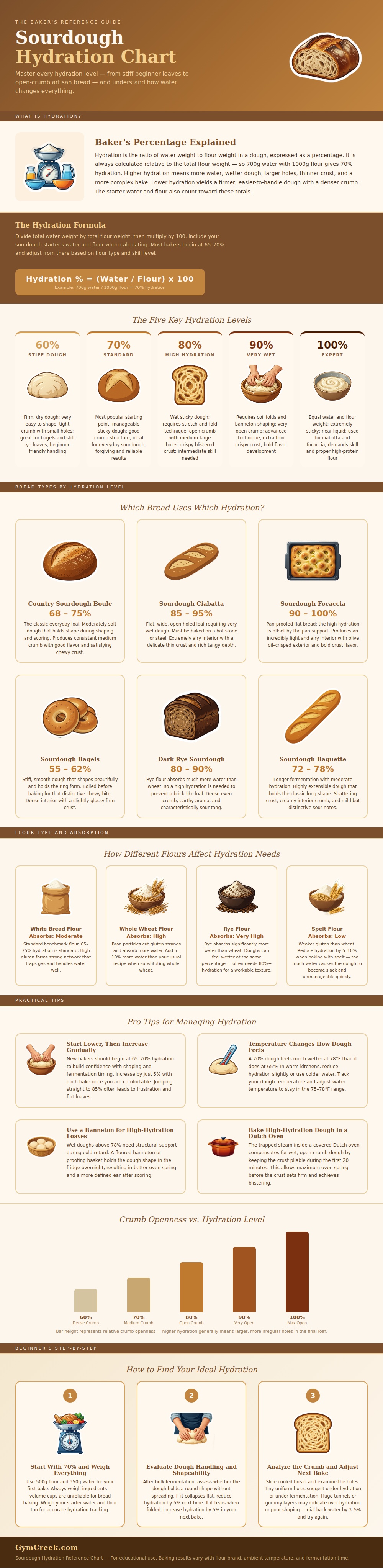
Sourdough hydration are the ratio of water to flour in a sourdough recipe and determines the texture and structure of the finished loaf of bread. To calculate the hydration level of a sourdough recipe, divide the total weights of the water by the total weight of the flour in the recipe and multiply the results by one hundred. Include the flour and water in the sourdough starter in the weights of the flour and water in the recipe calculation.
A seventy percent hydration level is common in sourdough bread recipes because this hydration level provide enough moisture to help form a good structure in the sourdough bread but does not make the dough too sticky to be easy to handle. The hydration level of sourdough dough impact the dough during mixing, fermentation, and baking. Doughs with a lower hydration level are firm and easy to shape into the desired form.
How Water to Flour Ratio Affects Sourdough Bread
Low hydration sourdough doughs produce a tight crumb with small hole and are suitable for bagels and rye loaves as they produce a chewy texture when baked. Doughs with a high hydration level is stickier and more extensible. They can spread out more when the baker dont take care in handling the sourdough dough with a high hydration level; however, the crumb structure produces larger hole than sourdough doughs with lower hydration levels.
The type of flour used in sourdough recipes impact the hydration level requirements of the sourdough recipe. White bread flour is used as the baseline hydration level for sourdough bread recipes. Flour that contains bran, such as whole wheat flour, absorbs more water then white bread flour and requires more water to achieve the same dough consistency with sourdough starter as recipes that use only white bread flour.
Rye flour absorbs water more than whole wheat flour and requires a high hydration level in sourdough bread recipes, even though the resulting sourdough bread may appear more denseness. In sourdough recipes using spelt flour, adding too much water weaken the dough structure. Therefore, sourdough recipes using spelt flour require a lower hydration level.
The temperature of the kitchen can impact the hydration levels of sourdough recipes. A sourdough dough with a specific hydration level can feel firm in a cool kitchen but may feel soupy in a hot kitchen. Bakers often adjust the temperature of the water used in sourdough recipes rather than the total amount of water to dough to control the hydration level of sourdough recipes.
Bakers adjust the water temperature so that sourdough dough ferment at a consistent rate. High hydration levels require adjustment in the dough shaping techniques. For sourdough bread recipes with a hydration level higher than seventy-five percent, bakers use the stretch and fold method for sourdough dough for more even rising of the dough rather than the traditional method of knead sourdough dough.
Placing sourdough bread in bannetons or proofing baskets during the rising process provides support for the sourdough bread and prevents the sourdough bread from spreading out too much before baking. Placing sourdough bread in an Dutch oven during baking allows the sourdough bread to trap steam, which allows the crust to remain flexible so that the sourdough bread can expand to its maximum size during baking. Hydration levels should of be a variable that bakers adjust in sourdough bread recipes.
Bakers should start with a seventy percent hydration level and adjust hydration levels in five percent increments to determine the effect of each hydration level on the sourdough bread. Bakers should examine how the sourdough dough behaved during the shaping of the sourdough bread and examine the size of the hole within the crumb structure of the sourdough bread after baking. If the holes within the sourdough bread crumb are small and even, add more water to the sourdough bread.
If the sourdough bread has large tunnels or a gummy center, the sourdough dough was too wet for the flour in the recipe. By making slight adjustments to the hydration levels of sourdough bread recipes, bakers can eventualy create sourdough bread with the crumb texture that bakers desire.
