
You walk into gym. There’s the Smith machine. It’s a bar with some sort of mechanism that locks it in place along vertical rails.
It appears to be a regular old Olympic bar. You pick up handles and get ready to bench press or squat. Is it as heavy as a freestanding bar?
Does it seem clunky? It is heavier then expected. Yep.
That’s not your imagination. The Smith machine alters the physics of lift. And one component of that equation are the weight of the bar.
If you guess wrong, assuming it’s forty-five pounds, you’re going to either under- or overload your lifts. This impact injury risk and tracking progress. Every Smith machine have its own bar, and every bar weighs something different.
So there’s really no rule of thumb for how much the bar weigh. Some are around ten pounds and some are almost one-hundred pounds. How do you go about training without knowing exactly how much your bar weigh?
Understanding Smith Machine Bar Weight Variations
Why Smith Machine Bars Vary in Weight
Different machines will has different designs and different counter balance systems. Even different brands like Hammer Strength versus Life Fitness have their own internal workings. Some may be purely using gravity to counteract weight of the bar while others may use gas springs to counteract the weight of the bar.
This mean that sometimes a fifty-pound steel bar might feel lighter because the machine uses springs or pulleys to offset the weight. Don’t guess; check out the bar weight. It should be somewhere on frame.
How Counterbalance Systems Affect Lifts
The issue arises when working out at home. Many home machines such as the Total Gym or Powerline specify the weight of the bar in their manual. And the bars is generally going to be lighter than what you’d find in a commercial gym.
You can expect that your home set-up is somewhere between 15-25 lbs for the bar, which lightens the load on the floor while also making the machine more easily movable. This causes weight to vary due to the counterbalance mechanism. For instance, if they put in heavy bar it will take more force to get the bar moving.
This might be intimidating for someone new to lifting weights. To fix this issue manufacturers uses pulleys and/or springs. Pulleys and springs makes the bar appear less massive by decreasing its effective inertia.
As you lift, you’re still fighting gravity and mass of the bar. But now you’ll notice that there’s a bit less weight to contend with. This alter your calculations for training.
Finding the Exact Bar Weight
Look for a sticker on the uprights or the crossbeam. That is where most companies put their sticker. The sticker will say what weight it is, typically rounded to the nearest 5 or 10 lbs.
Alternatively, just look at gym’s manual online, or find a trainer. Sometimes, googling the model number along with words ‘bar weight’ can give you some info. That way you avoid collecting bad training data.
Adjusting Training for Smith Machine Differences
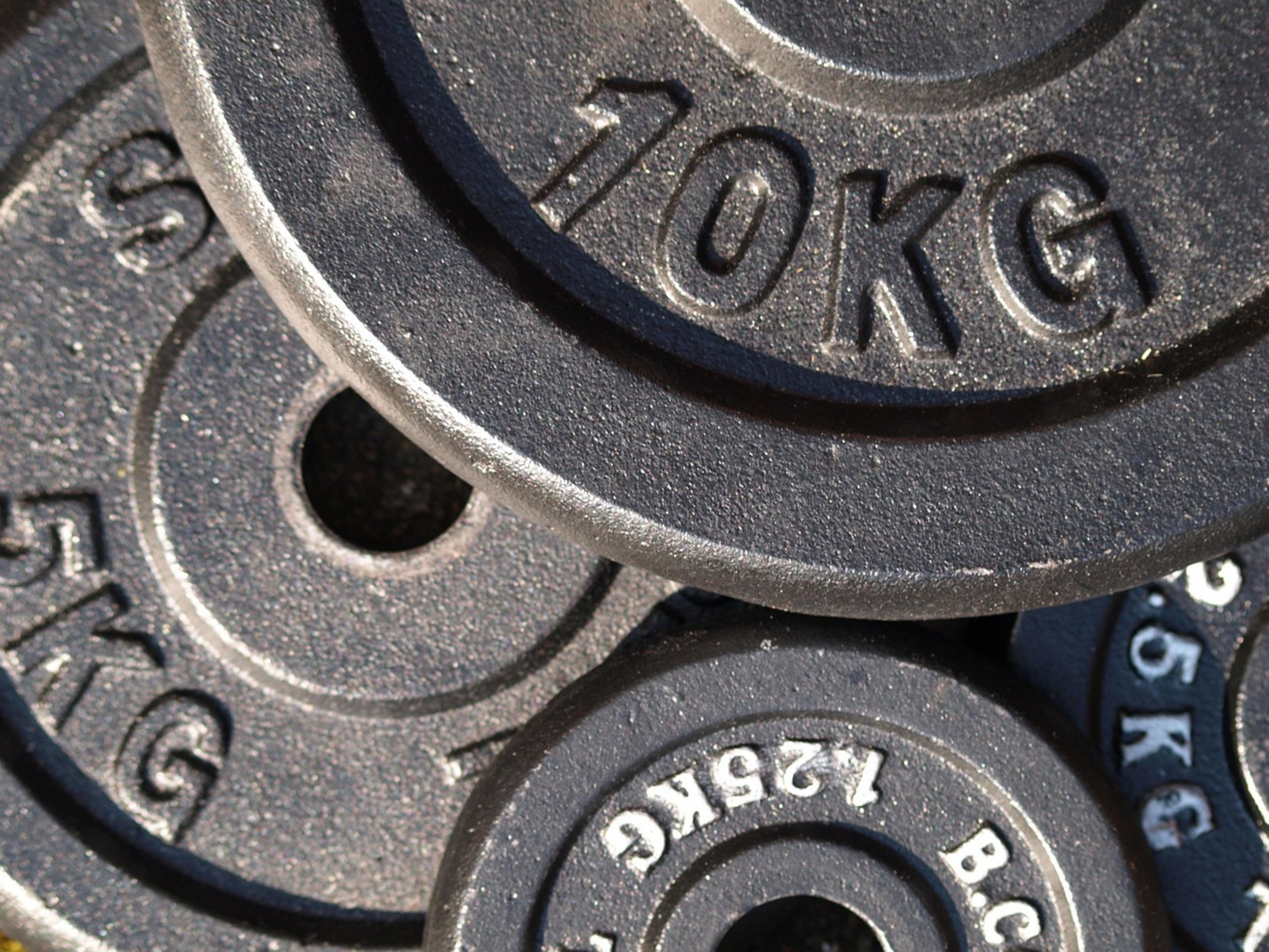
You’ll need to adapt your plate loading depending on whether you’re using a free bar or a Smith machine. Let’s say the Smith bar has an effective weight of only twenty pounds, whereas you were previously squatting one hundred pounds on a free bar. That means you’ve reduced your load by thirty-five pounds.
That’s a big difference and can derail your strength curve and throw off your confidence. Advanced lifters uses this distinction. Maybe they do a set of Smith machine presses at the end of a workout with the same amount of total weight as before.
Benefits and Drawbacks of Smith Machines
Because the bar is counterbalanced/lighter, it seem to be easier on the joints. Since the bar travels on a fixed path, there’s less demand on your stabilizer muscle. This allows them to train closer to failure or do more volume without worrying about having to drop the weight.
On one hand, you’re sacrificing some of the core stability benefit, but on the other, you’re gaining safety and isolation. Take into account the rail friction. Some Smith machines has gritty tracks which increase resistance.
This could make the bar seem heavy coming up and light going back down. The friction in the rails can create an uneven load profile, which makes it difficult to measure. High-quality brands like Rogue or Eleiko uses machines with smoother bearings.
You get what’s written on the sticker much better in terms of how it feels in your muscles. Accuracy and feel equal quality. The best thing to do is treat the Smith machine bar like a variable.
Don’t assume it’s equivalent to your free bar. Ask someone on staff. Read the label.
Tracking Progress with Accurate Data
If available, test it out with some plates you’re familiar with. After finding out what it weighs, jot it down. Include this piece of information alongside each Smith machine exercise in your logbook.
From there, your gains will be real and trackable. You lift to push your body in a controlled manner. That includes knowing exactly how much you’re moving.
With the weight of the bar, you transform a vague sensation into cold hard facts. Your numbers becomes something you can believe in. And when you believe your numbers, you don’t have to guess anymore…you get strong.
