Protein for Seniors Calculator
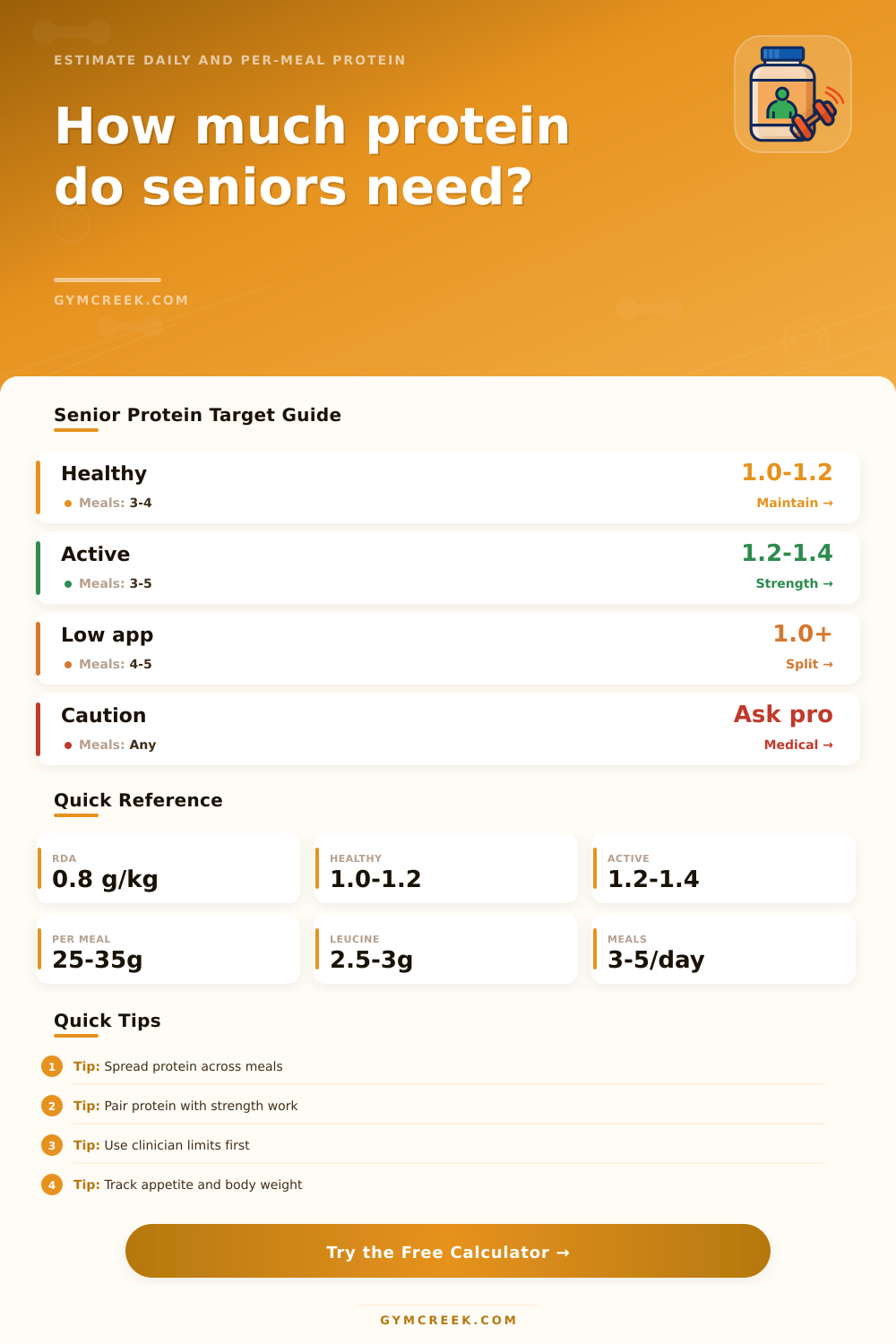
Estimate daily protein, per-meal protein, grams per kilogram, leucine trigger, and a practical range for older adults based on age, weight, activity, appetite, training, meals, medical caution, and goal.
📌Senior Protein Presets
Presets load realistic older-adult scenarios and immediately calculate a sample protein target.
⚙Calculator Inputs
Senior protein estimate
Enter your inputs to estimate daily protein, meal distribution, and leucine threshold.
📊Metrics Grid
📑Reference Tables
| Profile | Typical g/kg | Daily focus | Use when |
|---|---|---|---|
| Adult RDA | 0.8 | Minimum floor | General adult baseline |
| Healthy senior | 1.0 to 1.2 | Maintain tissue | Stable weight and health |
| Active senior | 1.2 to 1.4 | Support training | Walking, classes, lifting |
| Higher need | 1.3 to 1.5 | Protect lean mass | Weight loss or recovery |
| Meals/day | Per-meal aim | Leucine cue | Best use |
|---|---|---|---|
| 2 meals | 35 g plus | Often meets | Large appetite |
| 3 meals | 25 to 35 g | Target zone | Common routine |
| 4 meals | 20 to 30 g | May need focus | Low appetite |
| 5 to 6 meals | 15 to 25 g | Often lower | Small meals |
| Caution | Calculator action | Reason | Next step |
|---|---|---|---|
| No restriction | Uses full estimate | Standard planning | Track intake |
| Ask clinician | Shows moderate range | Needs review | Confirm target |
| Prescribed limit | Caps estimate | Doctor limit first | Use care plan |
| Kidney concern | Flags caution | Needs individual care | Ask provider |
| Step | Formula | Input | Output |
|---|---|---|---|
| Convert weight | lb / 2.2046 | Body weight | kg |
| Set density | Base plus modifiers | Goal, age, training | g/kg/day |
| Daily target | kg x g/kg | Weight and density | grams/day |
| Per meal | Daily / meals | Meal count | grams/meal |
💡Tips
Due to the changing protein requirements of older adult, older adults can feel less energetic and have slower recovery time from illnesses or injuries. The muscle tissue of older adults are not as effective at utilizing the amino acids from the protein in they’re diet, meaning that older adults need to consume more protein to maintain their muscle mass. While no changes need to be made to an individual’s diet overall, it is important for older adults to monitor their protein intake.
The calculator ask for several different inputs from each individual to calculate the protein needs of that individual. These different questions include the age of the individual, their weight, and their activity level. For example, anabolic resistance increase after an individual reaches the age of seventy years, meaning that older adults require more protein to achieve the same results in the muscles of their body as younger individuals.
Protein Needs for Older Adults
An individual’s activity level indicate how much protein the body needs to recover from the physical activity that they perform. For instance, resistance training will increase the useful of the protein the body consumes. An individual’s appetite level is also an input into the calculator of protein needs, as many older adults have smaller portions of food at meals due to issues like dental health or digestion, meaning that these individuals may not consume enough protein at each meal.
Each of these different inputs will alter the protein requirements calculated for each individual. For example, individuals who walk may require different amount of protein than those who perform resistance training. Additionally, individuals who eat three large meals may have different protein requirements for each meal than individuals who eat five smaller meals per day.
Thus, the calculator provides the protein requirements calculated as a range for individuals. This range allows for the individual to have different protein goal for their body, such as maintaining muscle or recovering from an illness. One of the errors that individuals may make is consuming all of the protein that their body require from protein in one large meal at the end of the day.
Instead, people should consume protein in various meal throughout the day. Additionally, another error is to apply the same recommendations for protein intake for younger adults to themselves. Younger adults require less protein than adults of any other age due to the decreased efficiency of their body to utilize the protein that they consume.
Thus, the adjustments to the requirements that are included in the calculator allow for individuals to avoid having to calculate these adjustments themselves. Various different variable can impact the protein that each individual consumes, such as dental health, the protein content of medications, and appetite. For instance, if an individual experiences a drop in appetite due to an illness, it is important for those individuals to track their appetite and protein consumption level separately, even if their protein requirements have not changed according to the calculator.
The results of the calculator include information about the leucine threshold of an individual’s muscle. The leucine threshold is an important metric because leucine is the amino acid that trigger muscle protein synthesis. The muscle of an individual who is over the age of forty contain more muscle fibers that are comprised of older muscle tissue, meaning that these muscles require a specific amount of leucine to be supplied with each meal in order to initiate muscle protein synthesis.
Foods that contain leucine include eggs, dairy products, fish, and lean meats, but the portions of these foods that many individuals consume may not contain enough leucine to meet the threshold for protein synthesis. Thus, the protein intake that is calculated for each meal is useful in enabling individuals to plan their meals according. If the calculated amount of protein for each meal is higher than what an individual can consume, they do not need to force themselves to consume these amount of protein in each meal.
Instead, they can incorporate a snack that contains protein into their day that occur in the middle of their meals. Additionally, they can increase the protein content of the meals that they consume. However, if an individual consumes the amount of protein calculated in the recommendations of the calculator, they can continue to consume protein at these level.
Thus, the calculator enables individuals to make eating decisions regarding their protein intake. By incorporating the protein intake calculator into the routine of each individual, that individual will develop a habit of monitoring their consumption of protein. This habit will allow them to recognize which meals contain enough protein of their body to enable them to maintain their mobility and their independence from the need for assistance from other.
Thus, the calculator simplifies the mathematics of protein calculations for individuals to focus upon their eating habits and conversation with their clinician.