Running Cadence Target Calculator
Estimate a practical step-rate band from your current cadence, current pace, goal pace, height, measured stride length, terrain, experience level, fatigue, and injury-risk preference.
📌Runner Presets
Presets fill every input with realistic combinations. Use them to compare how the same runner changes cadence targets across roads, trails, hills, workouts, and risk profiles.
⚙Cadence Inputs
Running cadence target
Enter your current rhythm, pace goal, height, stride length, terrain, and risk preference to estimate a target cadence band.
📊Cadence Metrics
📑Running Cadence Tables
| Component | Your Input | Adjustment | Meaning |
|---|---|---|---|
| Current cadence | --- | --- | --- |
| Change Size | Typical Use | How to Apply | Watch For |
|---|---|---|---|
| 0-2 spm | Already close | Use cues only | Do not force it |
| 3-5 spm | Normal shift | Add short blocks | Breathing drift |
| 6-8 spm | Big change | Use drills first | Calf tightness |
| 9+ spm | Long project | Split over weeks | Form breakdown |
| Terrain | Cadence Bias | Band Width | Useful Cue |
|---|---|---|---|
| Road | Neutral | Moderate | Quiet feet |
| Track | Slightly faster | Narrow | Even rhythm |
| Trail or grass | Variable | Wider | Adapt steps |
| Hills | Shorter steps | Wider | Under hips |
| Preference | Change Cap | Best For | Coach Note |
|---|---|---|---|
| Protective | --- | --- | --- |
💡Cadence Tips
Your cadence is what propels you down road. It’s your step count per minute, its how many times your foot strike the pavement. And it’s something you tend to overlook, until it hurts.
While most runners obsess over their mile time or weekly run volume, a runner’s cadence impact energy expenditure. It also impacts the effect of every stride. Cadence is a mechanical consideration. When you increase speed, you lighten up the step, keeping your foot underneath your hip rather than allowing it to get ahead. That decrease vertical bounce and braking force that loads your hips and knees. At slower speeds, the stride length typically increase and lands further forward, often leading to overuse injuries. The trick here is knowing how fast to turn over, but not so fast as to make a change your body can’t sustain.
How to Find Your Best Running Cadence
So what’s the right target on any particular day? It depends on a few variables. A general starting point is your height. The taller you are, the more ground you’ll cover per stride for same amount of effort. Next up is current pace versus desired pace; the faster you run, the more it support a slightly quicker rhythm. Then there’s terrain, which varies. Hills and technical trails demand shorter strides that can adjusts quickly; road and track work best with steady stride. Weekly volume and fatigue plays a major role. If you’re tired (legs or otherwise), or if your miles has shot up lately, take any cadence jump conservativey.
Then there’s the “injury history” and “experience level.” A new runner or an old one coming back may get by on minor tweaks. This allows body to adjust to running without soreness setting in. An experienced runner who have never been injured might be able to kick it up a notch if the workout require it. Once you plug those factors in, the calculator crunch the numbers and spits out a target range based off your goal pace and current capabilities.
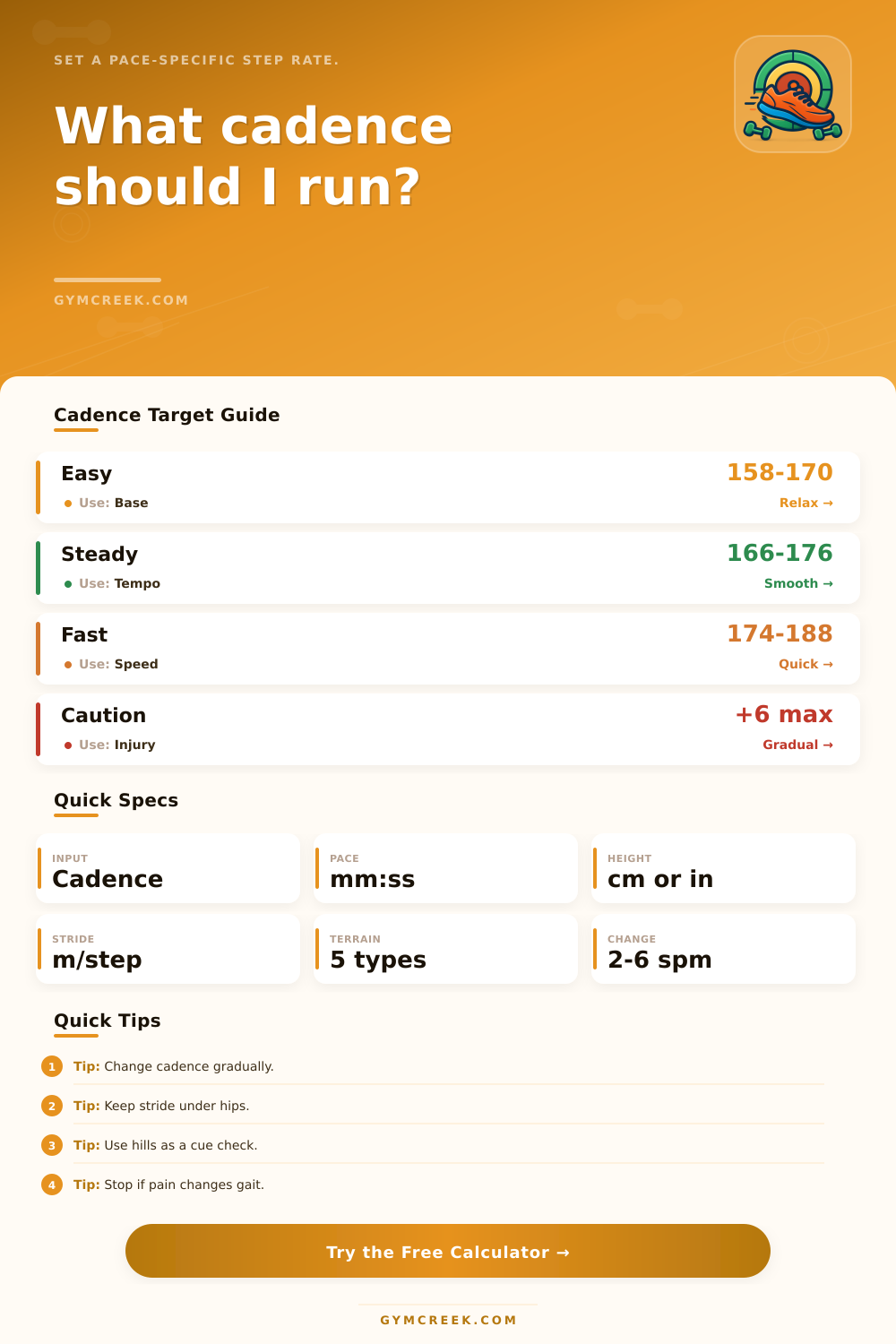
However, many runners mistake cadence for a hard-and-fast figure instead of steering cue. If you chase 180 steps/min during each run without regard for fatigue, terrain, or your own stride mechanics, you’re doing it wrong. Similarly, some will jump up by several step one week, resulting in form collapse or calf tightness. It is better to practice gradually in small blocks so that muscles and the nervous system can adapts together.
The tool also provide reference tables illustrating how various size changes affect things in real life. For small increments such as a couple steps/minute, it may be just a matter of paying close attention to your foot placement. Bigger ones could of include drill work and breaking into shorter segments before applying those to longer runs.
The tool’s caution score is based on the number of risk factors for that particular day. Instead, seek out a feel where you can make it flow smooth; one that doesn’t force itself. If you can take another step without tightening up and target seems within reach, it will likely stick. The body typically knows when the number mean work. Listening to that distinction makes what could be a mere suggestion into an effective habit.