Rowing Machine Weight Loss Calculator
Project rowing machine calories, weekly deficit, expected weight change, and sustainable loss range from body stats, 500m split or watts, stroke rate, drag factor, duration, sessions, calorie mode, and food deficit.
📌Rowing Weight-Loss Presets
Presets fill realistic rowing machine situations, including split-paced base rows, measured watts, monitor calories, interval sessions, and sustainable deficit checks.
⚙Calculator
Rowing weight-loss snapshot
Enter rower stats, rowing workload, schedule, calories, and deficit to estimate expected loss.
📊Rowing Metrics Grid
📘Reference Tables
| 500m split | Approx watts | 40 min monitor cal | Common use |
|---|---|---|---|
| 2:45 | 78 W | 408 kcal | Easy technique row |
| 2:30 | 103 W | 475 kcal | Beginner aerobic row |
| 2:15 | 166 W | 643 kcal | Steady fitness row |
| 2:00 | 203 W | 741 kcal | Firm tempo row |
| 1:45 | 302 W | 1005 kcal | Hard trained effort |
| Weekly rate | At 180 lb | Deficit signal | How to read it |
|---|---|---|---|
| 0.25% bodyweight | 0.45 lb/week | Small deficit | Gentle and easy to recover from |
| 0.50% bodyweight | 0.90 lb/week | Moderate deficit | Common sustainable target |
| 0.75% bodyweight | 1.35 lb/week | Firm deficit | Needs consistent recovery |
| 1.00% bodyweight | 1.80 lb/week | Upper target | Often too aggressive for long plans |
| Metric | Formula | Calculator use | Rowing note |
|---|---|---|---|
| Watts | 2.8 / pace cubed | Workload base | Uses 500m split seconds per meter |
| J/stroke | Watts x 60 / spm | Stroke load | Higher value means more drive per stroke |
| Mechanical kJ | Watts x seconds / 1000 | Energy work | Useful when comparing erg sessions |
| Monitor kcal/hr | 4 x watts + 300 | Calorie mode | Matches common erg display style |
| Range | Category | Weight-loss read | Watch point |
|---|---|---|---|
| 80-105 drag | Light | Technique-friendly | Do not rush the recovery |
| 106-130 drag | Moderate | Common base rowing | Repeatable for calorie plans |
| 131-155 drag | Firm | More load per stroke | Watch lower-back fatigue |
| 18-24 spm | Steady | Aerobic sessions | Good for longer weekly volume |
| 28+ spm | Hard | Intervals or tests | More hunger and recovery cost |
💡Practical Notes
Rowing machine are tools that can be used for burning calories. However, to use a rowing machine to lose weight, it is essential to understand the connection between rowing machine efforts and creating a caloric deficit in the body. While many people believes that rowding harder or for longer periods will result in weight loss, this isnt true as there are many factor that relate to weight loss.
The work done on a rowing machine is only one of the factors that creates the total caloric deficit that is required to lose weight on the scale. The measurements of the efforts put into rowing machine sessions are crucial to understanding the work that is being done on the rowing machine. Factors such as average split and measured watts, stroke rate, and drag factor all impact the work that is being done during a rowing session.
How to Lose Weight with a Rowing Machine
Additionally, the duration of each rowing session and the number of sessions that is performed each week are crucial to understanding the total workload that is being created each week with using the rowing machine. Body statistics is essential to understanding how much weight can be lost each week with such a plan with the rowing machine. Factors such as weight, height, and age help determine how much weight can be lost each week with the rowing machine while still maintaining healthy levels of muscle and energy.
The activity levels that are exhibited outside of rowing impact the impact that the rowing machine will have on the body. A person who sits the majority of their day will lose more weight with the same rowing plan than someone who gets regular exercise without using the rowing machine. The two main data outputs from the rowing machine will impact the individual in determining their weight loss plan.
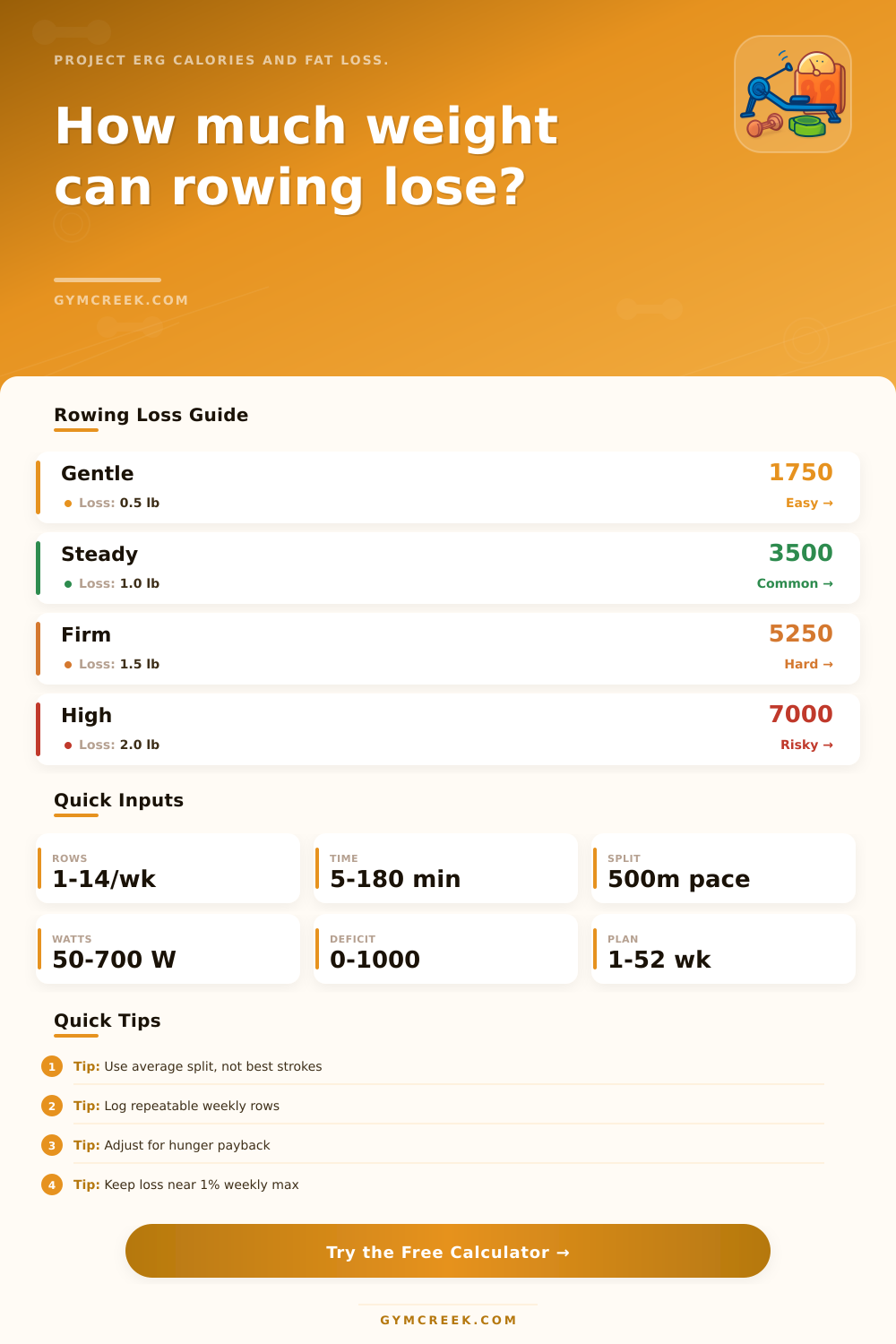
The weekly deficit in calories will be calculated from the calories that are burned during rowing sessions and the calories that the individual consumes during the same period of time. The loss of weight rate will be calculated as a percentage of the total weight of the individual. However, the loss of weight rate that is suitable for an individual of heavy body weight may not be suitable for an individual of light body weight.
Rowing machines present challenges to individuals who use them. Many individuals tend to want to beat the splits that they row every single session with the rowing machine. However, rowing harder than they normally do can lead to increased hunger and increased costs for recovering from the exercise that they performed during that session.
It is far better for an individual to include rowing machine sessions into their routine each week than to perform one intense session that makes them skip the machine for the remainder of the week. The food that the individual consumes has a direct impact upon the effectiveness of the rowing machine plan. If an individual reduces the food that they consume, they will lose weight at a rapid rate.
However, if they reduce the food that they consume, they may eat more to compensate for the food that they are not consuming. This can reduce the effectiveness of the plan. A rowing machine plan and food intake plan can be modeled with a tool so that the individual does not choose a food intake that they cannot maintain.
Small adjustments to the food that is consumed can have a much greater impact on weight loss than small adjustments to the rowing machine split. Common mistakes with the rowing machine include ignoring the calorie measurement that is displayed on the rowing machine monitor. Not all rowing machines are the same, and different calorie modes display different amounts of calories for the same split and rowing efforts.
It is also a mistake to ignore the difference between the gross calories and net calories that are burned with the rowing machine. Additionally, an individual may pursue chasing a high rate of loss of weight each week with the rowing machine without considering their body weight. This will result in rapid initial loss of weight, but ultimately, the individual will plateau in their weight and feel fatigued.
Reference tables exist to assist individuals with creating a weight loss plan with the rowing machine. These tables will show the relation of split, watts, and calorie estimates. Using these tables will help the individual to ensure that the data that they input into their plan is based on measurable data.
Additionally, reference tables can help individuals to understand the impact that different body weights may have on the loss of weight rate that is projected with the rowing machine plan. These tables will ensure that the weight loss that is projected is tied to the actual rowing machine sessions that an individual performs. To lose weight with a rowing machine, an individual must find a balance between the efforts that is invested into rowing and the bodys ability to recover from such efforts, as well as their ability to adjust the amount of food that they consume.
Using a tool to model these variables will help an individual to find a balance between rowing and food intake. When the projected loss of weight is a number that an individual can manage, and when the body can perform the number of rowing machine sessions that are indicated in the projected rate of weight loss, such a number will actualy manifest on the individuals scale.