Reverse Curl Calculator
Estimate reverse curl strength, weekly volume, wrist-loading demand, grip fatigue, and tempo time from your exact curl setup.
📌Presets
Each preset loads a realistic reverse curl session with strict form, grip position, tempo, and weekly frequency.
⚙Calculator
Reverse curl snapshot
Enter your load, reps, tempo, and grip setup to estimate training demand.
📊Reverse Curl Metrics
📑Reference Tables
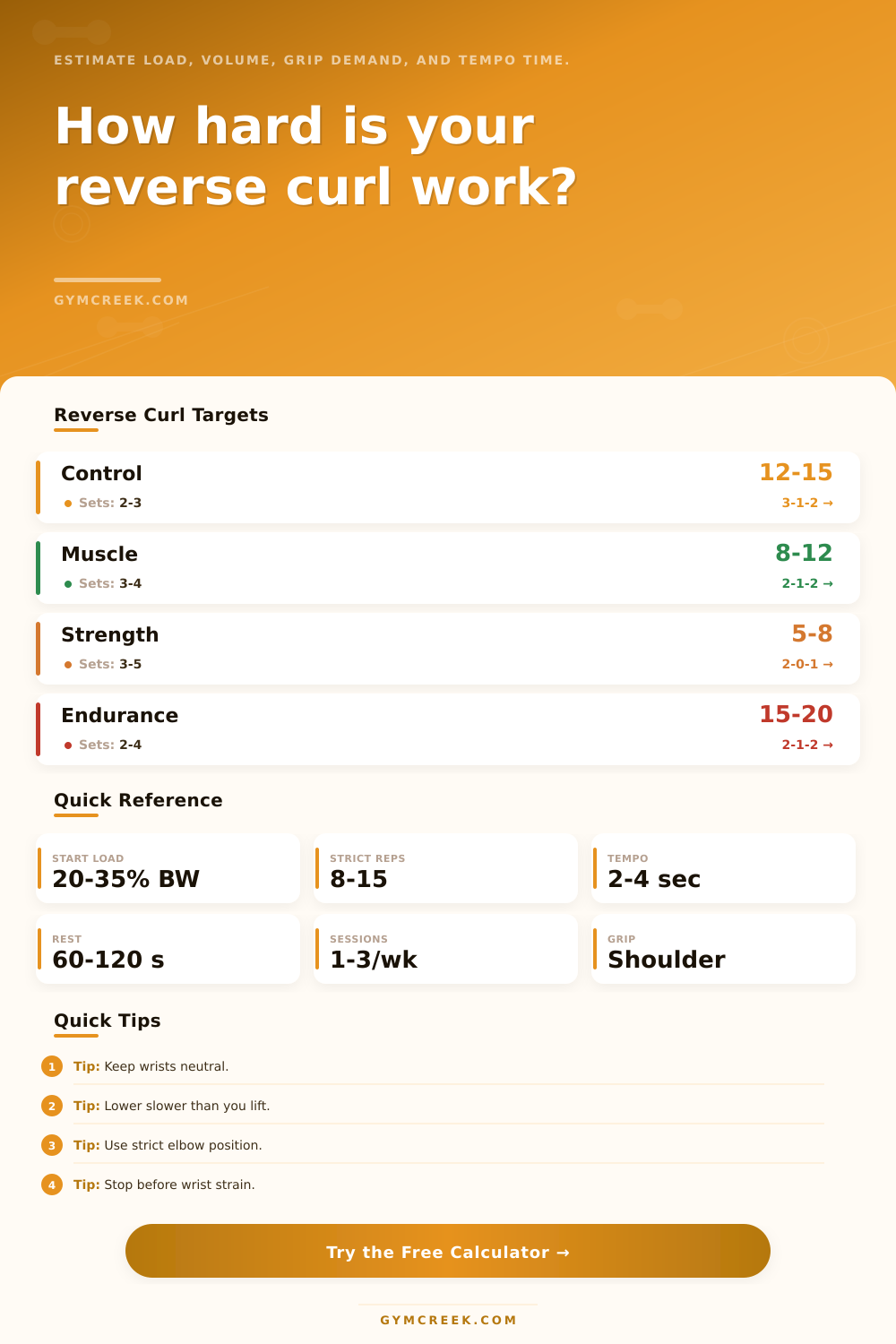
| Goal | Reps | Sets | Reverse Curl Focus |
|---|---|---|---|
| Technique control | 12-15 | 2-3 | Slow lowering, neutral wrists, no swing. |
| Brachioradialis muscle | 8-12 | 3-4 | Moderate load with clean top position. |
| Strict strength | 5-8 | 3-5 | Heavier sets, longer rest, crisp reps. |
| Grip endurance | 15-20 | 2-4 | Lower load, longer set time, even tempo. |
| Implement | Stability | Wrist Demand | Best Use |
|---|---|---|---|
| EZ curl bar | High | Moderate | Default reverse curl loading. |
| Straight barbell | High | Higher | Strict strength if wrists tolerate it. |
| Dumbbells | Medium | Lower | Side-to-side control and symmetry. |
| Cable bar | High | Moderate | Constant tension and pump work. |
| Rotating handle | Medium | Lower | Wrist-friendly loading variation. |
| Load / Body Weight | Typical Level | Use Caution When | Adjustment |
|---|---|---|---|
| 10-20% | Learning | Grip gives out first | Use slower tempo. |
| 20-35% | Novice to intermediate | Wrists bend backward | Reduce load 5-10%. |
| 35-50% | Intermediate plus | Elbows drift forward | Add rest or cut reps. |
| 50%+ | Advanced strict | Swinging starts | Use fewer reps. |
| Formula | Variables | Result | When To Use |
|---|---|---|---|
| Epley estimate | Load, reps | Estimated 1RM | Sets of 3-12 strict reps. |
| Volume load | Load, reps, sets | Session and weekly tonnage | Tracking progression. |
| Tempo time | Reps, sets, seconds | Time under tension | Comparing pump sessions. |
| Demand score | Grip, load, rest, form | Wrist and grip stress | Choosing safer loading. |
💡Tips
Don’t dismiss the reverse curl as merely an afterthought, either. It’s a distinct motion that transfers more of the work from the biceps to the brachialis and the brachioradialis. Because it place the wrist in a supinated position. It reinforces grip strength and builds forearm thickness.
And yes, math is figured out by the calculator above for your set up. You don’t have to guess whether what you’re doing is dangerous or effective.
How to Use the Calculator for Reverse Curls
People new to reverse curls sometimes load bar like a standard curl. Don’t do that. If you do, you’ll fail. Because your palms are facing downward, it’s a different leverage situation. The reverse curl calculator estimates your one-rep max and that provides a starting place. For serious training, you shouldn’t pay attention to that estimate. Use it to track progress, not to boost your ego. Instead, think about how much you’re pulling compared to your own body weight. Twenty to thirty-five percent seems like a solid start… Light enough to maintain proper form yet heavy enough to create tension.
If you notice your wrist bend back, change the weight. The tool flags that wrist load metric, so you can change it before you feel any pain. Form is everything. Most people leak due to improper form. Because of this, we ask how strict your form is so that the calculator can adjusts to match. If you start to drift your elbows forward, or swing your hips, you’re cheating the brachioradialis. Your forearms feels untouched while your output looks great on paper. Keep your elbows pinned to your side. All movement comes from the elbow joint. It’s a small detail but it matters.
When the calculator shows a high grip score, it means your hands are fatiguing before your muscles are. Your hands will fatigue before your muscles. Consider dropping down in weight or switching to a neutral grip handle.
Forearm Growth and Tempo The calculator also breaks out tempo time, or how many seconds you keep the muscle under tension. Slow lowering works really well with reverse curls. Take about two to four seconds on the eccentric phase. This will help increase micro-tears in the muscle fibers while controlling the stretch. Don’t go too heavy for this effect. Moderate loads with crisp control are what helps muscle growth goals based off the reference table. Heavier, swinging reps aren’t as good than this.
What tool do you use? Reverse curling with a straight barbell is tough on your wrists (they’re forced in extreme extension). Use a dumbbell or EZ bar instead and keep your arms in more natural alignment. That takes pressure off the joints. The calculator uses your selection to calculate stresses. If you’re not familiar with reverse curls, begin with dumbbells, they’ll let you move each arm independently (a good feature if your forearms aren’t of equal strength). As your grip becomes stronger, progress to bars for higher loads.
Another component of this puzzle is volume. No, you don’t have to go to failure each workout. Frequency x sets x reps = total volume for the week. Most folks will be fine with two to three workouts per week. Any more and you risk tendon-overuse injuries. Listen to your wrists. If they’re sore post-workout, take more rest or lower the workload.
Density is another measure the calculator gives as a snapshot. It tells you how many pounds you’re lifting per minute of exercise. Higher density + less rest time = better for endurance; worse for strength.
Finally, there’s the reverse curl, it’s respect for the smaller muscles working with the bigger guys. It is not about lifting the heaviest. It is about delivering a controlled, consistant stimulus. Let the tool inform how you plan. Trust your body to signal “stop.” Sometimes only a few seconds of tempo and a few pounds separate a building-up workout from a breaking-down one. Keep your elbows tight and your wrists neutral. Allow the forearms to do their work. That turns an awkward move into a powerful way to build arms.
It should of been more obvious. You’ll recieve better results if you follow it. This moddern method is actualy better than others.