
To build a functional home gym you don’t need a power cage or a squat rack. All you really need is something to provide tension. Enter: resistance bands.
They can be stored in your dresser drawer and stuffed into a bag, making them fixtures in every apartment and living room. Unfortunatly, many see them as a second-class alternative to dumbbells. But that’s missing the entire purpose.
Because the resistance rises as the band elongates, the peak contraction phase, typically the most difficult portion of the lift (can be the toughest). It’s a load profile that no amount of iron can replicate. You probably thought lifting weights off the ground was crazy.
Complete Guide to Resistance Band Chest Workouts
Why Resistance Bands Outperform Dumbbells
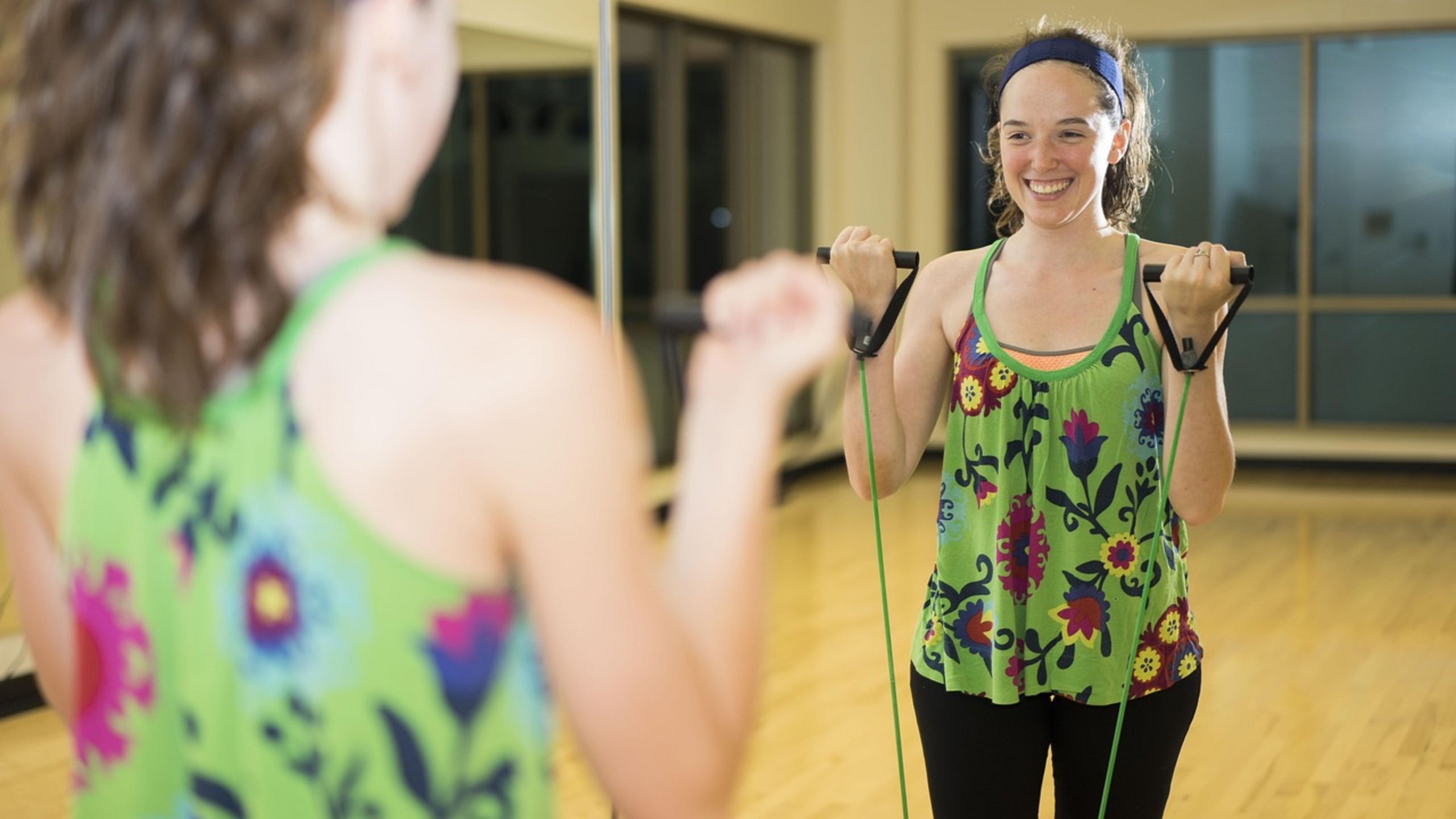
How can you train your chest if there’s no bench? After all, most of us imagine lying on something solid with our backs supported as we press. So how effective could this be without that support?
Won’t it lack stability? Nope. Your stabilizer muscles must do much more work when you remove the bench.
You’re learning to control the weight across its entire range of motion. Your body is the lever, the floor is your anchor, and the band is the force. That’s functional strength.
It is the kind that translate into your everyday activities. You’ll notice a different engagement from your core and shoulders. It is a little tweak, yet a major transformation for your workout.
Training Chest Without a Bench
Begin by learning how to handle tension early with the standing chest press. Secure one end of the band to something sturdy like a dedicated wall mount or perhaps a solid door frame (about chest level). Grip the other ends and take a step out.
You want moderate tension in the band. Maintain good joint protection with elbows below shoulder height. Squeeze your chest muscles outward when pressing, then try to fight the return phase.
Don’t let the band yank you back hard. Instead, control the stretch. This builds as much muscle during the lowering phase as it does during the pushing phase.
A lot of novices hasten the return, which is an error. Slow down, and boy do you ever feel it. Perform isolation work to target the inner chest.
How to Perform Standing Chest Press
Move to the floor fly. Anchor the band somewhere above your head (on a pull-up bar or maybe a high door frame) and lie down facing up. Extend your arms straight up and hold onto the handles.
Slowly lower your arms out to the side, making a large circular arc. Maintain a small elbow bend during the entire exercise. As you come to maximum width, the band will be pulling with its greatest force.
Bring your hands back toward one another, squeezing your chest muscles. Think of this as performing a traditional dumbbell fly, except with accommodating resistance. As you stretch the band further, it becomes more difficult.
In other words: You have maximal leverage when the exercise is at its most difficult. Sounds like the perfect hypertrophy move. You can also do incline work on the floor by angling your body.
Floor Fly Technique for Inner Chest
Use a folded mat or towel as a rolled up pillow, so your shoulders are off of the ground and your hips rest on the floor. This slight incline will shift more emphasis onto the upper chest. Attach the band at a low point behind you.
Then press forward and upward. Most folks don’t have an adjustable bench at home, which means this angle gets overlooked quite a bit in workout routines. But a little cushion fixes that issue.
It makes it necessary to use your torso when pressing. This is a big deal. You’re not going to be able to cheat the rep with any kind of leg drive.
It’s all about your front delts and chest. It is an underrated variation for balanced shoulder development. Rear delt pulling actions helps with posture health.
Incline Floor Press for Upper Chest
The rear delts are often forgotten, but they help with posture and provide an opposing muscle group to support chest health (even though it’s not a direct chest exercise). With band held in front of chest, stand up tall and pull your hands away from each other as far as you can, bringing the band toward your breastbone. Squeezing your shoulder blades together counteracts the forward rounding caused by heavy pressing.
Weak rear delts and lat muscles puts your shoulder joints at risk for injury. They also make your chest presses less effective because they lack a stable base. Balancing out the back is just as important than how hard you press.
Rear Delt Pull-Apart for Posture
Consistency beats complexity You don’t need a dozen band attachments. Learn to use the pull-apart, the fly and the press. Focus on time under tension more than lifting as heavy as possible.
Bands punish poor movement. They’ll slip when you perform jerky movements. Evenly load them, because an uneven pull puts you at risk for injury.
Controlled smooth reps work best. Without one single bit of iron your chest gets stronger. The floor will work.
