Recovery Run Pace Calculator
Estimate a calm recovery run pace from a recent race, easy pace, fatigue level, heat, hills, and weekly training load.
📌Presets
Choose a scenario, then adjust the fields for your recent effort and how recovered you feel today.
⚙Calculator
Recovery run snapshot
Enter your current fitness and fatigue to calculate a recovery pace range.
📊Recovery Snapshot
📑Reference Tables
| Base race | Fresh legs | Tired legs | Very tired |
|---|---|---|---|
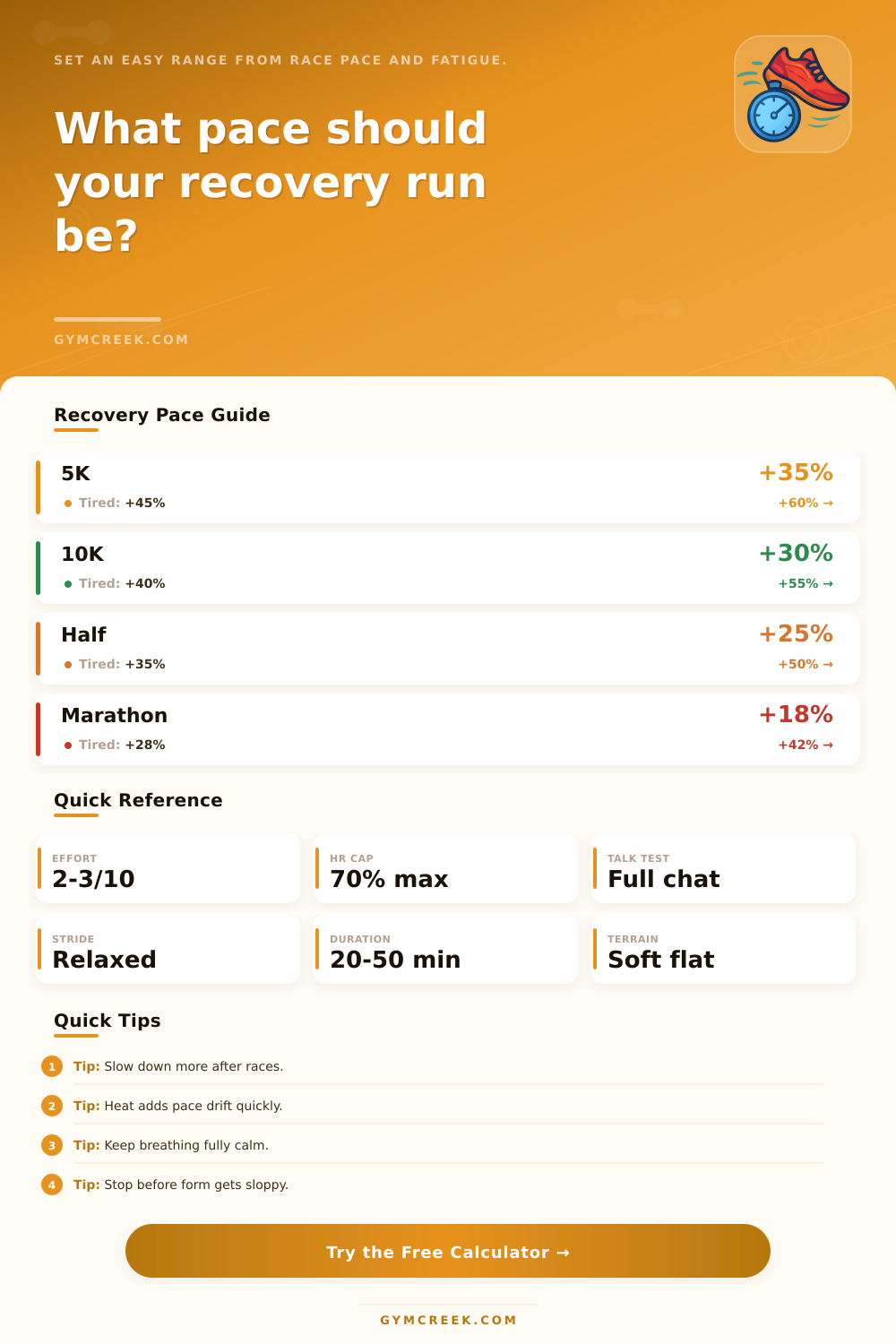
| 5K | +35% | +45% | +60% |
| 10K | +30% | +40% | +55% |
| Half marathon | +25% | +35% | +50% |
| Marathon | +18% | +28% | +42% |
| Previous effort | Pace add | Duration cue | Use when |
|---|---|---|---|
| Normal aerobic | +0-3% | 30-55 min | Routine easy day |
| Long run | +4-8% | 25-45 min | Legs feel heavy |
| Intervals | +6-10% | 20-40 min | Neuromuscular load |
| Race | +10-16% | 20-35 min | Systemic fatigue |
| Condition | Adjustment | Signal | Action |
|---|---|---|---|
| Warm weather | +10-30 sec | HR rises early | Slow by feel |
| Hilly route | +20-45 sec | Breathing spikes | Cap effort |
| Soft surface | +5-20 sec | Stride shortens | Keep cadence easy |
| Very tired | Walk breaks | Form fades | End early |
| Formula step | Variable | How it works | Output |
|---|---|---|---|
| Base pace | Race or easy | Convert to seconds | Fitness anchor |
| Recovery factor | Distance | Add race-based margin | Easy baseline |
| Stress load | Fatigue | Add training stress | Slower range |
| Environment | Heat terrain | Add pace seconds | Final target |
💡Tips
Long distance training has a particular brand of masochism. On easy days, you lace up and recover, and then by mile three, you’re sprinting because your heart rate refuse to stay in Zone Two. Your legs say one thing, while you tell yourself: Just a shakeout, just an easy shakeout. But no, the issue’s not effort; it’s expectation. Running fast is how you’re wired, and learning to recover well mean unlearning the whole thing.
To ground pace in data (not ego), the tool I made above will help reset your expectations. It uses what pace feels “easy” for you or what pace you ran recently, then multiplies it by recovery factors that take into account your terrain, heat, fatigue and distance. Why? Because recovery pace is not one size fits all. Your body’s recovery needs after a marathon weekend will be different than after an interval session on Tuesday; you might need walk breaks for the first and a slow jog for the second.
Why Slow Running is Good for Recovery
Plug in your fitness baseline, then adjust legs-feel slider to reflect how heavy they are feeling. The rest of equation gets done for you. No more guessing at the conversions and coefficients.
Let’s talk about fatigue as an input. Fatigue is something most of us either default to low on or simply choose to ignore because we think we’re fresh (after all, who likes to admit they’re tired?). The problem is that even when your muscles say “fine,” your nervous system say otherwise after knocking out some hard intervals. Choosing high/very high fatigue expands your acceptable pace range considerably. This lets the algorithm know that it should set the ceiling lower, preventing you from inadvertantly turning a recovery run into another workout. This make all the difference in avoiding overtraining.
The built-in reference tables explain this well, and the charts show how much to add in percent at different race distances. The shorter ones result in bigger pace discounts (because there’s still some residual speed junk left in your legs). The longer ones result in systemic fatigue, which require slower actual paces but fewer percentage adjustments.
And then there’s the surroundings. The heat makes you sweat. It also raises your resting heart rate and lowers your stroke volume, which means your body do more work for less power. The calculator accounts for this with extra seconds per mile (or kilometer) strictly due to temperature. Those figures are optional, but only if you’re fine blowing through your intended effort level within the first minute.
Same goes for hills: Your watch may indicate a reasonable pace, but that slope jacks up your perceived exertion. On days like these, the tool recommends shifting focus from speed to other measures. Namely talk tests and heart rate. Can’t string together complete sentences? You are going too fast, no matter what time reads on the clock.
What they get back is not one number but rather a pace range. And that’s on purpose. When running at the lower end of the range, it will feel awkward. You’ll find your arms swinging loosely. Your step will shorten. You’ll look like someone who could walk if he had better shoes. Good. That’s what this is supposed to do: help blood flow without causing additional microtears in the muscle fibers. Circulation is the objective. Calorie burning is secondary.
When you’re done with your recovery run and you feel like having a cup of coffee, you’ve done it correctly. If you feel drained, you went too hard. This is typically the most difficult pill for new runners to swallow. Slow doesn’t win any trophies, but it does get you somewhere. Running with these controlled limits increases your training volume while keeping intensity levels lower. This develops your aerobic endurance without risking breaking yourself down with speed workouts. It transforms recovery time into a key part of your fitness plan.
Believe me when I say that trusting the slow-down pays off. You’ll be thankful come race day and your tired legs will agree.