
Oh yeah? Well, you do some bench presses for hours on end. Then you slam overhead presses as hard as possible.
Maybe you even do some lateral raises to give yourself that wanted V-taper look. So what happens next? You go sit in your office chair for the next eight hours with your shoulders hunched up in front of you and let gravity pull them down into a perpetual shrug.
That’s a one-two punch that few people can spot coming. Your front delts becomes overdeveloped while your back delts remains weak and stretched out. Not only will this lead to poor posture, but it also puts you at a higher risk of rotator cuff pain and other shoulder impingement issue.
Pushing isn’t the problem. Pulling is solution. Most lifters neglect rear delt exercises because they do not yield ego lifts.
These muscle help hold up your shoulder girdle, giving it a sculpted look. That’s what makes a physique go from average to sculpted. 3-dimensionality.
Because rear delts don’t produce ego lifts, most lifter ignore them. “I lifted X pounds on my rear delt raises!” Yeah, OK. Instead, you’ll have better posture that commands respect.
You’ll also have shoulders that allow you to work out without pain. And that’s something you can brag about. As far as upper body strength goes, there’s no doubt the bench press reigns supreme.
But if left unchecked, it can wreak havoc on the shoulders. Each rep causes your chest and front shoulder to contract. When you don’t train the rear delts enough, your tight pecs and anterior delts begins pulling your humerus (upper arm bone) forward.
This reduces your subacromial space and alters the angle of your shoulder joint. That’s when you’ll start experiencing some discomfort. To fix the issue, you need to perform certain exercises that address the shoulder’s posterior chain while avoiding any cheating motion.
How to Fix Shoulder Imbalance With Rear Delts
The Problem with Overdeveloped Front Delts
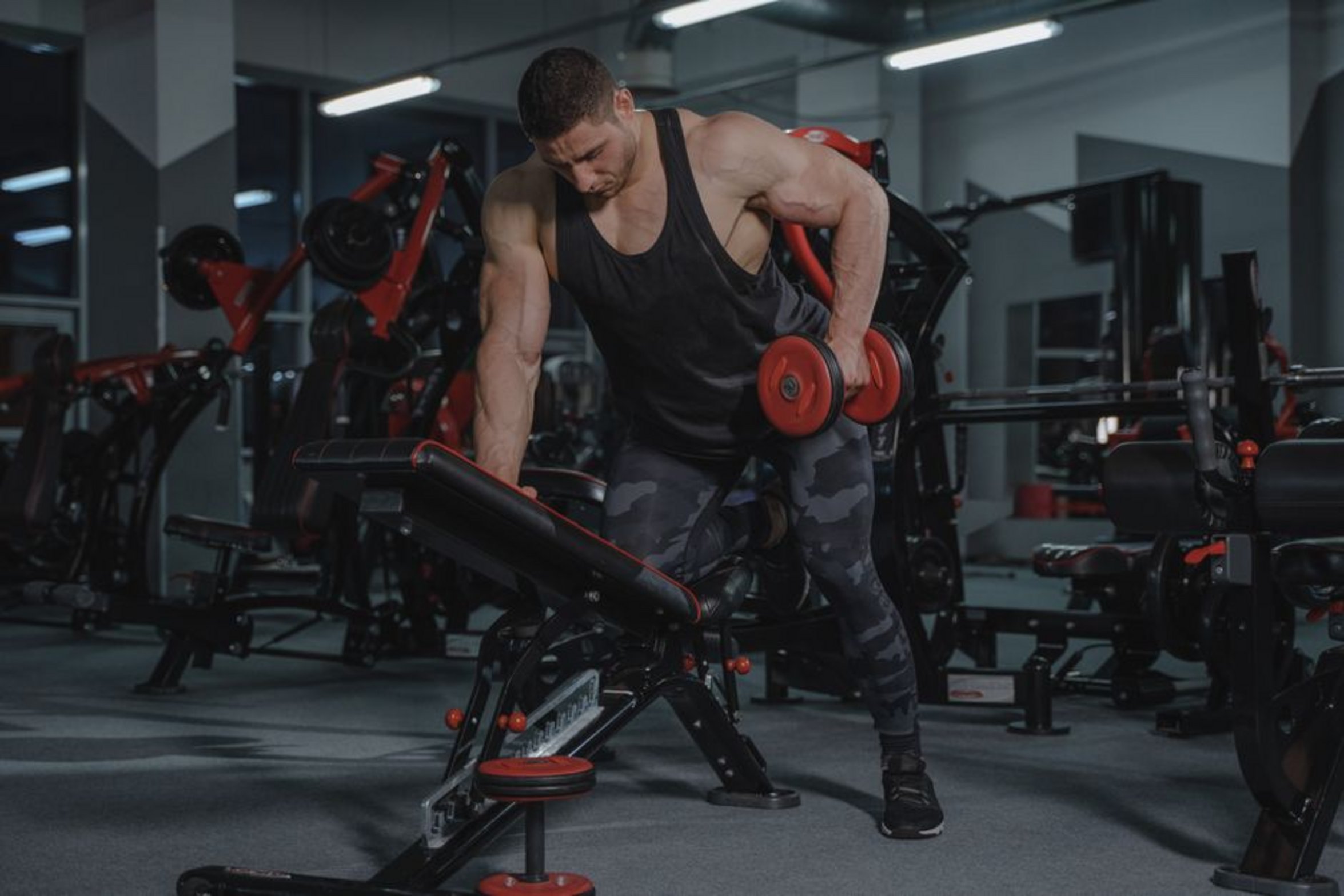
Isolation The bent-over dumbbell raise is the gold standard for isolation. Keep a slight bend in your elbows and hinge at your hips so that your torso is almost parallel with the ground. Then lift them out to the side of your body, keeping your elbows ahead of your hands.
At the top, squeeze your rear delts. Avoid letting your traps take over by shrugging. It shouldn’t feel heavy.
If it does, you’re probably using more momentum than muscle. Here’s where we see people arcing their lower back. They round off their spine, or even hyperextend it to get some leverage when the weight becomes difficult.
Now instead of working on the deltoids, they’re shifting more of the load onto the lumbar spine. Brace that core. Pretend like you’re in a plank position with just your upper body.
The motion is minimal, the range of motion is modest. But the contraction itself is intense.
Bent-Over Dumbbell Raise Technique
One variation is incline dumbbell face pulls, which focus more specifically on the external rotators.
On an incline bench at a thirty- or forty-five-degree angle, you’ll be lying face down with your arms hanging straight below your shoulders. Your hands will be together with your palms facing each other; pull the weights up toward your ears and apart. The mechanics are similar to the cable face pull, though you get a more free range of motion.
These strengthen the muscles that keep your shoulders externally rotated. Shoulder stability relies on being able to externally rotate. Through everyday activities we tend to become dominant at internal rotation.
So building up the opposing action balance things out. This exercise combines working both your external rotators and shoulder blade muscle. Don’t worry about moving a lot of weight.
It’s all about pulling precisely. Slowly control the lowering phase of the movement as you lower the weights. Feel the stretch in your back shoulder before starting the next repetition.
Incline Dumbbell Face Pulls
Perform a flat bench reverse flye. This exercise sounds redundant, why perform reverse flyes on a flat bench? The answer lies in support.
When lying on your chest on a flat bench, there is no requirement for core stability. That’s one less variable, because now you’re able to concentrate solely on the shoulder muscles. In addition, pushing just under failure becomes possible without the risk of breakdown due to fatigued lower back.
Focus on the mind-muscle connection. Light weight are key here. Concentrate on squeezing as hard as possible at the top of each repetition.
This variation really comes in handy for people with low back issue and/or a weaker core. Here it cleans up the rear delt isolation more so than the bent over variation. Here you can go heavier without sacrificing form.
Heavier equals more danger when you slip off form. Keep your elbows slightly bent and pulled back. Pull with your elbows, not with your hands.
Your hands are merely hooks.
Flat Bench Reverse Flye Benefits
The key is combining these exercises. Rear delts aren’t something that you can hit every few weeks and see results.
They’re responsive to frequency. Do 2-3 sets of rear delt work at the end of your back workouts using higher rep ranges. Try for 12-15 repetitions.
Go for the burn. Go for the squeeze. In this case, consistency beats intensity.
Your shoulders will thank you and so will your posture. You’ll stand taller. Humility is the first step on your road to improved shoulder balance.
Accept that there’s no such thing as a glamorous rear delt exercise; there’s no such thing as a heavy rear delt exercise either. There is, however, an effective rear delt exercise: the bent-over raise. Nail the form and progress from there.
Do the incline face pull next, then do the bench reverse fly. It is time to build a foundation, folks. It is time to protect your joints.
Wait until later for the front delts; right now, the rear delts need you.
