Gel Intake During Race Calculator
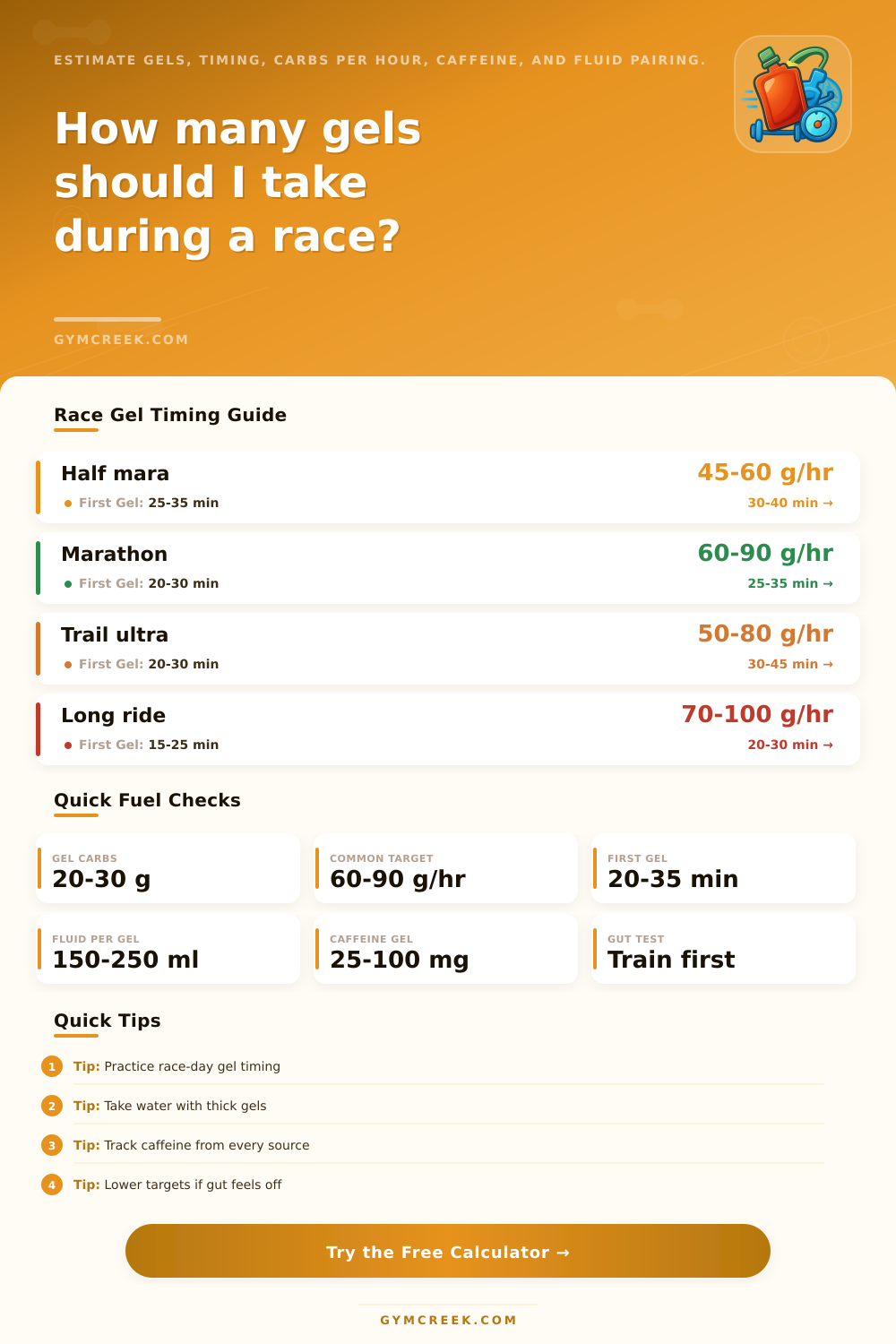
Estimate race gel count, suggested gel interval, carbohydrate delivery, caffeine total, and water pairing from your duration, gel label, gut tolerance, and sport.
🏁Gel Strategy Presets
Presets load realistic race fueling patterns. Edit the gel label values and interval after choosing a starting strategy.
⚙Calculator Inputs
Race gel snapshot
Your gels, timing, carbs/hour, caffeine, and fluid pairing update as inputs change.
📊Metrics Grid
📘Calculation Rules
📑Gel Fuel Reference Tables
| Gut tolerance | Practical gel-carb range | Best fit | Watch point |
|---|---|---|---|
| Low | 30 to 55 g/hour | New gel users, hard running, sensitive stomach | Use smaller doses and more water |
| Moderate | 50 to 80 g/hour | Most practiced endurance athletes | Test exact products before racing |
| High / trained gut | 75 to 110 g/hour | Long races, cycling, triathlon, ultras | Works best with glucose/fructose blends |
| Aggressive | 110+ g/hour | Specialized plans only | High gut-risk unless heavily practiced |
| Sport | First gel | Common interval | Planning note |
|---|---|---|---|
| Road running | 20 to 35 minutes | 25 to 40 minutes | Pair gels with water at aid stations when possible |
| Trail / ultra running | 20 to 40 minutes | 30 to 45 minutes | Alternate gels with solid or salty foods if needed |
| Cycling | 15 to 30 minutes | 20 to 30 minutes | Higher carb targets are often easier on the bike |
| Triathlon | 15 to 30 minutes | 20 to 35 minutes | Front-load the bike carefully and simplify the run |
| Obstacle race | 25 to 40 minutes | 35 to 50 minutes | Protect packets and avoid taking gels before obstacles |
| Fluid per gel | Interpretation | Use case | Adjustment |
|---|---|---|---|
| 0 to 100 ml | Low pairing | Only if gel is isotonic or fluid is coming separately | Add water near the gel when possible |
| 100 to 200 ml | Moderate pairing | Most standard gels during moderate weather | Increase in heat or with thick gels |
| 200 to 300 ml | Strong pairing | Concentrated gels, hot races, higher carb targets | Split sips before and after the gel |
| 300+ ml | High pairing | Cycling bottles or deliberate aid-station strategy | Watch stomach slosh and sodium balance |
| Output | Formula | Inputs used | Meaning |
|---|---|---|---|
| Gels needed | Ceiling of target total carbs divided by gel carbs | Duration, target carbs/hour, gel carbs | Minimum gels to meet the carb target from gels |
| Gel interval | Time from first gel to finish divided by gel gaps | Duration, first gel timing, gels needed | Suggested spacing to hit the target evenly |
| Carbs/hour achieved | Gels needed times gel carbs divided by race hours | Gels needed, gel carbs, duration | Actual gel-only delivery after rounding up gels |
| Caffeine total | Gels needed times caffeine per gel | Gels needed, caffeine per gel | Total caffeine from gels, before coffee or cola |
| Fluid pairing | Gels needed times fluid per gel | Gels needed, fluid per gel, duration | Water or drink volume paired with gel intake |
💡Gel Strategy Tips
The gel intake during race calculator is a tool that will help you to plan your nutrition for the race that you are running. The gel intake during race calculator will take your race, your gel nutrition label, and your target carbohydrate rate for athletes to turn that into a schedule for taking the carbohydrate-based gels during your race. To use the gel intake during race calculator, you must enter the length of your race in minutes, the carbohydrate content of the gel packet in grams, and whether your target intake is moderate or aggressive.
The calculator will output for you the number of packets of gel that you should consume during your race, as well as the length of time that should pass between each packet to ensure that you recieve the carbohydrates at a steady rate. Many athletes understands the importance of fueling during there race, but struggle with the exact timing for fueling. If athletes begin to consume fuel too late in their race, they may experience a dip in their blood sugar.
How to Use the Gel Intake Calculator
However, if they begin to consume fuel too early, they may experience stomach discomfort from consuming the fuel too early in their race. The gel intake during race calculator includes a field for first-gel timing, which allows athletes to decide when they would like to consume their first packet of gel. Any change to the first-gel timing will alter the timing of the other gels that the gel intake during race calculator calculates, hence the need for athletes to make such a decision with the calculator.
The gel intake during race calculator includes the ability to compare the interval that an athlete select for consuming the gels to the interval that the race calculates. For instance, if the athlete selects forty minutes between every packet of gel, but the calculations indicate that every twenty-five minutes should be a packet, the calculator will provide that difference. An athlete’s body absorbs carbohydrates at a steady rate; too long of a time between packets will result in a dip in blood sugar, but too short of a time will result in stomach discomfort.
Thus, the difference between the athlete’s selected interval and the calculated interval provides them with an understanding of the potential consequences of their chosen schedule. Many athletes also include caffeine as one of the component of their fueling strategy. Many caffeinated gels contain caffeine, but many athletes do not track the amount of caffeine that they are consuming.
If they consume too much caffeine, they may feel jittery during the latter portion of their race. The gel intake during race calculator allows athletes to track the total amount of caffeine in each packet of gel that they calculate that they will consume during their race, as well as the hourly rate of caffeine consumption. This information allow athletes to account for other sources of caffeine that they may consume during the race.
The gel intake during race calculator can also be used to determine the amount of fluid that an athlete should consume during their race. Fluid is required in conjunction with each packet of gel to ensure that the thick gels can pass through an athlete’s digestive system easy. The gel intake during race calculator multiplies the amount of liquid that an athlete selects as each packet of gel to be consumed by the total number of packets that the tool calculates.
This will output the total amount of liquid that the athlete should consume during their race. If the amount of liquid is too low for the number of carbohydrates that are to be consumed, the tool will alert the athlete to that fact. The gel intake during race calculator cannot account for environmental factors.
Factors like heat, altitude, and even the hills that are to be run during the race will impact the body’s consumption of carbohydrates different than if an athlete was to run on a flat course at a more comfortable altitude. The gel intake during race calculator includes a selector that allows athletes to choose their level of gut-tolerance to the fuel that they plan to consume during the race. If an athlete can take the fuel well, they can adjust the settings within the calculator to produce a plan that is within the range of what their body can absorbs.
The parameters that are included in the gel intake during race calculator include reference tables that account for the difference in the timing and fluid needs for different categories of athletes that participate in various sports. For instance, the fluid recommendations will be different for a road marathon than for a gravel ride or trail ultra. When an athlete selects the type of sport that they will be participating in within the race, the calculator will adjust the amount of fluid that they consume during their race accordingly.
The purpose of utilizing the gel intake during race calculator is to establish a routine with the fueling schedule that the athlete can utilize during the race, even when they are tired. Once the athlete has established a routine using the calculator, they must implement that routine during their training. During their long training runs, athletes should simulate the same fueling routine that they calculated with the gel intake during race calculator.
If they are able to execute that routine during their training, it is a strong indication that the gel intake during race calculator has successfully create a plan for the athlete to follow during their upcoming race.