Pro Physique Macro Calculator
Estimate stage-ready calories and macros from lean mass, training load, target weekly rate, and carb cycling structure.
📌Presets
Each preset fills a full physique scenario and recalculates the high-day and low-day macro targets.
⚙Calculator
Physique macro snapshot
Enter stats and calculate the stage target.
📊Physique Metrics
📑Reference Tables
| Stage | Weekly rate | Protein cue | Macro focus |
|---|---|---|---|
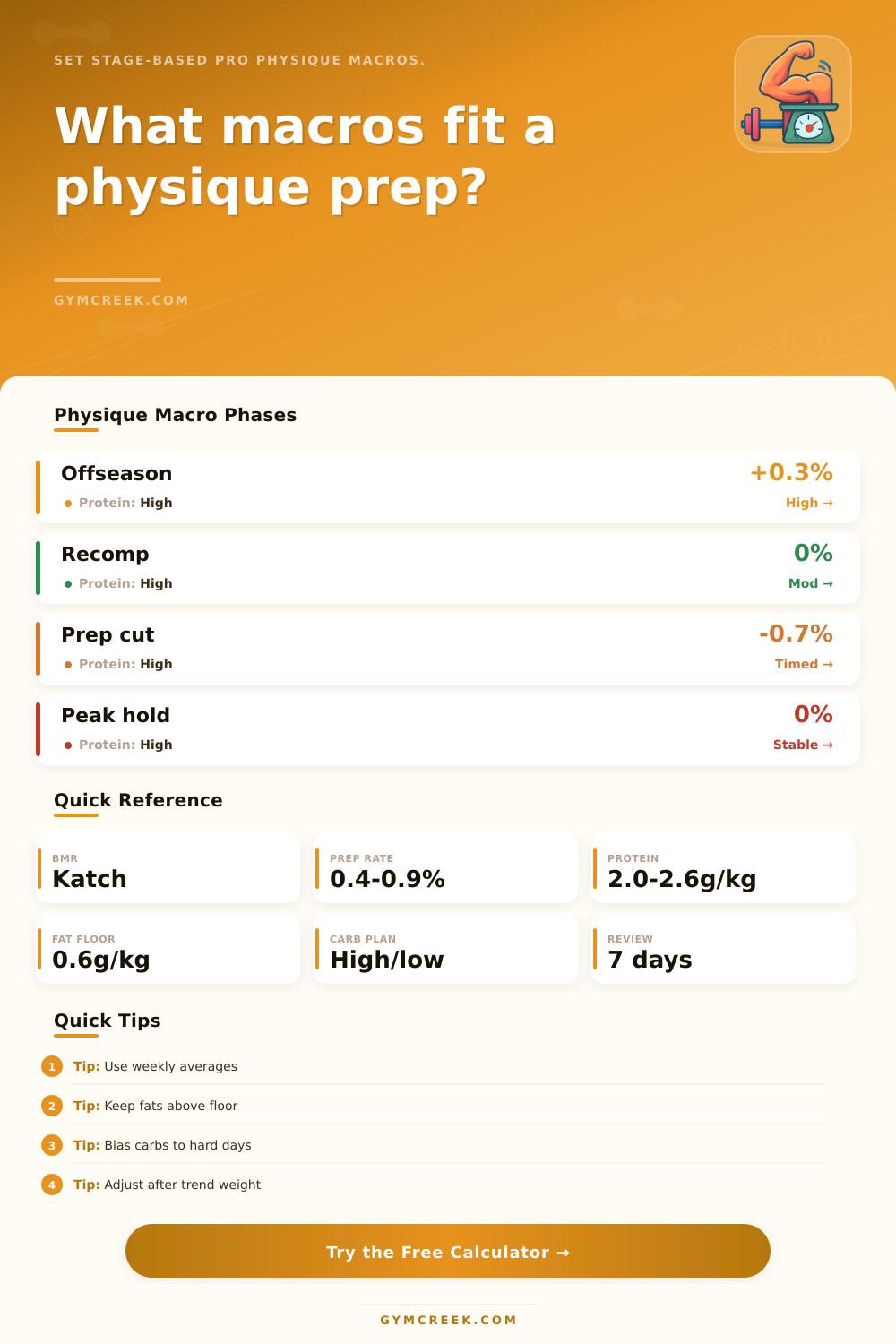
| Offseason | +0.2 to +0.5% | Moderate high | Carb support |
| Recomp | -0.1 to +0.1% | High | Stable intake |
| Prep cut | -0.4 to -0.9% | High | Fat floor |
| Mini cut | -0.8 to -1.2% | High | Short phase |
| Body fat | Men | Women | Macro cue |
|---|---|---|---|
| Stage lean | 5-8% | 10-14% | Small shifts |
| Athletic | 9-13% | 15-20% | Carb timing |
| Build range | 14-18% | 21-26% | Slow gain |
| Cut start | 19%+ | 27%+ | Rate control |
| Macro | Prep floor | Build range | Use |
|---|---|---|---|
| Protein | 1.0 g/lb | 0.8-1.1 g/lb | Lean mass |
| Fat | 0.25 g/lb | 0.30-0.45 g/lb | Hormones |
| Carbs | Remainder | Remainder | Training |
| Fiber | 10 g/1000 kcal | 10 g/1000 kcal | Digestion |
| Formula | Inputs | Best when | Output |
|---|---|---|---|
| Katch-McArdle | Lean mass | BF known | BMR |
| Mifflin-St Jeor | Stats | No BF data | BMR |
| Rate math | BW trend | Prep phases | Delta |
| Carb cycle | High days | Hard lifts | Day split |
💡Tips
Physique prep isn’t a math problem. Don’t treat it like one solved with a spreadsheet. Tweak your decimals all you want while staring at cells, but your compliance doesn’t always equal scale movement.
The tool above take care of the calculations for you, anchoring your calorie target against your lean mass instead of your overall weight. Why? Muscle tissue burns more calories per pound than fat tissue, and standard metabolic estimates loses accuracy as you become leaner. The tool focus on what muscle you actualy have, giving you a baseline that honors your physiology. It protects you from starving yourself out of fear rather than strategy.
Why This Tool Helps You Prepare Better
Fear. The vast majority of prep plans fall short because they don’t consider the context: What stage you’re currently in. If you’re 10 weeks out from a show, you won’t train or eat like you would if you were gaining in the offseason. But most folks leaves their macros constant despite changing body composition. To address that, the tool lets you specify what phase you’re in (e.g., peak maintenance, hard cut, recomp). Different stages calls for a unique relationship with food.
In the offseason, you want surplus to fuel growth & recovery; in prep, you want deficit to shed fat without losing muscle. If you know which camp you’re in, you’ll avoid treating yourself aggressively at the wrong time.
How does your body use those calories? It depends on your training load. If you’re lifting heavy five days per week, staying relatively sedentary the other days, that’s one thing. If you have an active job that keeps you moving all week while you only lift lightly a couple of times, that’s something else entirely. The model accounts for these changes based off your cardio sessions and how often you do resistance training.
You don’t necessarily need higher carbohydrate intake every single day; only when your glycogen needs is greatest (typically during your most challenging lifting). Moving some carbs to those days helps support performance without increasing your total number of calories consumed on “rest” days. While carbs, fat and protein can be changed, they aren’t.
You’ll need plenty of protein to protect lean tissue during this process (particularly if you’re in a deficit). Reducing protein too soon is a quick road to losing both fat and muscle mass. Dietary fats are necessary for good hormonal health, which is why there’s a floor for fat consumption. Going lower than a certain amount will hurt your mood and recovery long before it benefits your waistline. These macronutrients remains in their safe zones without you having to play guessing games.
Be patient with yourself: It takes time to review your results. Weigh-ins matter more on a weekly average basis then any single day. This is because hydration and food volume fluctuate. Maintain consistency if the trend aligns with your desired rate of change, but don’t be afraid to tweak your approach slightly instead of making a huge change. Trying to fine-tune body composition are about consistency, not intensity.
Your prep isn’t just about what goes into your mouth; it’s also about your head. It’s about getting (and staying) in a place where you can enjoy the process. Not only look good on stage day. The less stress you have, the better your results will be. Following a nutrition plan that respects your biology while supporting your training efforts also make a huge impact.
You go from fighting against yourself to working with yourself. And that change of mindset is often the turning point between quitting early versus walking across the stage confidently. Respect the data, trust the process and keep in mind that the journey should of been constructed by little things, consistency, not grand gestures.