Pre Workout Calculator
Estimate a bodyweight-based caffeine target, scoop fraction, timing window, hydration target, carb support, and total daily stimulant load.
📌Presets
Each preset loads a realistic training day and recalculates dose, timing, and daily caffeine exposure.
⚙Calculator
Pre-workout snapshot
Enter body weight, label caffeine, and training time to calculate your plan.
📊Training Metrics
📑Reference Tables
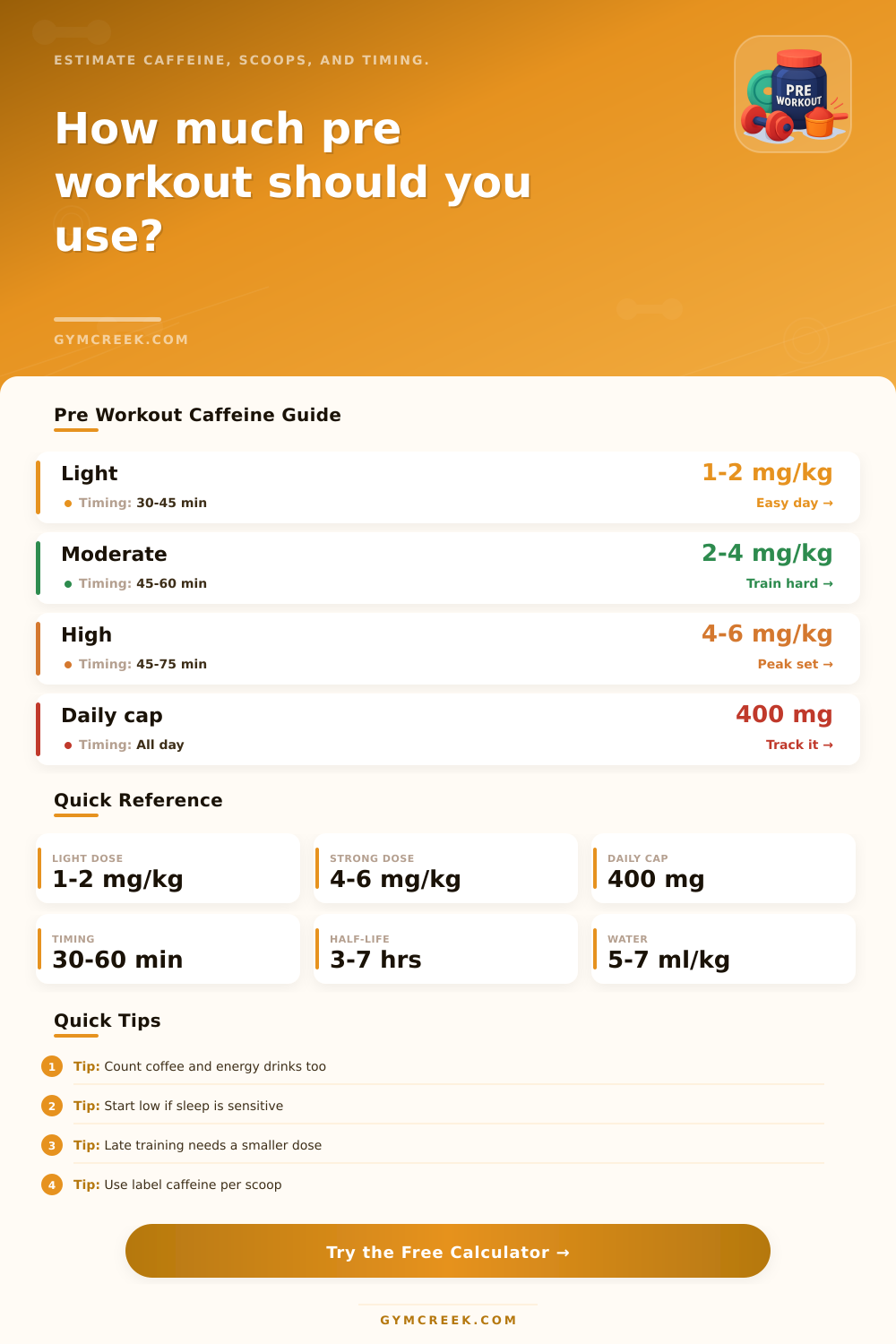
| Use case | Caffeine range | Timing window | Calculation note |
|---|---|---|---|
| Light or new user | 1-2 mg/kg | 30-45 minutes | Start conservative |
| Moderate training | 2-4 mg/kg | 45-60 minutes | Common performance range |
| Hard or peak day | 4-6 mg/kg | 45-75 minutes | Higher side-effect risk |
| Daily intake cap | Up to 400 mg | Full day total | General healthy adult reference |
| Training time | Sleep risk | Calculator adjustment | Why it matters |
|---|---|---|---|
| Morning | Lower | Full planned dose | More time to clear |
| Midday | Moderate | Usually unchanged | Watch total intake |
| Evening | Higher | Smaller dose flag | Caffeine half-life is long |
| Late night | Highest | Sleep warning | Residual stimulant load |
| Formula | Variable | Output | Use |
|---|---|---|---|
| Mifflin-St Jeor | Sex, age, size | BMR | Energy context |
| Katch-McArdle | Lean mass | Lean BMR | Body fat context |
| mg/kg dose | Bodyweight | Caffeine mg | Stimulant target |
| Half-life range | Time to bed | Sleep flag | Timing caution |
| Support target | Calculator basis | Typical range | Note |
|---|---|---|---|
| Hydration | 5-7 ml/kg | 300-600 ml | Pre-session fluid |
| Carbs | 0.2-0.6 g/kg | 15-60 g | Longer sessions need more |
| Sodium context | Duration and sweat | 300-600 mg | For long or hot sessions |
| Daily caffeine | All sources | 0-400 mg | Compare with personal cap |
💡Tips
Pre-workout supplements is used by many individual to increase their energy, their focus, and their physical performance during there training sessions. The active ingredient in most pre-workouts are caffeine, but the effective amount of caffeine for each individual depend on a few different factors. Factors to consider before taking a pre-workout supplement may include the individual’s body weight, the type of training that they will perform, and the time of day that they perform those training sessions.
Because caffeine act as a stimulant, the amount of caffeine that an individual consumes can impact not just the individual’s feelings during there training sessions, but also their sleep after those training sessions. To determine the appropriate amount of caffeine to take prior to an individual’s training sessions, individuals can utilize the caffeine calculator. The caffeine calculator require that each individual enter their body weight, the amount of caffeine in the pre-workout supplement that they intend to consume, the details of their training session, and how much caffeine they have consumed throughout the day (as the suggested daily limit for caffeine is 400mg).
Find the right caffeine dose for your workout
Because caffeine can remain in the body for some time after it is consumed, individuals must ensure that they dont exceed their daily limit for caffeine. Additionally, the amount of caffeine that an individual consumes will impact the time at which they consume their pre-workout supplement. If an individual consumes their pre-workout supplement too early or too late during the day, their caffeine supplement will have too great an effect at the wrong time during their training session.
However, if they consume their supplement between thirty and sixty minutes before their training session, their caffeine will likely reach its peak effect at the time that they will find most beneficial, when they are performing the most difficult portion of their training. For individuals that consume their pre-workout supplement after 6pm, however, the caffeine calculator may suggest that they consume lower dose of caffeine of their supplement. High doses of caffeine prior to sleep can make it difficult for individuals to sleep proper.
Additionally, caffeine calculators also include factor related to hydration and the consumption of carbohydrate prior to training. Hydration is important for individuals that train for long periods of time, as they will lose fluids during those training sessions. An individual loses more fluids during training than another individual, for instance, so they will feel the effect of dehydration more than that other individual.
Carbohydrates are another important factor for individuals to consider before training. Carbohydrates provide the body with the energy required to endure the training session. If an individual consumes too much caffeine on an empty stomach, they may feel jittery.
Consuming carbohydrates prior to training will help an individual to avoid this feeling of jittery. Finally, another factor that an individual may consider prior to training is their tolerance to caffeine. Some individuals have high tolerance to caffeine, meaning that they consume caffeine frequently, but they feel its effect only after consuming significant amounts of caffeine.
Other individuals have low tolerance to caffeine, meaning that they feel the effects of caffeine after consuming relatively small amount of caffeine. These settings allow individuals to select the level of caffeine that they are most accustomed to consume. For individuals with low caffeine tolerance, the caffeine calculator will indicate an amount of caffeine to consume that is lower than that which an individual with high caffeine tolerance will experience.
The effects of consuming too much caffeine can include feelings of anxiety and restlessness. Thus, the calculator aim to reduce the chance that an individual will experience these effect. The caffeine calculator indicate the amount of caffeine that an individual should consume prior to their training sessions.
However, the calculator does not make the decision for the individual as to how much caffeine to consume. An individual’s body will respond to the amount of caffeine suggested by the calculator. For instance, if an individual feel anxious after consuming the amount of caffeine that is calculated for them, they may have to adjust the amount of caffeine that they consume in the future.
However, if an individual feels that they need more energy during their training sessions than they experienced with the calculated dose of caffeine, they may have to adjust the amount of caffeine that they consume during their training sessions. Thus, using the caffeine calculator allow individuals to make an informed decision as to the amount of caffeine that they will consume prior to their training sessions, and to manage both their energy and sleep cycle effectively.