Potassium Intake Calculator
Estimate daily potassium intake, exercise replacement range, sodium-potassium balance, and gap to a practical training-day target from age group, body weight, sweat loss, diet pattern, heat, and medical caution.
🍌Potassium Presets
Presets are starting points for healthy athletes and active adults. Edit the inputs to match your actual body weight, sweat test, training time, diet pattern, sodium pattern, and medical context.
⚙Calculator Inputs
Potassium plan snapshot
Daily estimate, exercise range, balance, and gap update as inputs change.
📊Metrics Grid
📘Exact Rules Used
📑Potassium Reference Tables
| Group | Base target used | Planning note | Calculator use |
|---|---|---|---|
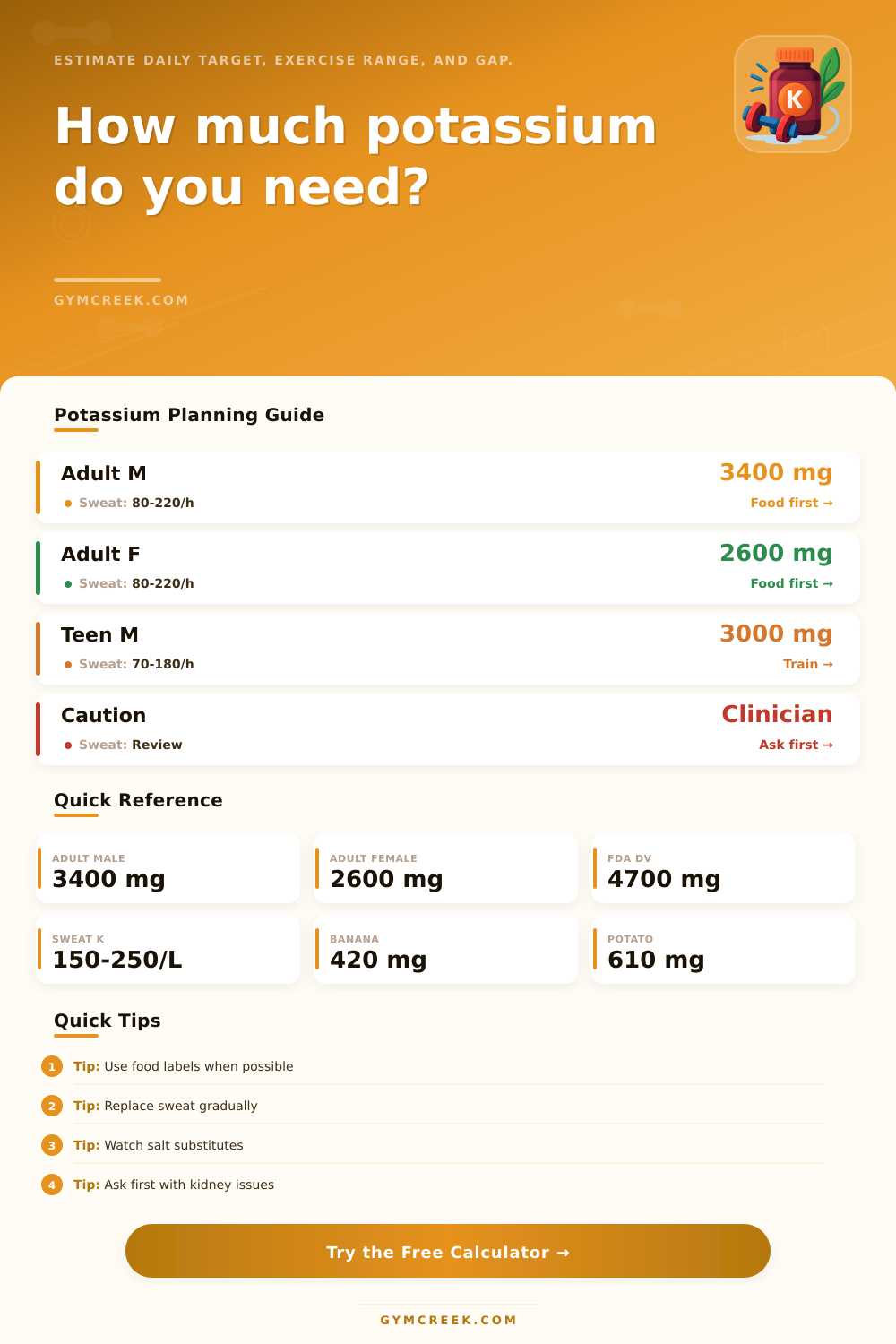
| Adult male 19+ | 3400 mg/day | General Adequate Intake style target | Default for adult male athletes |
| Adult female 19+ | 2600 mg/day | General Adequate Intake style target | Default for adult female athletes |
| Teen male 14-18 | 3000 mg/day | Growth and training should be reviewed by a professional when intake is restricted | Teen athlete preset |
| Teen female 14-18 | 2300 mg/day | Diet quality and menstrual health context may matter | Teen female planning |
| Pregnant 19-50 | 2900 mg/day | Use prenatal clinician guidance | Flags caution if selected |
| Breastfeeding 19-50 | 2800 mg/day | Fluid and energy needs may also rise | Flags caution if selected |
| Diet pattern | Model value | Common food pattern | Likely gap cue |
|---|---|---|---|
| Low produce / convenience meals | 24 mg/kg plus 600 mg | Few beans, potatoes, dairy, fruit, or greens | Often below target |
| Mixed omnivore | 30 mg/kg plus 850 mg | Some fruit, dairy, meat, grains, and vegetables | Often close for smaller athletes |
| Balanced high-produce | 36 mg/kg plus 1100 mg | Several servings of produce, dairy, legumes, or potatoes | Usually strong |
| Plant-forward beans and potatoes | 42 mg/kg plus 1250 mg | Beans, lentils, potatoes, squash, greens, fruit, soy foods | Usually above base target |
| Endurance carb-rich day | 38 mg/kg plus 1200 mg | Fruit, potatoes, grains, dairy, sports meals | Good for long-session days |
| Low-carb gym day | 26 mg/kg plus 700 mg | Fewer fruit, legumes, potatoes, and grains | May need attention |
| Sweat volume | Estimated potassium lost | Replacement range | Practical interpretation |
|---|---|---|---|
| Under 1 L | Small | 0 to 100 mg | Normal meals usually cover it |
| 1 to 2 L | 150 to 500 mg | 60 to 350 mg | Food plus normal drink mix is often enough |
| 2 to 4 L | 300 to 1000 mg | 120 to 700 mg | Plan potassium-rich foods around training |
| Over 4 L | High loss | Review | Fluid, sodium, heat, and medical risk matter more |
| Potassium:sodium ratio | Label | What it means | Next planning move |
|---|---|---|---|
| Under 0.7:1 | Low balance | Sodium pattern is high relative to potassium estimate | Emphasize foods and review sodium pattern |
| 0.7 to 1.0:1 | Watch | Common on processed or restaurant days | Add produce, beans, dairy, or potatoes |
| 1.0 to 1.5:1 | Balanced | Potassium is keeping pace with sodium estimate | Maintain food quality |
| Over 1.5:1 | Strong | Food pattern is potassium-forward | Do not add supplements without a reason |
💡Tips
Potassium is an essential mineral for the human body, and potassium is necessary in the body because potassium manage the movement of fluids inside the cells of the human body. Additionally, potassium is necessary for the proper functioning of the muscles in the human body. Most often, individuals thinks of potassium after they begin to feel fatigued.
Fatigue can manifest itself in the body as heavy leg or a lack of energy. It is natural to wonder if a lack of fuel for the body causes the fatigue that one feels or if an imbalance of potassium in the human body causes the fatigue that occurs after strenuous exercises. The amount of potassium that is present in the human body change based on various factors, but the most significant of those factors is the food that an individual consume every day.
Calculate Your Daily Potassium Needs
Although some of the bodys fluids can be lost through sweating, the food that an individual consumes has a more significant impact on the daily levels of potassium that is present in the body. For instance, an individual that consumes sandwiches and other snack foods contains a different amount of potassium then an individual that consumes foods like beans, potatoes and fruit. This calculator allow an individual to input various data regarding their body and their diet, which prevent them from guessing at the amount of potassium that their body require.
Each of the parameter that an individual inputs into the calculator can have an impact upon the amount of potassium that is calculated for that individual. For instance, an individual’s body weight can be one of the parameters that is input into the calculator, as the body weight can determine the amount of food that an individual need to consume. Additionally, the amount of sodium that an individual consumes can be one of the parameters that is entered into the calculator.
Other parameters may include the amount of sweat that an individual produce during their training session, the length of that training session, the degree to which that individual is exposed to heat, and other parameters related to the health and bodily functions of that individual. Finally, there are additional settings within the calculator that ensure that the software will not require the intervention of a medical professional for the parameters for potassium that is calculated. The output of the calculator will include information regarding the levels of potassium that are present in the body of the individual that enters the calculations into the calculator.
For instance, the calculator will calculate the amount of potassium that the person consumes from the food each day. In addition, the calculator will determine the amount of potassium that an individual will need to consume after their training session to restore any potassium levels that may have been lost during those exercises. Additionally, the calculator will provide information regarding the balance of potassium and sodium levels in the body, the gap in potassium levels between the current levels of that individual and their target levels of potassium.
Even though the calculator can include many factors related to the body, there are still various real-life factor that influence the amount of potassium in an individual’s body. For instance, an individual may become acclimated to heat over time. Additionally, an individual may increase the amount of training that they perform without being able to adjust their grocery habit to provide more potassium to the body.
Finally, various medications and health conditions of an individual may impact the way in which potassium affect the body. Thus, the calculator only provides an estimate for these variables. The reference tables within this calculator provide the target levels of potassium for various age groups and sex group.
These tables provide the targets for each group of individuals before any of the other variables are entered into the calculator. These tables can provide a basis for understanding the needs of the body for potassium, as the individual can use this information to input various factors related to their bodies into the calculator. Individuals often focus upon the period following their workout, yet the body must manage the potassium levels that are required throughout the day.
While an individual may require a higher level of potassium after a particularly hard training session, ordinary meals fulfill the majority of the bodys need for potassium. Additionally, although the calculator can provide an understanding of the levels of potassium in an individual’s body, the calculator does not track the actual level of potassium in that bodys blood. Thus, this calculator should not of been used as a means of replacing blood tests performed on that individual.
Instead, individuals should use the calculator to determine if the body weight of the individual, the number of training sessions that they perform, and the type of food that they consume each day is likely to provide the body with a workable amount of potassium. Additionally, rather than relying upon potassium to be consumed after each training session, individuals should focus upon their food intake to ensure that their bodies contains an adequate amount of this essential mineral.