
Pull the handle toward your chest; your legs kick forward. Air hisses through the mechanism or maybe it’s just rushing water, and flywheel spins. Your heart pounds.
It seems like cardio. Most of us think we’re simply getting our heart pumping. And to be honest, that’s a reasonable guess.
After all, there we are: in middle of gym’s cardio aisle, next to ellipticals and treadmills. But rowing isn’t simple cardio. Rowing is coordination, too.
Every time you sit down to row, you’re engaging a complex chain of muscle that don’t often work together during the day. Knowing which ones is doing most of the heavy lifting will alter your approach to machine. It transforms a vague cardio workout into a targeted strength and conditioning session.
Rowing is a full body movement. It recruits muscles from your fingertips to your heels. That make it an efficient exercise, giving you a lot of stimulus for the time invested.
But many people don’t use good form when they row. They isolate their arm and don’t involve their legs, which totally defeats purpose. Look at anatomy of stroke to see where real power is coming from.
The Main Muscle Groups Engaged During Rowing
Why Rowing Is More Than Cardio
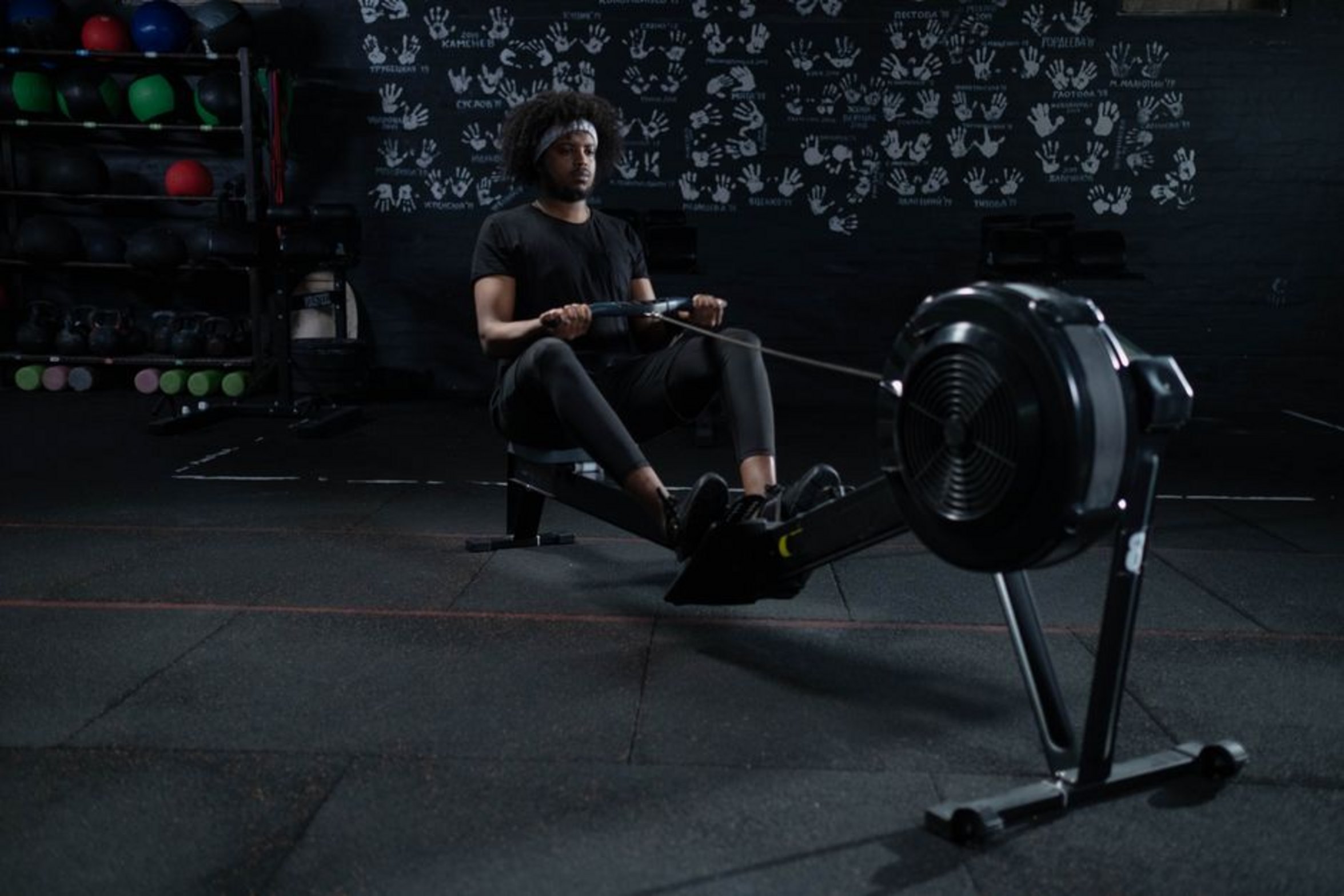
Your legs are the engine; your quads, hamstrings and glutes. Before your arms pull or your back move, your knee joints extend in a powerful way that starts the drive phase. Watch elite rower and you’ll see this leg dominance clearly as they generates most of their speed from lower body.
Why? Because it’s powerful and protects your back. Leg muscles is larger and stronger than arm muscle.
So when you use them, you can handles more resistance without stressing your joints. Plus, even though you’re sitting down, you’re building lower body muscle. That’s right: you’re getting the benefits of both weight training (muscle growth) and cardio (stamina).
Legs Drive the Power
After your legs stretch, your core kicks in. As you hinge forward, your abs and lower back engage to stabilize your torso. This is what I call the “catch and recovery” phase, where the stiff trunk transfers energy from your legs to your upper body.
And if your core is weak, all of that energy leak out. A strong core enables efficient energy transfer, keeping your back safe and preventing most common rowing injury: lower back strain. Most folks injure their backs by rounding their spine, rather than hinging from the hips.
Core Stabilization and Safety
When you engage your abs, you keep your spine neutral and safe. Then your back muscles kicks in. As you grab the handle and pull, your trapezius, rhomboids and lats pulls your shoulder blades back.
That’s the pull, hence the name of this exercise. And these muscle are what give your upper back its definition and width, something people chase with pull-ups and lat pulldowns in gym. When you’re rowing, you’re doing same type of pulling movement as in pull-ups and lat pulldowns … except instead of just sitting there and moving weight, you have to maintain your stability and pulls against resistance.
Back Muscles and Functional Strength
In other words: You’re building functional strength. Plus, because you sit down at a desk all day, rowing helps improve your posture. Rowing every day help counteract the slouch from sitting at an office.
Now finally: Your arms comes into play at end of move. As you curl the handle up to your ribcage, your biceps and forearms does their thing. But they’re not the first to engage, so don’t start there.
The Role of Arms
Your arms are simply the connection point, not the power source. Remember this sequence: Legs-core-back-arms. Get it right and it’ll change your entire workout, and you’ll feel it in new places.
You’ll feel your lats stretch. You’ll see your glutes fire. It’s a full circuit that flows together in one smooth movement, no other machine gives you quite this combination of endurance and power.
Use your arms to complete the move; use your back to power the movement; guard your core; respect your legs. Once you get the anatomical concept down, the rowing machine ceases to be nothing more than yet-another-treadmill-alternative. It becomes a tool designed to create a durable, powerful body.
You’ll row better, harder, and saferer. You should of focused on form from start. Keep this in mind the next time you plant your feet on the footrests: Your quads are primed to push.
Let them drive.
