🥩 Protein Intake Calculator
Calculate your optimal daily protein for muscle gain, fat loss, or maintenance — personalized to your body and goals
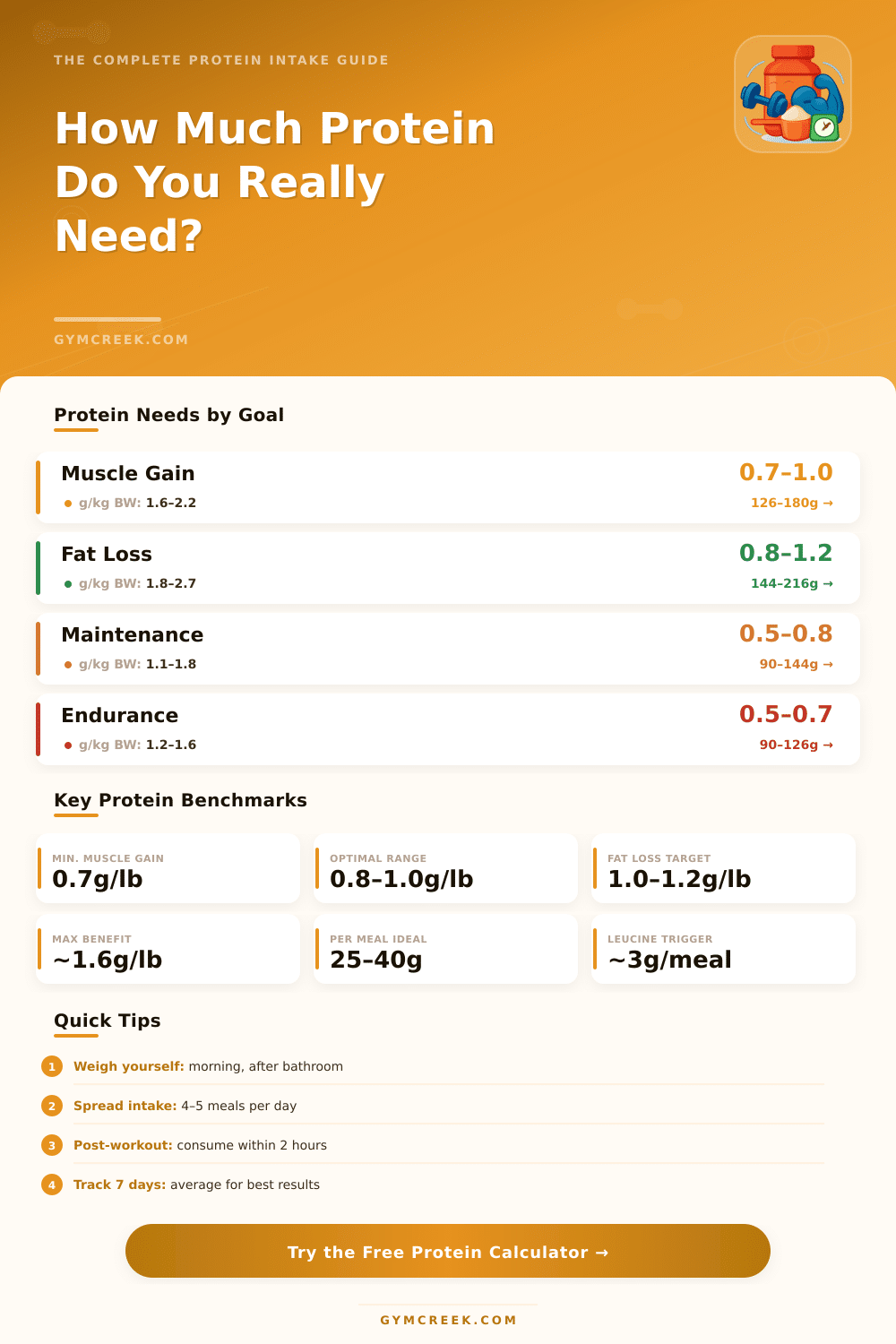
| Goal | g per lb BW | g per kg BW | Example (180 lb / 82 kg) | Evidence Level |
|---|---|---|---|---|
| Muscle Gain | 0.7 – 1.0 | 1.6 – 2.2 | 126 – 180g | Strong (ISSN 2017) |
| Fat Loss | 0.8 – 1.2 | 1.8 – 2.7 | 144 – 216g | Strong (Helms 2014) |
| Body Recomp | 0.8 – 1.0 | 1.8 – 2.2 | 144 – 180g | Moderate |
| Maintenance | 0.5 – 0.8 | 1.1 – 1.8 | 90 – 144g | Strong (RDA + ACSM) |
| Endurance | 0.5 – 0.7 | 1.2 – 1.6 | 90 – 126g | Moderate (ACSM) |
| Active Senior (50+) | 0.6 – 0.9 | 1.4 – 2.0 | 108 – 162g | Strong (Bauer 2013) |
| Food Source | Protein (g/100g) | Calories (kcal) | Complete Protein? |
|---|---|---|---|
| Chicken Breast (cooked) | 31g | 165 | Yes |
| Canned Tuna | 26g | 116 | Yes |
| Lean Ground Beef (90%) | 26g | 215 | Yes |
| Salmon (cooked) | 25g | 208 | Yes |
| Eggs (whole) | 13g | 155 | Yes |
| Greek Yogurt (0% fat) | 10g | 59 | Yes |
| Cottage Cheese (low-fat) | 11g | 85 | Yes |
| Tempeh | 19g | 193 | Yes |
| Lentils (cooked) | 9g | 116 | No (incomplete) |
| Black Beans (cooked) | 9g | 132 | No (incomplete) |
| Tofu (firm) | 8g | 76 | Yes |
| Edamame | 11g | 121 | Yes |
| Category | Body Fat % |
|---|---|
| Essential Fat | 2 – 5% |
| Athletic | 6 – 13% |
| Fitness | 14 – 17% |
| Average | 18 – 24% |
| Obese | 25%+ |
| Category | Body Fat % |
|---|---|
| Essential Fat | 10 – 13% |
| Athletic | 14 – 20% |
| Fitness | 21 – 24% |
| Average | 25 – 31% |
| Obese | 32%+ |
| Goal | Protein % | Carbs % | Fat % | Calorie Surplus/Deficit |
|---|---|---|---|---|
| Muscle Gain | 25 – 35% | 40 – 50% | 20 – 30% | +200 to +400 kcal |
| Fat Loss | 30 – 40% | 30 – 40% | 20 – 30% | −300 to −500 kcal |
| Body Recomp | 30 – 35% | 35 – 45% | 20 – 30% | ±0 kcal |
| Maintenance | 20 – 30% | 40 – 50% | 25 – 35% | ±0 kcal |
| Endurance | 15 – 20% | 55 – 65% | 20 – 25% | ±0 to +200 kcal |
Protein really matters for keeping your body in good shape. The standard advice for adults above 18 years is 0.8 grams each kilo of body weight daily. Children, that still grow, as well as pregnant and nursing women, need more than that base because their bodies care about extra tasks.
DISCLOSURE: This post may contain affiliate links, meaning when you click the links and make a purchase, I receive a commission. As an Amazon Associate I earn from qualifying purchases.

Most adults should get around 10% to 35% of their daily calories from Protein. An interesting fact is that the typical American gets almost 16% of their calories from that source. A person that only hits the lowest RDA and stays a bit active, would end at the bottom limit, with around 10% of calories from Protein.
How Much Protein Do You Need Each Day
When one checks the numbers, the advice about Protein ranges between 0.8 and 1.8 grams each kilo of weight. Even so it depends on your daily needs. Whether you strongly train in the gym or want to grow Muscle, you need the higher amount.
Some experts offer 1.8 to 2 grams each kilo for such cases. On the otehr hand, new studies point to 1.2 to 1.6 grams each kilo as ideal range.
The amounts change based on the level of activity. For minimal motion 1.0 gram each kilo per day is enough, middle exercises need 1.3, and hard training needs 1.6. Studies confirm that 1.6 grams each kilo help to well grow Muscle and improve output.
For athletes, an amount between 1.3 and 1.8 grams each kilo, spread in three or four meals threw the day, usually works well.
The way you spread Protein through meals does matter. The best range is between 15 and 30 grams each meal. Studies show that eating more than 40 grams in one sitting does not beat the safe window of 15 to 30 grams.
How you spread your Protein intake can be even more important than the whole daily amount.
At the end of the day, the daily Protein intake is the main factor, although the time and frequency of meals a bit help in the right way. Older folks especially gain from passing the RDA to keep Muscle volume and power. There is no universal Protein need.
It ranges based on your goals, your current shape and the strength of your training. The most useful method is a steady meal plan rich in fibers, vitamins, minerals and good Protein sources.
The advice about Protein relates to the total amount from everything that you eat. Not only from powders or supplements, but from real food. That includes all meals and snacks through the whole day.
Meat, fish and eggs form complete Protein with all eight key amino acids. Dairy products like milk, yoghurt, cottage cheese and cheese give natural Protein in big measure. Eggs are especially easy todigest for the body and mix well with other stuff to reach your daily goals.