Calculate your personalized daily calories, protein, carbs & fat targets for optimal muscle growth
⚡ Quick Presets
📏 Your Details
💡 Measurement Tips: Weigh yourself first thing in the morning after using the bathroom, without clothes. Use a 7-day average for accuracy. Estimate body fat by comparing to visual references. Leaving it blank uses the Mifflin-St Jeor formula without lean mass adjustment.
🎯 Your Muscle Gain Macro Plan
🥗 Daily Macro Targets
⚠️ Disclaimer: This calculator provides estimates only. Individual results vary based on genetics, hormones, sleep, and training quality. Consult a healthcare professional or certified trainer before starting any fitness program.
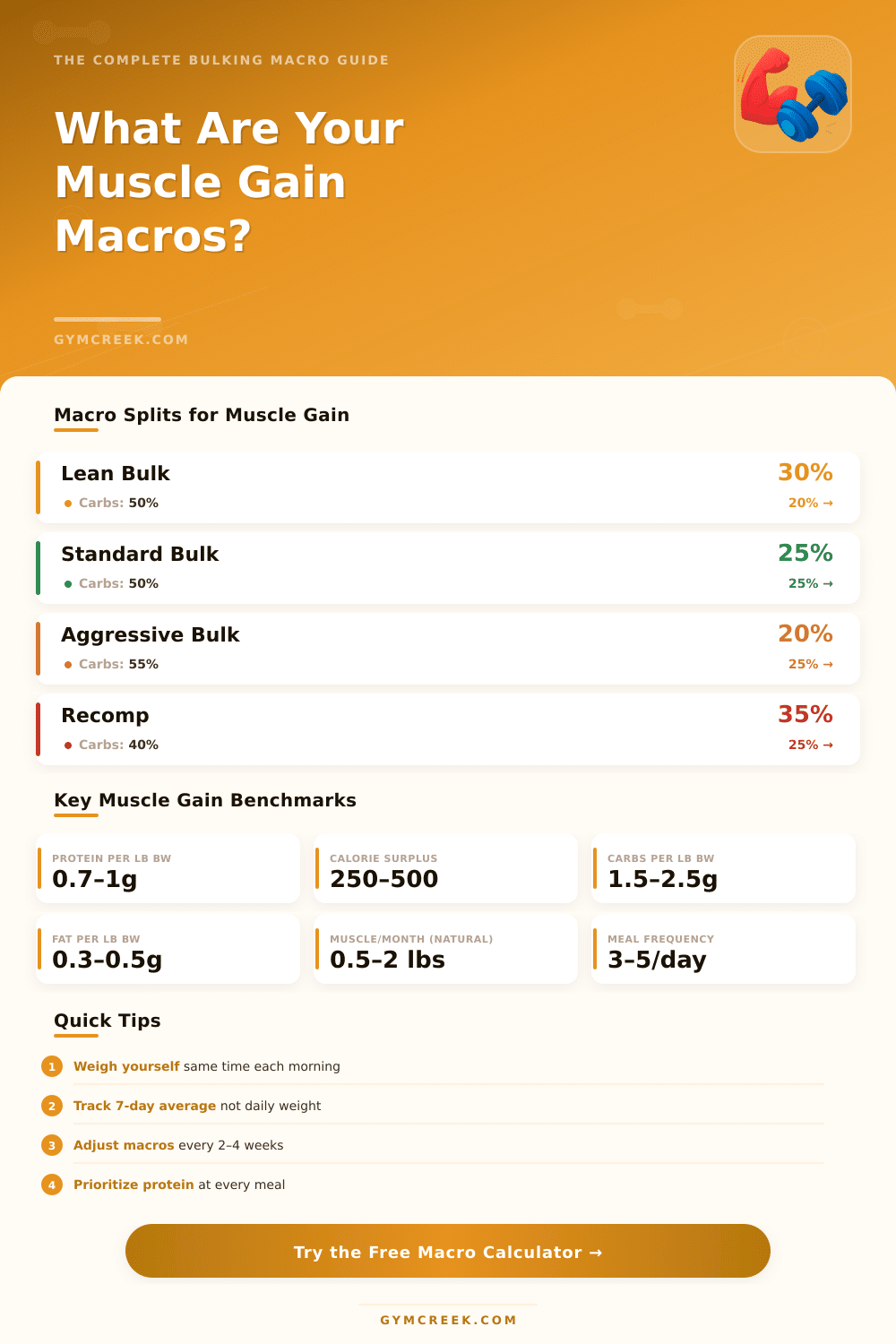
📊 Macro Split Reference by Goal
Goal
Protein
Carbs
Fat
Calorie Surplus
Lean Bulk
28–32%
48–52%
18–22%
+150 to +250
Standard Bulk
25–30%
48–53%
22–27%
+300 to +400
Aggressive Bulk
20–25%
52–58%
22–26%
+450 to +600
Body Recomp
33–38%
38–43%
22–27%
±0 (TDEE)
🥩 Protein Intake Guidelines (per lb of Bodyweight)
Training Level
Minimum
Optimal
Maximum Useful
Sedentary / No Training
0.36 g/lb
0.45 g/lb
0.60 g/lb
Beginner (0–1 yr)
0.60 g/lb
0.75 g/lb
0.90 g/lb
Intermediate (1–3 yrs)
0.70 g/lb
0.85 g/lb
1.00 g/lb
Advanced (3+ yrs)
0.75 g/lb
0.90 g/lb
1.10 g/lb
Competitive Athlete
0.80 g/lb
1.00 g/lb
1.20 g/lb
📈 Realistic Natural Muscle Gain Rates
Training Level
Male (lbs/month)
Female (lbs/month)
Annual Potential
Beginner (0–1 yr)
1.5–2.5 lbs
0.75–1.25 lbs
18–25 lbs
Intermediate (1–3 yrs)
0.75–1.25 lbs
0.4–0.7 lbs
9–15 lbs
Advanced (3+ yrs)
0.25–0.5 lbs
0.1–0.25 lbs
3–6 lbs
💪 Body Fat % Categories for Muscle Building
Category
Males
Females
Muscle Build Suitability
Essential Fat
2–5%
10–13%
Not recommended
Athletic
6–13%
14–20%
Excellent (recomp or lean bulk)
Fitness
14–17%
21–24%
Good (lean bulk ideal)
Average
18–24%
25–31%
Consider cutting first
Obese
25%+
32%+
Cut first, then bulk
⏱ Meal Timing for Muscle Gain
Strategy
Frequency
Protein per Meal
Key Benefit
Standard Distribution
3–4 meals/day
35–50g
MPS maximised each sitting
High Frequency
5–6 meals/day
25–40g
Consistent amino acid supply
Pre-Workout Meal
60–90 min before
20–40g protein
Performance & recovery
Post-Workout Meal
Within 2 hrs after
30–50g protein
Muscle protein synthesis
Building muscle can be challenging, even if you follow a proper workout routine. Even the best weights lifting routine will not yield desired muscle gain without the proper fuel for your body. Your body require specific nutrients for muscle gain. A muscle gain macro calculator will help determine the perfect amount of calories, protein, carbohydrates, and fats your body requires to gain muscle without gaining fat.
Many people struggle with gaining muscle. Some people eat too little to burn calories and gain muscle, while others eat too much fat and muscle without proper macronutrient distribution. To gain muscle, you need to consume a calorie surplus while ensuring your diet have sufficient protein to encourage muscle protein synthesis. With the proper training routine and nutrition, muscle gains will be impressive for your efforts.
How a Muscle Gain Macro Calculator Can Help with Muscle Gains
Nutrition play a significant role in gaining muscle. The nutritional needs of an individual vary depending on several factors. For example, younger individuals will gain muscle more efficient than those in their 40s. Someone who sits at their desk for most of their working day will require a different diet compared to a construction worker who works out extensively during the day.
Protein is essential for gaining muscle. When performing weight lifting exercises, your muscles experience damage. The repair of this muscle require protein. Research shows that 0.7 to 1.0 grams of protein per pound of body weight are the best amount for gaining muscle. However, the exact amount may vary depending on an individual’s experience level with weight lifting. Beginners will require less protein than an advanced trainee who can lift heavy weights.
Carbohydrates are equally important in building muscle. Carbs gives your body the energy required for high-intensity workouts. Without energy, muscle gains will be challenging to accrue. A muscle gain macro calculator will help find the right amount of carbohydrates in your diet to fuel your workouts without adding excess calories that will lead to fat gain.
Fats may not be the primary concern for bodybuilders, but they are crucial for gaining muscle. Fats in your diet will encourage the body to produce testosterone, the hormone that promotes muscle growth. Diets with extremely low amounts of fat will reduce the amount of testosterone your body produce. To promote muscle gains, maintain fats at 20-30% of your total diet.
Creating the proper amount of calories for muscle gain is crucial. Eating too much surplus will lead to fat gain. Conversely, consuming too few calories will make it challenging for muscles to gain the size they aim for. A surplus of 250-500 calories above your maintenance levels is the best range for muscle gains. This surplus, known as a lean bulk, will encourage muscle gains without the body gaining fat.
As shown in the calculator above, individual factors will change the recommendations for muscle gains. For example, a 25-year-old male athlete will require more calories than a 45-year-old female with a desk job. An individual with high body fat may gain muscle with a smaller calorie surplus as their body will have to work less to burn the calories required for muscle gains. In these cases, the body can work to gain muscle and burn fat at the same time.
The timing of nutrients intake is equally important for muscle gains. Consuming protein before and after workouts will maximize muscle protein synthesis. Experts recommend 20-40 grams of protein per meal while spacing meals 3-4 hours apart. Doing so will ensure that your body maintains the required amount of protein for muscle gains. Carbs before and after workouts will maximize the performance of your workouts and your body’s recovery time after workouts.
Individuals has to set realistic expectations for muscle gains. Natural weight lifters will gain muscle at different rates. Beginners will gain 1.5-2 pounds of muscle per month, while intermediate trainees will gain 0.75-1.25 pounds per month. However, advanced trainees will only gain a few pound of muscle per year. The rates at which muscles are gained can vary between men and women due to differences in the hormones that regulate muscle growth and body composition.
Individuals have to track their progress. Use measuring tapes to measure the muscles, take progress photos, and note their strength gains. If these three parameters improves, the nutrition plan is working for them to build muscle. Use these parameters to make adjustments to the nutrition plan as necessary.
Sleep and stress play a crucial role in muscle gains. Poor sleep will reduce the amount of testosterone and growth hormones in your system while increasing the presence of cortisol, a stress hormone. Poor hormonal balance will work against your muscle gains. To build muscle, ensure that you get at least 7 hours of sleep each night and find time to reduce your stress levels.
Consistency is the most crucial factor for muscle gains. A muscle gain macro calculator will help you find the ideal nutrients for your body. However, consistency in your workouts and nutritional plan will ultimately determine your success. You can start with the calculations from the tool but expect to make adjustments as necessary. Some people may gain better results with higher carbohydrates in their diets than with higher fat intake. Finding what works best for your body may take some experimentation in the 4-6 week leading up to your training goals.
Supplements cannot replace the benefits of proper nutrition. While there are benefits to creatine and protein powder supplements, the primary source of nutrition should come from food. Focus on eating lean proteins, eggs, dairy products, legumes, whole grains, fruits, and vegetables in your diet to promote muscle gains.
Patience is the most crucial virtue for individuals looking to gain muscle. Muscle gains take time. Consistency over several years will yield the best results for your body. Combining the proper training routine with the proper nutritional plan as calculated by a muscle gain macro calculator, adequate sleep, and consistent efforts to follow the nutrition and training plan will transform your physique over time.
The most successful weight lifters and muscle builders in the world focus on proper nutrition as much as their training program. By following the calculations and recommendations for the nutrients your body require for muscle gains, you will eliminate the guesswork in your fitness program. Follow these recommendations to develop the strongest and most muscular body of your dreams.
Hi, I am Hadwin, a Gym lover and have set up my own home Gym for daily use. Empower Gym Equipment! I share my real personalized experiences on the Gym equipment!