Matcha Caffeine Calculator
Estimate matcha caffeine from powder grams, grade, serving count, preparation style, body weight, timing, tolerance, current caffeine intake, and daily cap.
📌Matcha Caffeine Presets
Presets use typical matcha caffeine ranges. For best accuracy, use the custom caffeine field if your matcha tin lists milligrams per serving or lab-tested caffeine.
⚙Calculator Inputs
Matcha caffeine snapshot
Enter matcha grams, grade, timing, and body weight to estimate caffeine load.
📊Matcha Metrics Grid
📑Reference Tables
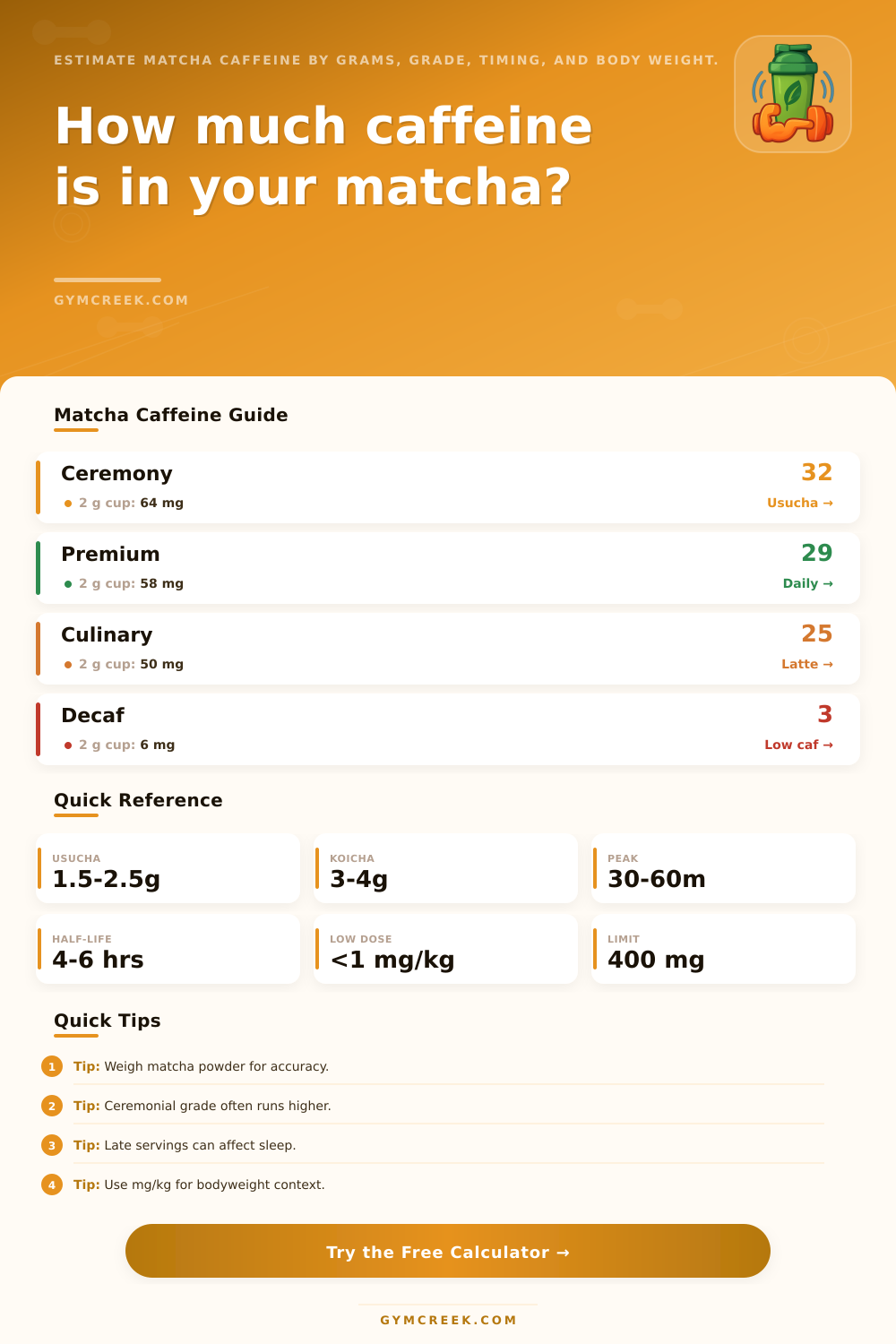
| Matcha Grade | Typical mg/g | 2 g Serving | Calculator Use |
|---|---|---|---|
| Ceremonial | 28-36 mg/g | 56-72 mg | Higher-grade bowl estimates |
| Premium daily | 25-32 mg/g | 50-64 mg | Everyday usucha |
| Culinary | 20-28 mg/g | 40-56 mg | Recipes and smoothies |
| Latte blend | 18-26 mg/g | 36-52 mg | Milk drinks |
| Decaf matcha | 1-6 mg/g | 2-12 mg | Low-caffeine planning |
| Serving Style | Powder Range | Liquid Range | Caffeine Note |
|---|---|---|---|
| Light usucha | 1.0-1.5 g | 60-90 ml | Lower caffeine bowl |
| Classic usucha | 1.5-2.5 g | 60-100 ml | Common daily matcha |
| Koicha | 3.0-4.0 g | 30-50 ml | Dense ceremonial serving |
| Latte | 2.0-3.0 g | 180-300 ml | Same powder, more liquid |
| Smoothie | 2.0-4.0 g | 250-500 ml | Often larger total dose |
| Bodyweight Dose | Range | Typical Feel | Planning Cue |
|---|---|---|---|
| Very light | Under 0.5 mg/kg | Gentle | Good starter range |
| Light | 0.5-1.0 mg/kg | Noticeable | Common daily cup |
| Moderate | 1.0-2.0 mg/kg | Strong focus | Watch sensitivity |
| High | Over 2.0 mg/kg | Very strong | Use caution |
| Timing Factor | Estimate | Why It Matters | Calculator Logic |
|---|---|---|---|
| Peak effect | 30-60 min | Most alertness appears here | Serving time plus one hour |
| Half-life | 4-6 hours | Caffeine declines slowly | Sensitivity adjusts warning |
| Late day | After 2 PM | Sleep impact is more likely | Flags higher remainder |
| Daily cap | User set | Includes current caffeine | Matcha plus prior intake |
💡Tips
The trick with a lot of morning matcha is that its perceived calmness hides a hefty dose of caffeine. Because we drink whole leaf; not merely steep it in hot water, there’s significantly more caffeine per gram than most people think. Before you make yourself another bowl, estimate how much you’ve actualy ingested.
After all, this isn’t an excuse to start downing extra bowls on a slow Tuesday. Once you enter both your body mass and the weight of your powder, the calculator do the math for you. You don’t need to worry about accidently overdosing or getting coefficient wrong.
Why You Should Measure Your Matcha
First up, let’s talk about measurement. Matcha can be very finicky. Since matcha is packed differently into each tin, its density vary, making teaspoons less reliable. Weighing out your dosage in grams eliminates all of that. For ceremonial grade, plan on around thirty-two milligrams of caffeine per gram of tea. Culinary grades and decaf blends will lower this number. This is where the tool take into account those variances by allowing you to choose which grade you’re drinking.
It may seem small but it makes a big difference in the result. Precision also allows you to avoid any jittery feelings when consuming caffeine. You don’t know how much you are getting if you aren’t measuring it.
Most people don’t realize that body weight matter. That same 50 mg of caffeine might feel mild when an athlete weigh 90 kilograms, but it can hit harder then someone else weighs 50 kg. How does it help? The calculator calculates your total as a ratio: milligrams of caffeine per kilogram of your body weight. This means we’re able to look at your intake in terms of a standard unit, so you can easily see how much you’re taking relative to your size.
Is it a gentle focus zone? Or have you pushed yourself into the “oh sh*t I’m on high stimulation” zone? It’s the distinction between being alert vs. Feeling anxious. Until the crash happens, most casual users don’t consider this ratio; but monitoring it proactively maintains stable energy all day long.
But it’s not just about how much you consume, it’s also about timing. Half of caffeine from that morning coffee will still be in your body around lunchtime. So if you’re sipping matcha at 2 pm, by the time you get ready for bed at 10 pm, there’s likely to be quite a bit left. The tool calculates how much caffeine will still be lingering come bedtime depending on when you had your initial dose. It won’t berate you for your decisions (instead), it’ll provide you with the information needed to make an informed one. Maybe you want to cut back on amount of powder used so you don’t interrupt those valuable deep sleep phase, or swap out your matcha for some decaf after lunch. Quality of sleep trumps any supplement you can add.
Remember the rest of your consumption. Matcha drinkers tend to think in isolation: “Oh, I just drank a matcha.” But did you also drink some coffee before? And a soda during lunch? Add your present-day caffeine inputs to the calculator and discover your actual total for the day compared to a healthy maximum. For most people, a reasonable cap on caffeine is around four hundred milligrams per day (though again this is total consumption).
Once you see how much all those sources add up, it is easier to focus on matcha for its special blend of L-theanine and cut back elsewhere when needed. Matcha contains amino acids, like L-theanine, that encourage a relaxed state of alertness (that’s why so many people choose it over coffee), but the caffeine itself still adds up no matter where it come from.
But it’s also about how it is prepared. Matcha is available as both usucha (thin), which is standard, and koicha (thick and dense) that has much more caffeine per sip. Latte preparation dilutes the powder with milk, but usually uses more powder overall to ensure flavor balance remain intact. These techniques alter how much actual powder you’re consuming at once, and this is where tool comes into play. Knowing these details enables you to customize your drink based off your goals.
Are you looking to wind down after a long workday? Prepare for a night of reading? Or perhaps get ready for your workout? Knowing exactly what is in your cup gives you the power to direct your day. After all, matcha is a practice in intention.
Once you know the numbers, the ritual is no longer merely soothing… It becomes a science. It is a habit transformed into a dependable tool for balancing and focusing on each day ahead. You should of known that before starting.