Marathon Fuel Calculator
Estimate marathon carbohydrates, fluids, sodium, serving count, and timing from your finish time, sweat rate, gut training, and race-day setup.
📌Race fuel presets
Presets fill the entire form with realistic race contexts, then recalculate the fueling schedule.
⚙Runner profile
🏁Race and fueling inputs
Race fueling plan
Enter race details to estimate carbohydrate, fluid, sodium, and timing.
📊Fuel metrics
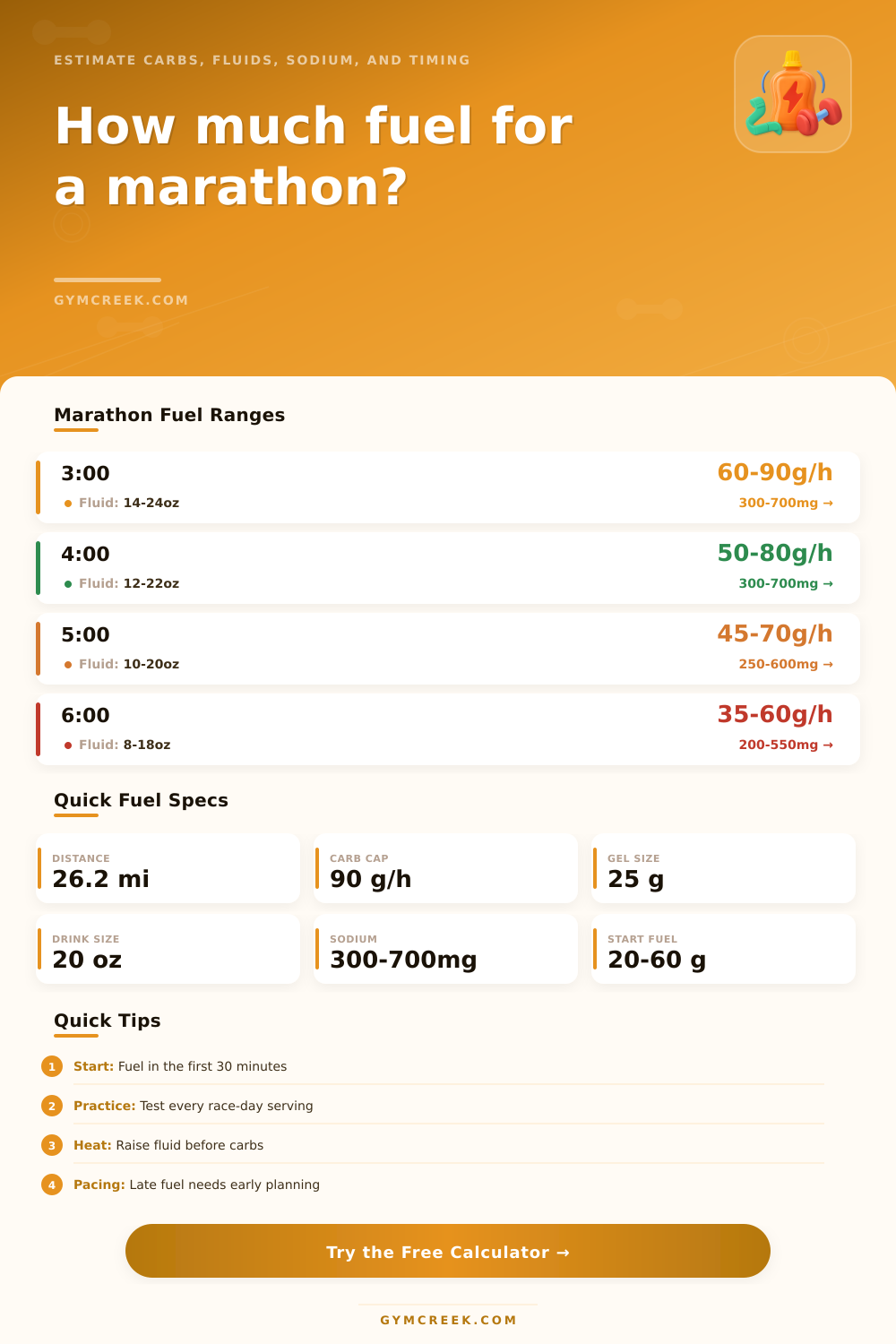
📋Marathon fuel ranges
| Runner context | Carbohydrate range | Fluid range | How to use it |
|---|---|---|---|
| First marathon or cautious stomach | 30 to 55 g/hour | 8 to 18 oz/hour | Prioritize practice and steady early timing. |
| Steady recreational racer | 45 to 70 g/hour | 10 to 22 oz/hour | Works well for many 3.5 to 5 hour finishes. |
| Performance marathoner | 60 to 90 g/hour | 12 to 28 oz/hour | Requires gut training and race simulation. |
| Hot or humid race day | Keep carb range practiced | Raise fluid cautiously | Heat usually changes fluid needs before carb needs. |
📝Fuel schedule scenarios
| Scenario | Typical inputs | Expected output | Watch point |
|---|---|---|---|
| Sub-4 road race | 4:00, moderate gut, mild weather | 55 to 75 g/hour | Start fuel before mile 4. |
| Warm race | Warm weather, higher sweat rate | More fluid portions | Do not chase all sweat loss. |
| Course drink focus | Carbs in bottles, aid every 2 miles | Fewer carried servings | Know exact drink portions. |
| Low gut practice | Conservative goal, low gut training | Lower carb ceiling | Practice higher intake gradually. |
🔢Formula reference
| Step | Formula | Variable | Purpose |
|---|---|---|---|
| Finish duration | hours + minutes / 60 | race hours | Sets fuel and fluid totals. |
| Carb target | base g/hour x modifiers | g/hour | Blends goal, gut training, terrain, and duration. |
| Fluid target | sweat rate x replacement | oz or L/hour | Estimates drink volume without full sweat replacement. |
| Energy context | Mifflin-St Jeor x activity | TDEE | Compares race carbs with daily needs. |
✅Marathon fueling tips
Marathon fueling is a processes that requires careful planning. Many decisions early in a runner’s career may lead to large problems during the marathon. Although a runner may have trained their entire life towards the goal of completing a marathon, it is possible that the runner will need to walking during the race if the fueling plan fails.
For these reasons, many runners focus on the aspects of fueling that includes carbohydrates, fluids, and sodium in the period before the marathon begins. To create a successful fueling plan for marathon races, a runner must understand how their body respond to the effort they put into running, and how the weather may impact their needs during the marathon. Furthermore, the fueling plan for a marathon must be simple so that a runner can remember and follow the plan while running tired leg over 26.2 miles.
Marathon Fueling Basics
Every runner has different variables that impact their needs during a marathon. These variables may include the time that the runner intends to take to finish the marathon, the runner’s body weight, the rate at which they tend to sweat during races, and the level of training their stomach has undergone in relation to the types of fuel they will consume during the marathon. For these reasons, a runner who intends to finish a marathon in four hours in cool weather will have different needs then the runner who intends to finish in five and a half hours in warm and humid weather.
The calculator included on this page can mathematically determine the needs of a runner based on these different variables, eliminating the guesswork that runners may otherwise have to use to determine their fueling plan. However, it is up to each runner to understand the variables and the reason for each component requested of them by the calculator. Carbohydrates are one of the main components of a fueling plan for runners who compete in marathons.
The glycogen that exists in a runner’s body is limited, and when running, a runner burns that glycogen at a steady rate. The target rate at which carbohydrates should be consumed during a marathon can be altered based on the length of the marathon, the number of hills in the course, and how well the runners have trained their guts to consume these fuel. For these reasons, the faster that a runner intends to complete the marathon, the more carbohydrates they will need to consume.
However, the more carbohydrates that are consumed will only be effective if the runner has trained their stomach to consume those amounts of carbohydrates. As with many aspects of marathon running, practice will help to make the carbohydrate intake for a marathon a plan that the runner can follow. Another of the main components of a fueling plan is the needs for fluids.
The same logic applies to fluids as to the needs for carbohydrates. Some runners will sweat at different rate, and their rates may even change from day to day. For these reasons, the fluid target for marathon runners will be replaced at a lower rate than the amount of fluid that is lost by these runners.
Such a target prevents the runners from experiencing stomach sloshing, which can lead to slow marathons for these endurance athlete. Additionally, the increased needs for fluids in hot and humid climates will impact the fluid component of the fueling plan before the increased carbohydrate needs for these same conditions. Sodium is an additional component of the fueling plan for marathons.
Sodium will help the body to retain the fluids that a runner consume while running. Additionally, sodium supports the body’s nerves and muscles while running long distance. The calculator will calculate the target for sodium intake according to the weather conditions and the rate at which the runner will sweat, and then compare it to the amount of sodium that is in each bottle of the fluids that are chosen for the runner.
Any difference between these two variables will indicate the amount of additional sodium that a runner should take in from another source during their marathon. Runners who do not pay attention to the sodium component of their fueling plan will likely experience pain or heavy leg during the later miles of their marathon races. Timing is the last component of a fueling plan that a runner should decide.
The plan should begin well in advance of feeling depleted of energy and fluids. Starting to fuel early will help to maintain the runner’s blood sugar and prevent lows in their blood sugar that could result in fainting or other problems during a marathon. Furthermore, spacing out the servings of the fueling plan will prevent the runner from consuming too much fuel at one time and remembering to refuel for the marathon.
The timing of the first fueling and the intervals between the servings will be according to the length of the race and the number of servings of fuel that are recommended to be consume during the race. While the reference ranges for each of these components are provided on the page, they are not the rules for marathons. These ranges show examples of the different types of fueling plans that may exist for runners of different finish times and different weather conditions.
For these reasons, the reference ranges may help a runner to determine whether their numbers and calculations is within the limits of a successful fueling plan. For example, if a runner is new to marathon races, they may consume fewer carbohydrates than a seasoned marathon runner who has trained their body and gut to consume these amount. However, the reference ranges can help to remind a runner of the needs of fluids before the carbohydrates.
Common mistakes with fueling plans include treating them as unchangeable plan. If the weather or the condition of the runners change during a marathon, it is impossible to ignore those changes. A runner might create a fueling plan that incorporates these variables in their calculations, but they may not experience these conditions during their marathon.
Flexibility in a fueling plan will ensure that any problems created by early plan changes can be avoided. Furthermore, many runners will become used to consuming certain products, but it is common for runners to practice with products other than those that will be consumed during the marathon. The body and the gut will become used to those other products, so it is common for runners to experience stomach issues if they change products during their marathons.
Finally, the best fueling plans for runners may appear boring. The most durable fueling plans will use the same amount of fueling products for the length of the marathon, from the first hour to the final miles of the races. Using the same amount and type of fueling products will make it more easy for a runner to remember the fueling plan when their mental and physical stamina begins to fade during these long distances.
The calculator will help to determine the number of servings for each type of fueling product, and the runner will have to practice this number to commit it to memory. For best results, the fueling plan should remain in the background of the runner’s mind during their marathon race.