Leucine Per Meal Calculator
Estimate leucine per meal, the protein serving needed to reach a practical muscle protein synthesis trigger, and how your meal pattern distributes daily protein.
◎Presets
Presets load realistic meal, source, age, and training contexts and recalculate instantly.
⚙Calculator
Leucine meal snapshot
Enter a protein meal to estimate its leucine trigger status.
▦Fitness Metrics Grid
▣Reference Tables
| Profile | Leucine target | Typical protein dose | Calculator adjustment |
|---|---|---|---|
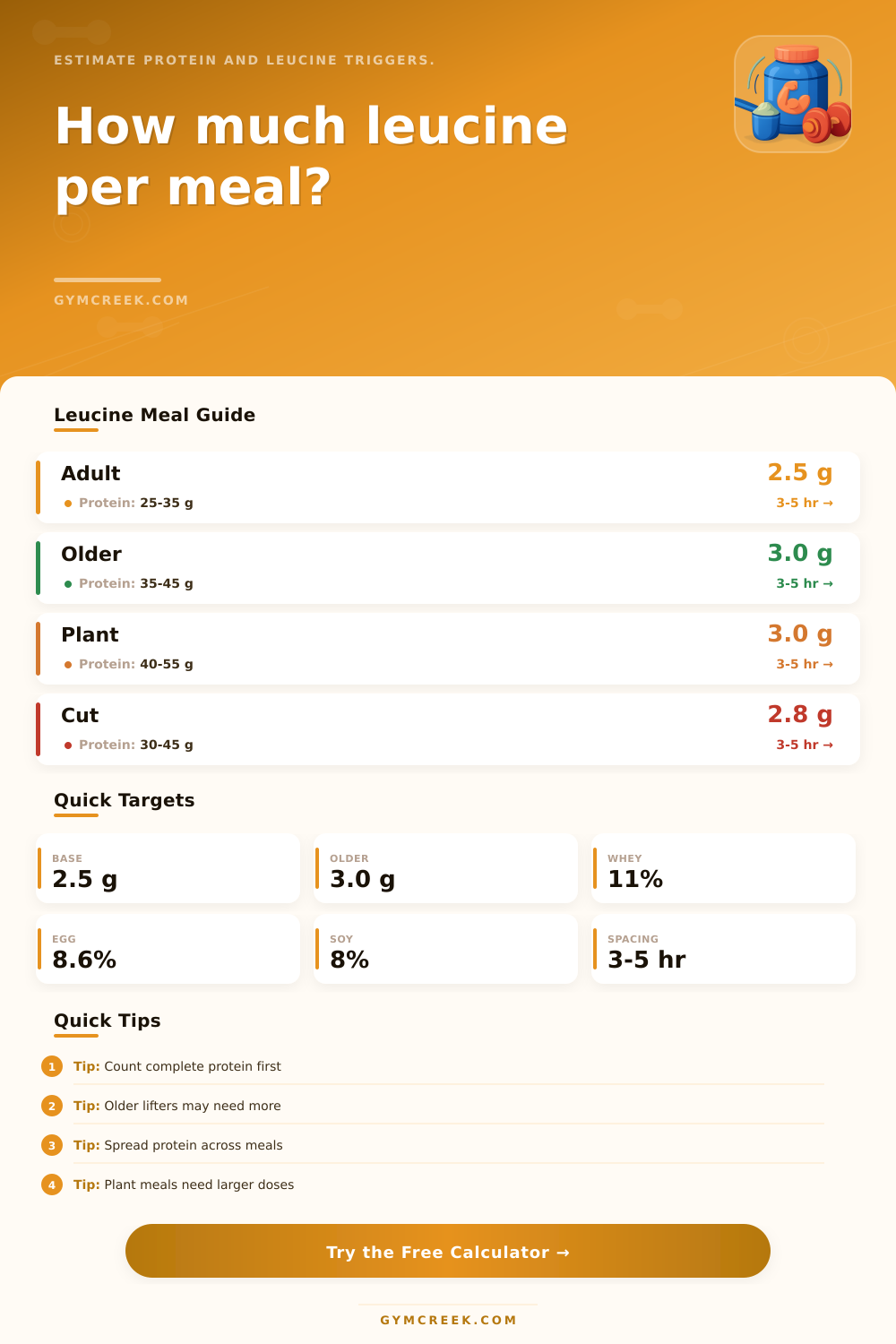
| Healthy adult lifter | About 2.5 g | 25-35 g high quality protein | Base trigger with normal age and mixed goals |
| Older athlete | About 3.0 g | 35-45 g high quality protein | Age 50+ raises the trigger |
| Fat loss phase | About 2.7-3.0 g | 30-45 g protein | Goal adds a small muscle-retention buffer |
| Mostly plant meal | About 3.0 g | 40-55 g protein depending source | Lower leucine percent means more total protein |
| Source | Leucine estimate | Protein for 2.5 g | Planning note |
|---|---|---|---|
| Whey protein | About 11% of protein | 23 g | Usually reaches the trigger with a smaller serving |
| Milk or Greek yogurt | About 9.5% of protein | 26 g | Useful complete-protein baseline |
| Egg or egg white | About 8.6% of protein | 29 g | Often needs a normal meal-size serving |
| Meat, poultry, fish | About 8.2% of protein | 31 g | Close to common meal portions |
| Soy foods | About 8.0% of protein | 31 g | Higher quality plant option |
| Legumes or grains | About 6.8-7.2% of protein | 35-37 g | Often benefits from larger mixed meals |
| Meal pattern | Best use | Leucine risk | Calculator cue |
|---|---|---|---|
| Three protein meals | Muscle gain or maintenance | Each meal must carry more protein | Check per-meal aim and trigger gap |
| Four protein meals | Most lifting goals | Usually easier to hit each trigger | Common 3-5 hour spacing |
| Small breakfast pattern | Busy mornings | First meal can miss leucine threshold | Protein needed card shows shortfall |
| Plant-forward pattern | Vegan or high-fiber diet | Lower leucine percent per gram | Use source-specific protein needed |
| Formula item | Inputs | Output | Why it matters |
|---|---|---|---|
| Leucine grams | Protein grams x leucine percent | Estimated leucine per meal | Main trigger comparison |
| Protein needed | Target leucine / leucine percent | Meal protein target | Shows source-specific serving size |
| Protein dose | Meal protein / body weight kg | g/kg per meal | Checks serving relative to body size |
| Daily target | Body weight kg x chosen g/kg | Daily protein grams | Connects the meal to the whole day |
| Rest-of-day gap | Daily target - eaten - meal | Remaining protein | Shows how much protein is left after this meal |
◇Tips
A tub of whey protein sits on the kitchen counter. Did I waste my money? Do I really need this stuff? Scoop, shake, gulp. Done.
But wait, someone told me I have to drink it within an exact window to build muscle. Turns out, it’s not quite so simple. Your amino acids contain a biological switch that determines whether your body actualy repairs tissue or just burns energy for heat. These are the keys that will unlock repair mode (or burn-and-shred heat mode).
How Leucine Helps You Build Muscle
This key is called leucine. Once you learn what it does and when to flip it, food looks different. The most important trigger to build muscle protein is Leucine. Think of it as a key. You can put gas in your car’s tank, but until someone turns the key, the engine will not fire. In meal terms: your food is the gasoline; Leucine is the key.
The problem? Not all foods contains equal amounts. A small amount of good quality animal protein provide a robust dose of Leucine. Vegetarian protein sources tend to need far more volume before hitting that threshold. Why does it matter? Humans thinks grams of protein equal muscular stimulus. They don’t consider what else that protein is made off.
After plugging all the details about your meals into the calculator above, it do the math for you. You no longer have to guess whether your morning omelet was strong enough to stimulate muscle growth. It takes into account several variables such as food source and body weight. It translates those variables into a practical leucine estimate. No need to become a biochemist to know whether or not you hit the mark.
The tool compares your input against a physiological baseline. Hitting roughly two point five grams of leucine per meal is the goal for most healthy adult. This maximizes muscle repair. That target shifts up higher for older individuals or those who eat mostly plants. This accounts for lower amino acid density or metabolic resistance.
Protein distribution is a second common error. If you’re eating a big steak during dinner but snacking throughout the day with crackers, you’ve been front-loading protein. You haven’t given your body consistent signals to maintain. Because the body can only absorb what it needs at a time, anything else will be pushed off as either energy storage or oxidation.
Spreading your protein over three to five meals sustain that muscle-building switch. It doesn’t allow it to idle. As shown in the reference table, this also allows you to stay in the best range while keeping things simple.
Daily total is king. Getting all the leucine triggers right isn’t going to cut it. You’ll fail if your total protein in a single day don’t meet expectations. Those are balanced out by this tool. It displays how many grams of protein are left after a meal. So you don’t make the mistake of being full on one decent breakfast and then skimping the rest of the day. Both meal quality and total daily volume must be present to make a difference.
The concern among plant-based eaters: “I’m limited.” False. This is only true if you planned poorly (again). If your diet is mostly legumes, it’s lower in leucine. So is your grain. The answer is to eat more or mix them better. Blending soy with others closes this gap well.
Being aware is better than being perfect. Figure out what to look for and you can design meals that does the trick. The source matters. Leucine removes the guesswork of all this. “Did I have enough leucine in that post-workout shake to trigger muscle repair?” becomes “I know exactly how that post-workout meal affected my muscles.
The numbers don’t scare you as much. They’re more just steps to becoming stronger. And once you get that key turned on and see how it works, each bite is one step forward. It is one step toward understanding the mechanism. No more guessing. You are just doing a routine without an explanation. You should of known sooner.