💪 Lean Bulk Calculator
Dial in calories, surplus, macros, and gain rate for a cleaner lean bulk.
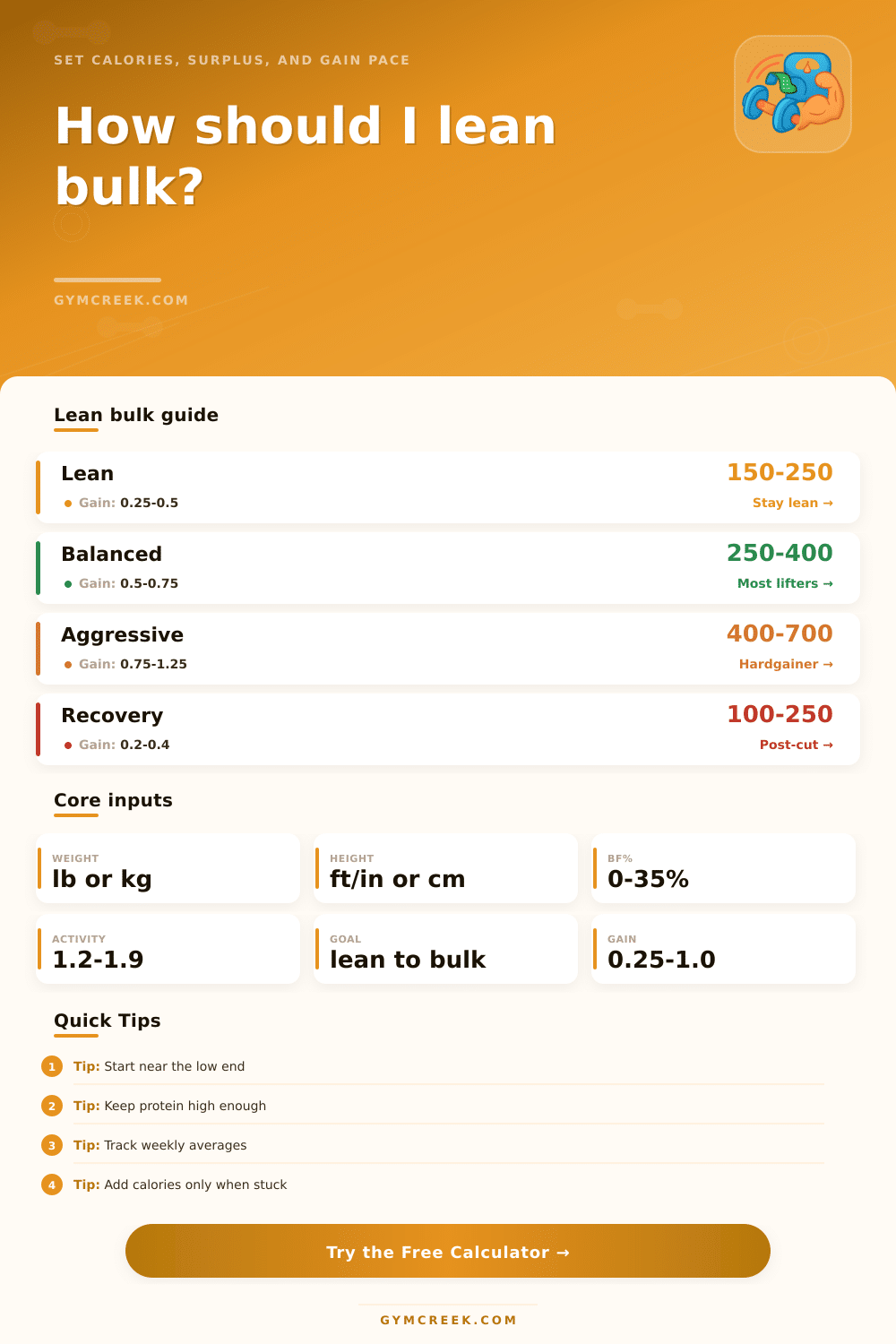
| Style | Surplus | Gain | Best fit |
|---|---|---|---|
| Lean bulk | 150-250 | 0.25-0.5 | Stay tight |
| Balanced bulk | 250-400 | 0.5-0.75 | Most lifters |
| Aggressive bulk | 400-700 | 0.75-1.25 | Hardgainer |
| Recovery bulk | 100-250 | 0.2-0.4 | Post-cut |
| Goal | Protein | Fat | Carbs |
|---|---|---|---|
| Lean | 2.0-2.2 | 0.7-0.8 | Remainder |
| Balanced | 1.8-2.0 | 0.7-0.9 | Remainder |
| Aggressive | 1.6-1.9 | 0.8-1.0 | Remainder |
| Strength | 1.8-2.1 | 0.7-0.9 | Remainder |
| Formula | Use | Inputs | Output |
|---|---|---|---|
| Mifflin | BMR | Age, Wt, Ht | kcal/day |
| Katch | Lean BMR | BF% + lean | kcal/day |
| TDEE | Maintain | BMR x act | kcal/day |
| Surplus | Bulk add | Gain target | kcal/day |
| Profile | BF band | Gain pace | Note |
|---|---|---|---|
| New lifter | 12-18% | 0.4-0.6 | Simple start |
| Hardgainer | 8-15% | 0.5-0.8 | Eat steady |
| Post-cut | 14-22% | 0.25-0.5 | Rebuild well |
| Strength block | 10-20% | 0.4-0.7 | Train hard |
Building muscle without gaining excessives fat is a dream that most weightlifters aspire to achieve. The concept of a lean bulk is ideal for those looking to gain muscle while keeping the fat gain to a minimum. Unlike bulking cycles that often result in fat gain, a lean bulk allows lifter to gain weight through muscle while keeping the fat accumulation minimal. This cycle is perfect for individuals looking to gain muscle while maintaining a tight midsection.
The idea of a lean bulk require an understanding of the specific needs of the individual weightlifter. Factors such as body composition, age, and strength will play a role in determining the amount of calories that should be consumed during the bulk stage. Getting this calculation spot on will ensure that the weightlifter avoids the frustrations of cutting fat later on. Digital bulk calculators are available to determine the specific numbers for each individual. You can use the lean bulk calculator above to determine your specific bulk target.
Lean Bulk Calculator
A lean bulk is a period during which the body gain weight by consuming more calories than the body burns each day. The goal is typically to gain between 0.25 and 0.75 pound of weight each week. This approach allows the body to gain weight in the form of lean muscle rather than body fat. Because of the controlled nature of the bulk phase, many individuals can determine there targets for strength and weight gain.
Bulking phases typically involve consuming 500 to 1,000 calories or more above the body’s requirements. The problem with this approach is that much of the gained weight come in the form of fat. When weightlifters cut later on, they lose the gained muscle as well as the stored body fat. By using lean bulk techniques, individuals can avoid this issue and not have to endure long periods of cutting to shed the excess body fat.
Studies show that gaining lean muscle require the body to consume extra calories. The body needs these calories to build muscle proteins so that the muscle can grow. While bulk and cut routines might seem to work for some individuals, a lean bulk allows the body to achieve better results in the long term. Furthermore, it removes the frustrations associated with cutting body fat.
Another significant benefit of using lean bulk cycles is psychological. The slow building of muscle allows weightlifters to see the scale increase while maintaining the size of their abdominal muscles. This will maintain the weightlifter’s motivation to continue build muscle. The motivation derived from the ability to continue to see improvements in the reflection in the mirror will help the individual to stick to their program. This approach allows for the best results with the least amount of frustration.
The percentage of body fat also plays a significant role in whether an individual should use lean bulking technique. Individuals with lower body fat percentages can use lean bulking techniques as their bodies will partition the calories towards gaining muscle rather than fat. Individuals with higher body fat percentages will benefit more from a recomp phase or a very light surplus technique rather than lean bulking.
Lastly, the experience level of the weightlifter will also play a role in whether lean bulking techniques will work for that individual. New lifter can gain muscle with a slight deficit while more experienced lifters will require a surplus to continue to gain strength. The lean bulk calculator takes into account the experience level of the user to calculate the appropriate targets for that user.
Macronutrients are another aspect of lean bulking techniques. The protein should be high at the rate of 1.8 to 2.2 gram per kilogram of body weight. The fats should be maintained in the moderate range. The remaining calories should come from carbohydrates to ensure that the muscles has adequate energy for their workouts.
Tracking the success of a lean bulk goes beyond the weight lifted or the body’s weight on the scales. Other indicators of success for a lean bulk include the measurements of the body’s various area, body strength, and the fit of the user’s clothing. If the strength and measurements continue to improve, the lean bulk is working for that individual. A flat scale reading after several weeks indicates the need for a calorie increase. Lastly, if the waist measurements continue to increase, the surplus of calories needs to be reduced.
One of the most common mistakes of those who attempt to perform lean bulking techniques is not paying close attention to the type of food that the body consumes. Even with lean bulking techniques, the food should still be healthy and contain a variety of vegetable. Supplements such as creatine, protein powder, and other dietary supplements can help individuals meet their nutritional needs while enhancing the benefits of the lean bulk cycle.

Recovery for the body is just as important as the lean bulk techniques themselves. Getting enough sleep and allowing the body to rest will allow it to benefit from the extra calories. Overtraining for any amount of time while bulking can limit the effectiveness of the lean bulk cycle.
When leaving a lean bulk period, the calories should be slowly reduced. This will allow the body to adapt to a maintenance phase or a cutting phase without gaining excess body fat.

The key to successfully performing lean bulk techniques lie in patience. This approach will not allow weightlifters to gain the most weight, but the results will be the best in terms of muscle gained and fat lost. By following these techniques and focusing on the goals that are established for each individual, weightlifters can build muscle and maintain a lean body.
The real power of lean bulk techniques lies in data. By understanding how the body responds to bulking techniques, weightlifters can remove the guesswork from there program and see the benefits of a lean bulk in their body composition and strength. Patience and data-driven adjustments are the real keys to long-term success.