Keto Protein Calculator
Estimate keto protein from lean body mass, carb cap, activity, training demand, and goal, then check macro ratio and ketosis compatibility.
📌Keto Protein Presets
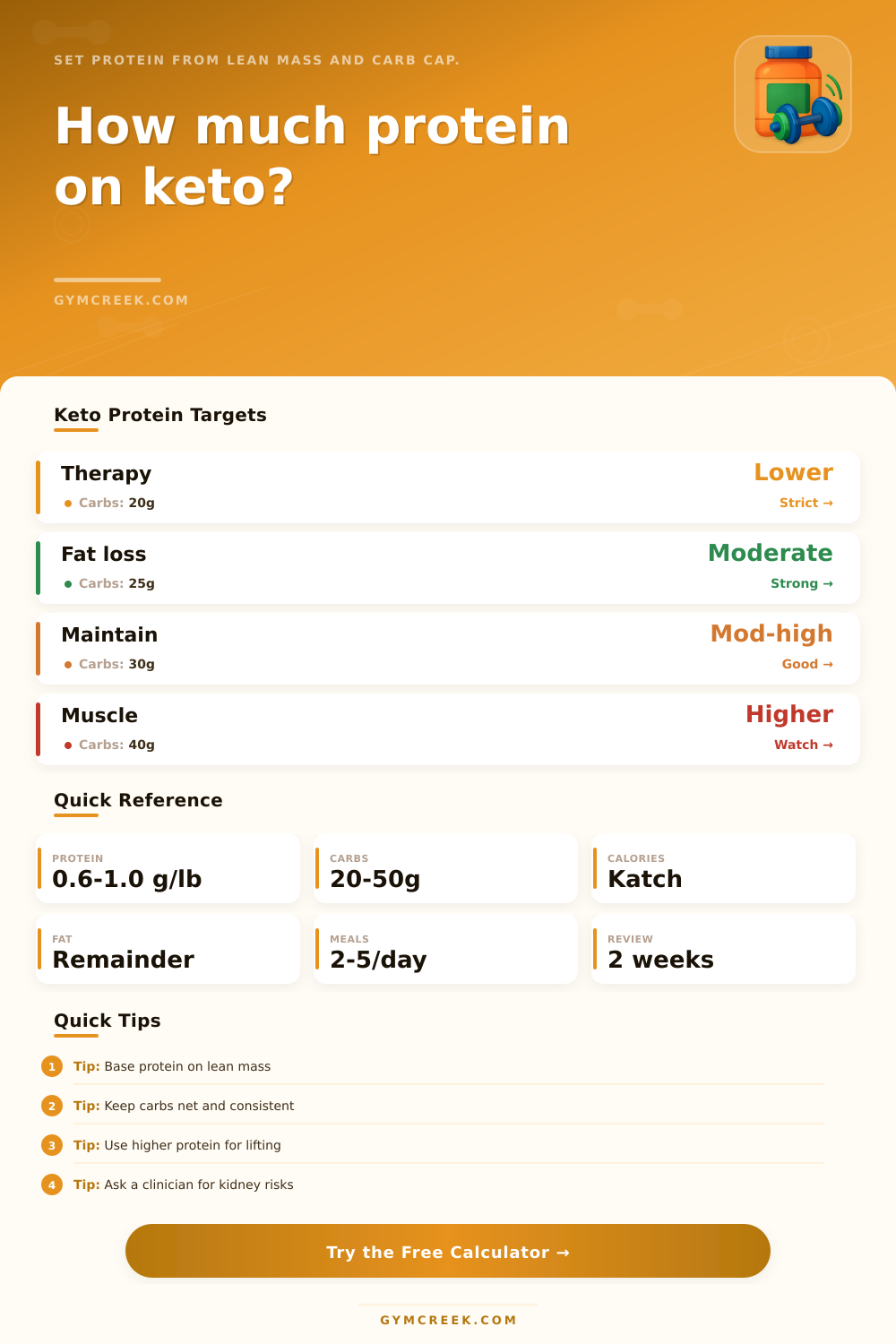
Presets are planning examples. The calculator uses lean body mass first, then checks whether protein and carbs still fit a keto macro pattern.
⚙Calculator Inputs
Keto protein snapshot
Enter your keto setup to calculate lean-mass protein and compatibility.
📊Keto Metrics Grid
📑Keto Protein Reference Tables
| Keto use | g/lb LBM | g/kg LBM | Best fit |
|---|---|---|---|
| Strict therapeutic | 0.45-0.60 | 1.0-1.3 | Clinician-led keto. |
| General keto | 0.60-0.80 | 1.3-1.8 | Most fat-loss starts. |
| Lifting or cut | 0.80-1.00 | 1.8-2.2 | Muscle retention. |
| Hard training | 1.00-1.20 | 2.2-2.6 | Watch keto fit. |
| Net carbs | Compatibility | Who uses it | Note |
|---|---|---|---|
| 0-20 g | Very strict | Therapeutic or reset | Harder to sustain. |
| 21-30 g | Strong keto | Fat loss | Common entry range. |
| 31-50 g | Flexible keto | Active users | Training may fit. |
| 51-100 g | Borderline | Performance keto | Monitor response. |
| Goal | Calories | Protein cue | Compatibility cue |
|---|---|---|---|
| Fat loss | About -15% | Moderate-high | Carb cap matters most. |
| Maintain | Near TDEE | Moderate | Fat fills energy. |
| Muscle retention | About -10% | Higher | Good for lifting cuts. |
| Therapeutic style | Individualized | Lower to moderate | Use clinician guidance. |
| Performance | Near TDEE | Higher | Carbs may be higher. |
| Macro pattern | Fat % | Protein % | Keto reading |
|---|---|---|---|
| Classic strict | 75-85% | 10-20% | Very keto-oriented. |
| Modern keto | 60-75% | 20-35% | Common fitness keto. |
| High protein keto | 50-65% | 30-45% | May still work. |
| Low-carb only | Under 50% | Any | Not classic keto. |
💡Keto Protein Tips
Calculating protein intake on a ketogenic diet can be difficult, as a persons protein requirements is based on several different factor. The protein target that a person set for themselves can be based on guess or the protein targets of others. However, guessing can result in low energy or high level of hunger.
A person must consider they lean body mass, activity level, and carbohydrate limits to determine their protein target. The calculator use lean body mass as a determinant of protein needs for ketosis. A persons lean body mass is not the same as their total body weight.
How to Calculate Protein on a Keto Diet
A persons total body weight include their body fat. A person who weigh 200 pounds with 30% body fat has less lean body mass than a person who weighs 200 pounds with 15% body fat. Using total body weight to calculate protein needs will lead to a target that is too higher.
A lean mass override allow a person to change the value to match their body composition measurement. A persons activity level will impact their protein needs for ketosis. A person can choose their activity level for the calculator.
Higher activity level will increase the protein factor that is recommend for the person, but also increase the total number of calorie that they take in from their diet. A person can choose the weight management goal for their body for the calculator. These goals impact the amount of protein that will be recommended for the user.
The carb cap that is entered into the calculator will ensure that the person remain in ketosis. A person will input their carbohydrate limit into the calculator. The carb cap and the protein target will be calculated for compatibility with the goal that they entered.
A lower carb cap allow for more fat to be consumed. A slightly higher carb cap can be used if a person engage in high levels of training. The compatibility score will show if the protein, carbohydrates, and fat level for a person are compatible with the body goal that they have selected for themselves.
The reference tables will show the protein range for different amount of lean body mass. Another table will show the carb caps for different level of ketosis. These tables are not strict rule.
If the protein level is less than the suggested protein for a goal, the calculator will show that recovery might decrease. However, if the protein level is higher than the protein suggested for a goal, the calculator will indicate that a person might need to monitor their intake to meet these goals. These numbers are suggested start point for the protein that a person should consume daily.
One of the most common mistake when using the calculator is to try and maximize protein intake. However, the carb cap is more important than protein for ketosis. Small change in protein will not impact ketosis.
However, if protein level are set too low, a person may not be able to properly perform physical training. A protein level towards the middle or upper part of the suggested range may work more better for individuals who perform physical training. A third factor to consider is how many meal a person eats daily.
The number of meal that the person can enter into the calculator will be included in the calculation. This will allow for the calculation of the amount of protein that should be consumed with each meal. Most people find it easier to consume protein with each meal rather than consuming a large amount of protein at one meal.
This field does not indicate when a person should consume their protein. A persons health is another consideration with ketosis. A person may need to consult with their physician prior to making any change to their protein levels if they have any health condition.
The caution checkbox will ensure that a person reads the health warning prior to making any changes to their ketogenic diet. After using the calculator, a person should monitor their energy, training performance, and levels of hunger for a two-week period. If a person feel that the calculated protein is not working for their body, the protein factor, carb cap, and fat target mode can be adjusted.
This allows for a person to make small changes to find the perfect protein level for their body and goal. The goal of this calculator is to find a protein level that will work well for the body, ensure that the carbohydrate level remain low enough to maintain ketosis, and allow for the body to get the amount of fat that it need for energy.