Insulin to Carb Ratio Calculator
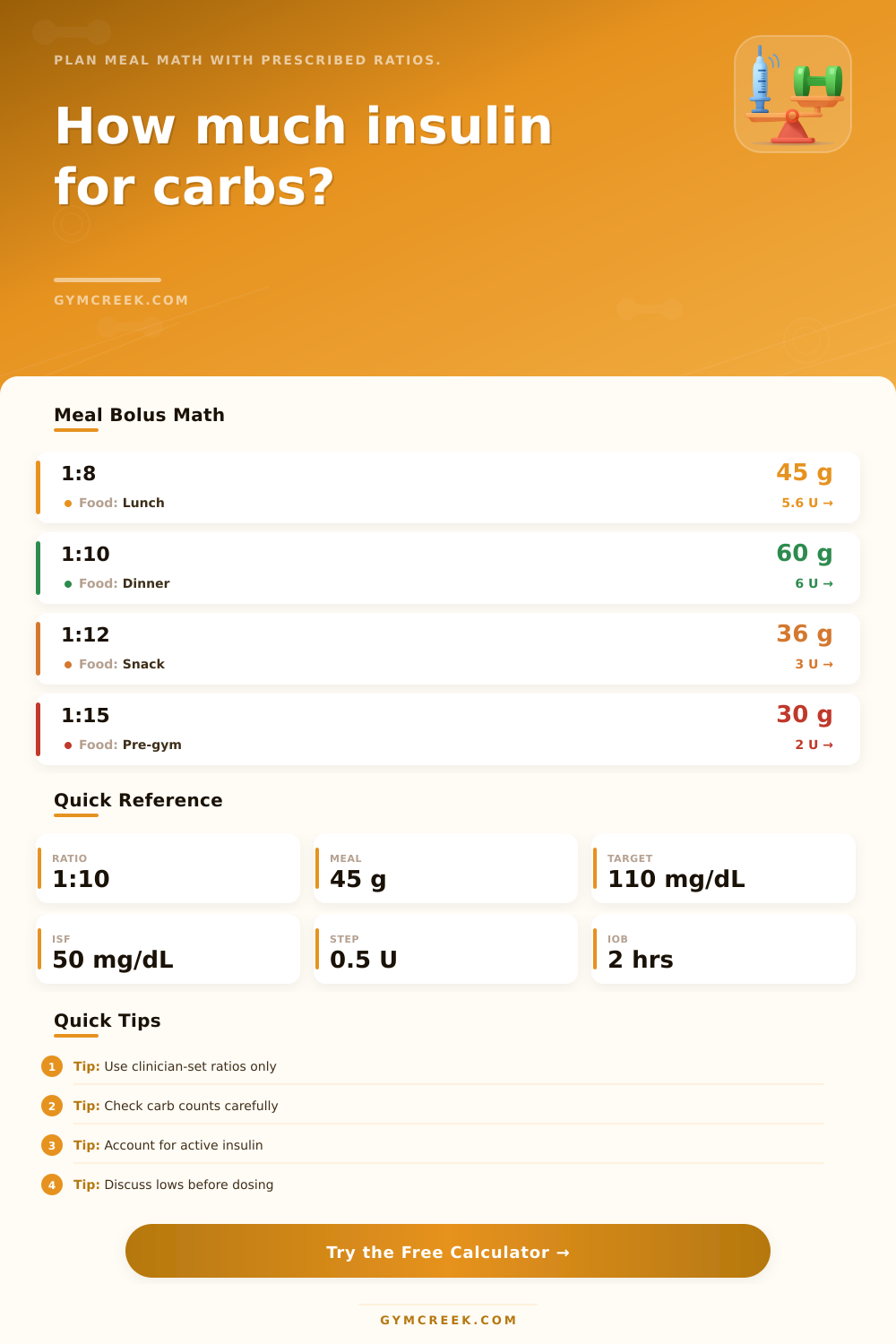
Estimate meal bolus planning math from clinician-prescribed insulin-to-carb ratio, correction factor, current glucose, active insulin, exercise context, and rounding preference.
📌Presets
Presets show common planning scenarios, but they are examples only. Keep the ratio and correction settings matched to your clinician-prescribed plan.
⚙Calculator
Meal bolus planning math
Enter prescribed settings to estimate carbohydrate coverage, correction math, and safety flags.
📊Fitness Metrics Comparison
📑Reference Tables
| Prescribed ratio | 30 g carbs | 45 g carbs | 60 g carbs |
|---|---|---|---|
| 1 unit per 8 g | 3.75 units | 5.63 units | 7.50 units |
| 1 unit per 10 g | 3.00 units | 4.50 units | 6.00 units |
| 1 unit per 12 g | 2.50 units | 3.75 units | 5.00 units |
| 1 unit per 15 g | 2.00 units | 3.00 units | 4.00 units |
| Glucose gap | ISF 30 mg/dL | ISF 50 mg/dL | ISF 75 mg/dL |
|---|---|---|---|
| 25 mg/dL above target | 0.83 units | 0.50 units | 0.33 units |
| 50 mg/dL above target | 1.67 units | 1.00 units | 0.67 units |
| 75 mg/dL above target | 2.50 units | 1.50 units | 1.00 units |
| 100 mg/dL above target | 3.33 units | 2.00 units | 1.33 units |
| Training context | Common concern | Calculator flag | Discuss with clinician |
|---|---|---|---|
| No planned exercise | Usual meal math | No activity flag | Routine ratios |
| Exercise soon after meal | Lower glucose risk | Activity reduction shown | Pre-exercise plan |
| Hard endurance nearby | Delayed sensitivity | High caution flag | IOB and carb strategy |
| Post-workout meal | Changed sensitivity | Recovery context | Workout day settings |
| Meal style | Examples | Planning issue | Calculator output |
|---|---|---|---|
| Fast carbs | Juice, cereal | Quicker rise | Fast meal flag |
| High fiber | Beans, oats | Slower digestion | Fiber flag |
| High fat/protein | Pizza, burgers | Delayed rise | Timing caution |
| Grazing meal | Buffet, snacks | Spread intake | Extended meal flag |
💡Tips
Managing blood glucose around meals involve more than an insulin to carbohydrate ratio. There is several other variable that impact the relationship between food and insulin. The insulin to carbohydrate ratio itself is a number used to manage the relationship between food and insulin.
However, the insulin to carbohydrate ratio is only useful if you provide the ratio with accurate information about the current moment. The insulin to carbohydrate ratio state how many gram of carbohydrate one unit of rapid insulin can cover. For example, a ratio of one to ten mean that one unit of insulin can cover ten grams of carbohydrate.
How to manage blood sugar at meals
The clinician provide this ratio, and it reflects your insulin sensitivity at a specific time of day. The insulin to carbohydrate ratio isnt a fixed number. Depending on the time of day, you may need a different insulin to carbohydrate ratio.
A ratio may be tighter after you wake up due to the effect of cortisol. You may need a looser ratio after a long ride on a bike as your muscles is extracting glucose from your blood. The calculator holds the prescribed insulin to carbohydrate ratio steady so that you can assess how the other variables impacts your insulin dose.
Another variable is the count of carbohydrate in the meal. A portion of rice you weigh will have a high-confidence carbohydrate count. However, the carbohydrate count of a bowl of pasta from a restaurant will have low confidence.
You can use the calculator to flag carbohydrate counts with low confidence. The calculator will let you know that you are making an estimate with lower confidence in the outcome. The glucose level in your blood at the time of the meal is another variable.
If the glucose level is above your target glucose level, the calculator will provide a number of insulin units that will bring your glucose level to your target glucose level. This number is the correction factor for your glucose level. For example, if your glucose is fifty points above your target and your correction factor is fifty, you will need to take an extra unit of insulin to take your glucose level to your target.
The calculator takes into account the active insulin in your system from any previous insulin dose. Thus, you dont have to account for this in your head. The activity level you are performing in the two hours before and after eating impacts how insulin work in your body.
If you are exercising in the two hours after eating, insulin will work more effectively over a more extended time frame. However, if you are exercising in the two hours before eating, your body will be more resistant to the effects of insulin. The calculator allow you to preset the activity level you will be performing so you can see how this will impact your insulin dose.
These activity level adjustments are temporary and sit based off your insulin to carbohydrate ratio. The composition of the meal does impact how quickly your glucose will change; however, it does not necessarily impact the insulin required to cover that meal. A meal of oatmeal with berries will take less time to be absorbed than a meal that contain eggs and avocado.
Meals high in fat can delay the rise of glucose. However, the rise in glucose may be much later and higher then the initial rise of glucose. The calculator does not take fat as a variable.
However, you can use the calculator to note the type of meal you are having. Your active insulin, also called insulin on board, is another variable people sometimes forget when hurrying to manage there glucose. If there are two unit of insulin already active in your system, adding insulin for a meal may drop your glucose too low.
The calculator will allow you to account for active insulin. Thus, the number of insulin units the calculator outputs for you to take will already have accounted for the insulin that is active in your system at this moment. The number the calculator outputs is not the insulin dose you will take; however, it is a reminder that your bodys contain some of the insulin you will take.
The calculator is not your new prescription. Use the calculator to compare your glucose settings to your glucose levels. If there is a consistent difference between the two, bring that to your clinician so they can adjust your settings.
Your bodys variable may need adjusting, or your insulin to carbohydrate ratio may need to be reviewed. Part of the skill of managing blood glucose is knowing which variables require more attention than others. A meal with high confidence carbohydrate content on a rest day may require almost no adjustment.
However, the same meal may require more adjustment on a training day. The calculator holds all of this information in one place so you can make an informed estimation of the insulin dose you will take to manage your glucose in the upcoming meal. It could of been easier if the calculator did it all, but it helps alot.