High Protein Diet Calculator
Estimate daily protein, calories from protein, grams per meal, upper practical range, and protein-to-calorie ratio from your weight, goal, training style, and meal plan.
📌High Protein Presets
Presets load realistic protein targets. Keep the factor editable so the calculator can match your coach, dietitian, or current tracking method.
⚙Calculator Inputs
High protein target
Enter your values to calculate a daily protein plan.
📊Protein Metrics Grid
📑High Protein Reference Tables
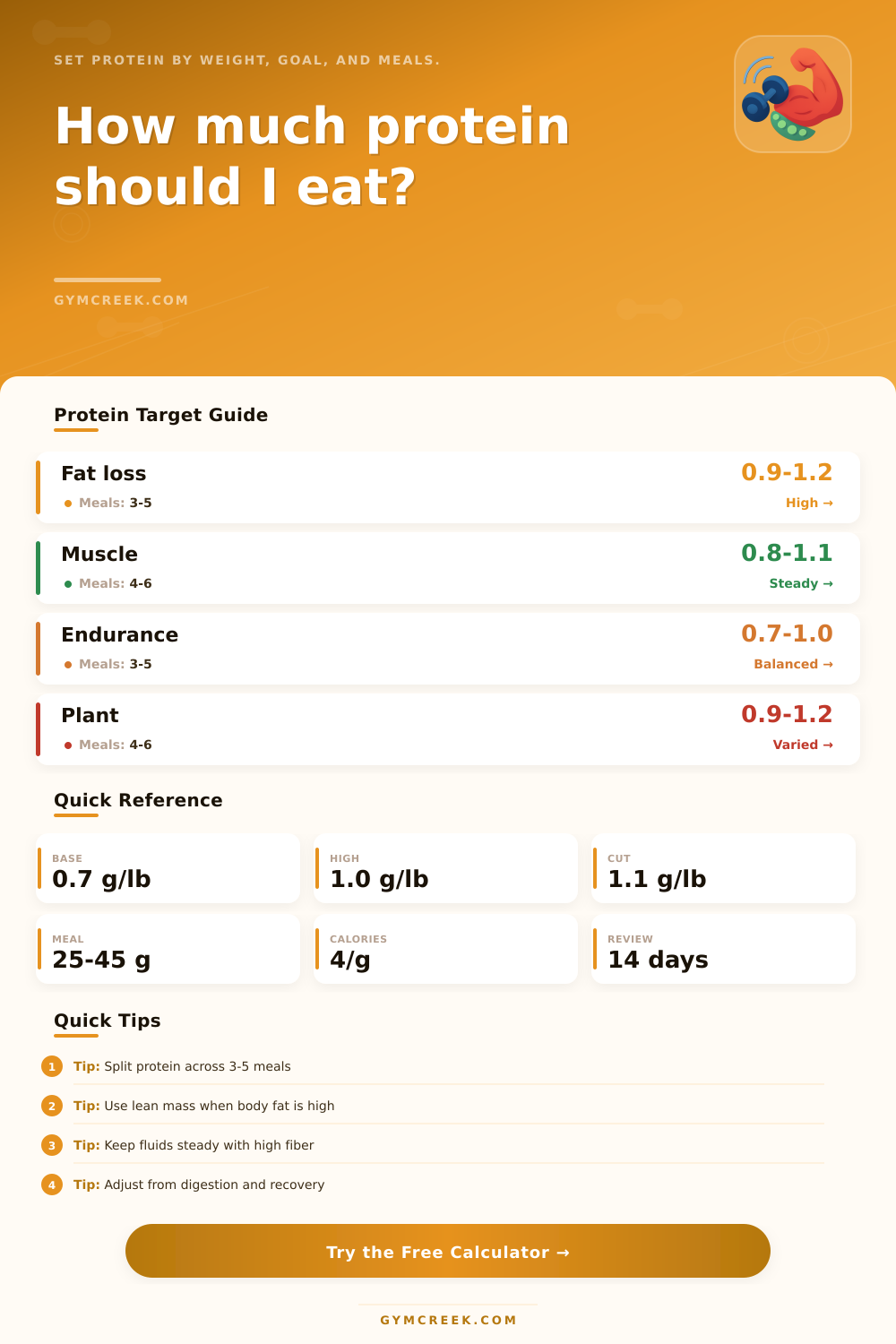
| Goal | g/lb | g/kg | Use when |
|---|---|---|---|
| Maintenance | 0.70-0.90 | 1.55-2.00 | Weight is stable and training demand is moderate. |
| Fat loss | 0.90-1.20 | 2.00-2.65 | Calories are lower or hunger control matters. |
| Muscle gain | 0.80-1.10 | 1.75-2.40 | Calories support hard lifting and recovery. |
| Plant-forward | 0.90-1.20 | 2.00-2.65 | Protein quality varies across foods. |
| Meals | Best protein/meal | Works for | Watch point |
|---|---|---|---|
| 2 meals | 45-70 g | Short eating windows | Large servings may feel heavy. |
| 3 meals | 30-55 g | Simple daily tracking | Anchor each meal with protein. |
| 4 meals | 25-45 g | Most lifters | Easy post-workout placement. |
| 5-6 meals | 20-35 g | Higher targets | Use snacks with real protein. |
| Preference | Primary cue | Range effect | Practical note |
|---|---|---|---|
| Mixed omnivore | Flexible foods | Neutral | Use lean and moderate-fat sources. |
| Lean meat and seafood | Dense protein | Neutral | Easy to keep protein calories predictable. |
| Dairy and eggs | Convenient meals | Neutral | Track fat if calories are tight. |
| Plant-forward | Higher variety | +5% | Mix legumes, soy, grains, seeds, and powders. |
| Minimal prep | Repeatable staples | Neutral | Plan portable options for missed meals. |
| Setting | Fiber cue | Fluid cue | Reason |
|---|---|---|---|
| Standard | 25-38 g/day | Steady fluids | Supports appetite and digestion. |
| High fiber | Raise slowly | Add water | Fiber works better with fluid. |
| Training day | Carb foods help | Add sweat fluid | Hard sessions raise fluid needs. |
| Digestion-sensitive | Smaller jumps | Spread fluids | Reduces bloating from sudden changes. |
💡High Protein Tips
Protein is an important nutrient in the body and a nutrient that impacts how a person feel between meals and how there body responds to physical training. A person may consider if they is getting enough protein in their diet, but they should also consider if their protein intake are appropriate based off their weight, their body goals, and their lifestyle. A high protein diet calculator can help determine the amount of protein that a person should consume each day.
This high-protein diet calculator will consider a person’s weight, the type of physical training they perform, the number of calorie that they consume each day, and other details about their lifestyle in order to provide the daily protein goal that they should aim to consume. The inputs into the high protein diet calculator influence the protein goal that the calculator is determine. One input is a person’s body weight, as their body weight will impact the amount of protein that their body require to perform its basic functions.
How to Use a High Protein Diet Calculator
Second, a person’s training type will impact the protein goal that the calculator determines for that individual. For instance, an individual that lift weights three days per week will have a different protein goal then an individual that performs running activities the majority of their days. Third, the calorie target that a person consume will impact their high protein diet goal; if they consume very little protein, it may be difficult for them to meet their high protein goal.
Additionally, an individual can input body fat percentage into the calculator in order to determine their lean body mass; knowing their lean body mass will allow the calculator to determine their protein goal in a way that avoids providing them with too much protein. Fourth, the number of meal that a person consumes each day will impact the amount of protein that they should consume in each meal. Finally, the protein source that a person consumes, whether plant or animal protein, may have an impact upon the amount of protein that they should consume in order to meet there goals.
The outputs of a high protein diet calculator can include information beyond protein alone. One output can be the amount of protein that a person should consume during each day. Additionally, the calculator may display the amount of calories that are derive from protein, the amount of grams of protein that should be consumed per meal, the upper range of protein that that individual should consume daily, the protein-to-calorie ratio of protein to the total calories that should be consumed each day, and other information.
The numbers that is displayed on the screen of a high protein diet calculator should be used as the start of a goal for protein intake, but not be treated as rules to be followed. For instance, many individuals may wish to consume all of their protein with two meals during the day, but consuming all of the protein with two meals can cause discomfort for those individuals. Additionally, consuming protein with three to five meals during the day is often considered to be more beneficial for those individuals than consuming all of their protein with two meals.
Thus, while a high protein diet calculator will consider the number of meals that should contain the protein, it cannot account for whether an individual’s schedule allow for four meals or if they need to consume three meals. Some mistakes that can be made with protein intake are ignoring the effect that protein have upon the other nutrients that are consumed with the diet. For instance, increasing the protein that an individual consumes may require decreasing the number of calories that that individual consumes.
Additionally, the protein that is consumed is also often required to contain carbohydrate for fuel for physical training, as well as containing fiber for maintaining regularity with digestion. Decreasing the protein that is consumed may lead to increased feelings of hunger in that individual. A high protein diet calculator helps to balance these factors; it indicates the amount of protein calories that are consumed each day, as well as the number of calories that can be allotted to other nutrient within the diet.
A high protein diet calculator can provide individual recommendation and goals for protein intake, but they cannot replace the way in which a person can monitor their own body in response to the protein that they consume. For instance, an individual can monitor their digestion, their level of energy, the sleep that they get, and their strength. All of these factor can help to determine whether the high protein diet calculator is producing appropriate recommendations for that individual’s body.
For instance, if an individual’s recovery from physical training is poor, they may need to adjust the protein that they consume or their total calorie intake. Adjusting the calorie intake or meal timing is a more common adjustment than adjusting protein intake, and an individual should monitor their body every two week to determine if any adjustments should be made to the high protein diet calculator. A high protein diet calculator can be used to input the details of an individual’s body and lifestyle to determine the protein that they should consume each day; the calculator will provide recommendations to that individual.
Additionally, an individual should make any adjustment to only one variable at a time. For instance, if an individual feels that the calculated protein goal is not working for that individual, they should only adjust one of the variables to the body or lifestyle requirement of that individual. Thus, adjusting only one variable will ensure that the protein goal is based upon calculations of the body, as well as the behaviors of that individual’s body.