Hammer Curl Load Calculator
Estimate the dumbbell load per hand for strict hammer curls, using your current reps, target reps, tempo, rest, effort, and training goal.
📌Presets
Each preset loads a realistic hammer curl setup and recalculates the recommended per-hand load.
⚙Calculator
Hammer curl load snapshot
Enter a current strict load and calculate your next working weight.
📊Fitness Metrics
📑Reference Tables
| Goal | Reps | 1RM Range | Rest |
|---|---|---|---|
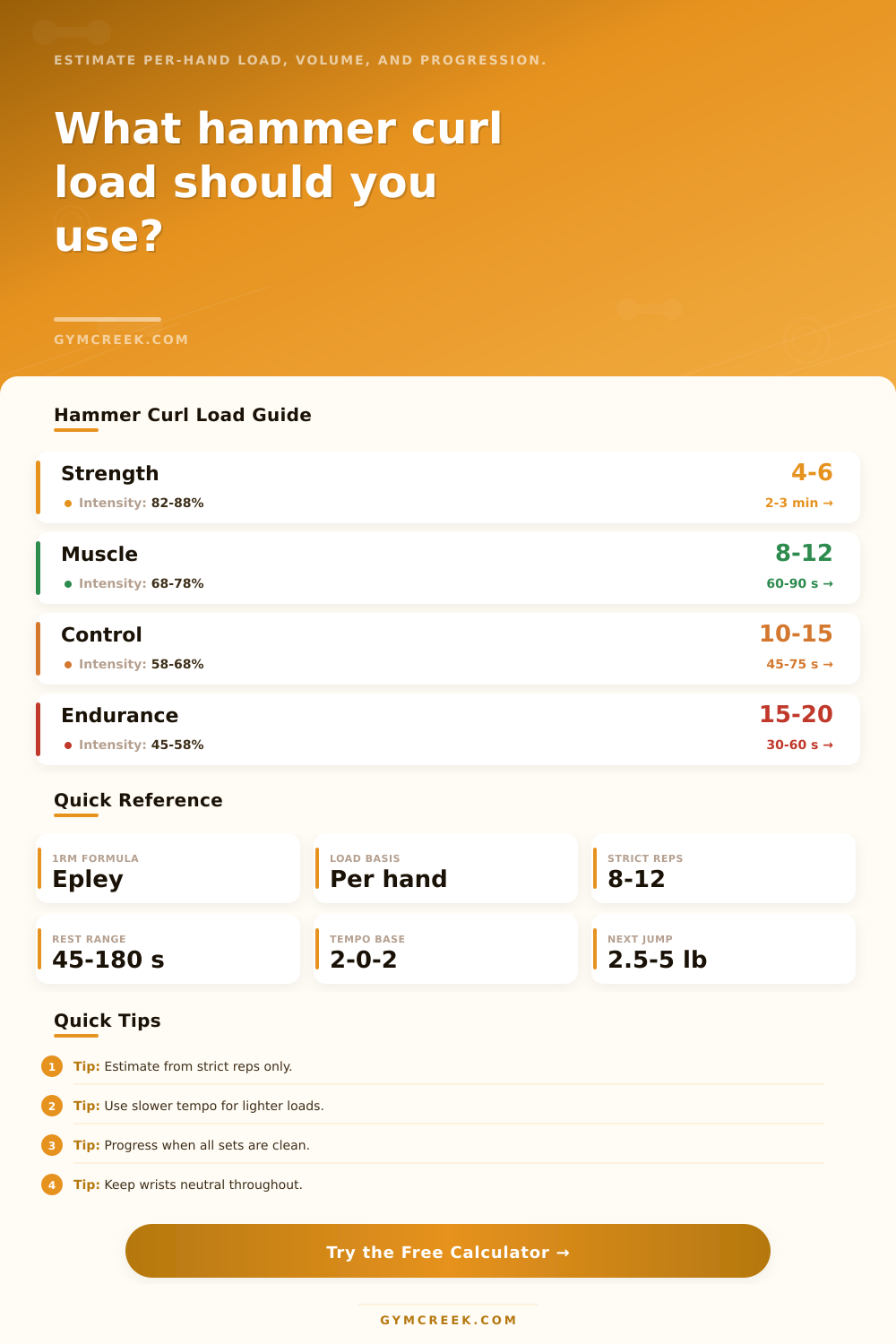
| Strength curls | 4-6 | 82-88% | 2-3 min |
| Muscle focus | 8-12 | 68-78% | 60-90 sec |
| Control work | 10-15 | 58-68% | 45-75 sec |
| Endurance | 15-20 | 45-58% | 30-60 sec |
| Relative Level | Per-Hand 1RM | Example | Use |
|---|---|---|---|
| Novice | 8-12% BW | 15-25 lb | Skill base |
| Intermediate | 13-18% BW | 25-40 lb | Muscle work |
| Advanced | 19-25% BW | 40-60 lb | Heavy sets |
| Elite strict | 26%+ BW | 60 lb+ | Low reps |
| Tempo | Load Effect | Best Target | Note |
|---|---|---|---|
| 1-0-2 | +3% | Powerful reps | Still strict |
| 2-0-2 | Base | General work | Balanced |
| 2-0-4 | -7% | Eccentric control | Slow lower |
| 2-1-3 | -10% | Peak squeeze | No swing |
| Formula | Variables | Output | When Used |
|---|---|---|---|
| Epley 1RM | Load, reps | Max estimate | 2-15 reps |
| Rep intensity | Target reps | Base load | Work sets |
| Volume | Load x reps x sets x 2 | Total work | Both arms |
| Progression | Load + jump | Next load | Clean sets |
💡Tips
There’s no guessing involved or math to do. Just plug in your workout variables (rest intervals, tempo, etc.) into calculator above and it spits out an estimate of how much weight your arms can handle. It takes into account difficulty of your working set: whether you’re pushing yourself to failure or not, which affects the type of stimulus applied.
Curling a light dumbbell slowly is a completely different stimulus then curling a heavy dumbbell quickly. Therefore, calculated 1RM estimate will reflect the tempo of your reps. Choosing a slower eccentric phase will result in a slightly lower recommendation on the calculator. Why? Because physics. Time under tension mean you can’t handle as much weight. You can’t handle as much if you want to control your movements.
How to Use the Hammer Curl Calculator
The hammer curl has become one of those “accessory” exercises. You do it as an add-on to your heavy pressing work. But it’s actualy one of the cornerstones of both forearm strength and elbow health. It use a neutral grip, which is less stressful on joint capsule compared to a supinated curl. So it’s safer (and more forgiving) to perform at higher frequencies.
As far as choosing how much weight to use, you’re looking for that sweet spot, the weight at which your muscle fails prior to your form. That’s what the effort rating accomplishes. If you’re going for an RPE 8, then you’ve got two reps in the tank. Sounds conservative, right? But it’s the difference between building muscle vs. Tearing tissue. With this calculator, you’ll be able to dial-in that specific amount of weight.
And then there’s progression. You’re tempted to leap forward with a five-pound increase each week. That’s how we get hurt. Instead, the tool recommend gradual increases. Often they’ll align with lowest dumbbell weight you have. It makes you focus on consistency versus ego. Sure, maybe you won’t see scale moving at warp speed. But over time, the strain on those brachialis and brachioradialis muscle builds up. Those are the guys responsible for that meaty appearance of the upper arm. A typical bicep curl tends to neglect them.
Follow your total volume from session-to-session, are you really doing more? On the page, there’s a breakdown of goals into four categories: endurance, control, strength, and hypertrophy. For each goal, there’s a corresponding rep range and rest period. Are you looking to build size? You’re probably looking at eight to twelve reps with moderate rest. Do you want some good old-fashioned strength? Drop the reps, up the rest. It’s a conscious tradeoff and trying to do everything at once will almost always result in average results. Pick a lane for a few weeks. Stick to prescribed rest times. Let numbers guide your weight choice.
Body weight ratio is relative strength. How do you stack up against the norm? This provides some context. Fifteen pounds for a beginner may be a chore. Sixty for an advanced lifter is no problem. Both are fine. Knowing what’s normal will help you form reasonable expectations. You won’t compare your day one to another person’s year three.
In conclusion, create a set of arms which perform well AND look good. There is no cheating the hammer curl. It’s a weight held in your hand. Your range of motion is strict. If you’re swinging it, you’re lying to yourself. Find the load that tests you but does not break you down and use tool. Show up and do the work. Trust the process. The numbers will catch up to the effort you put in.