🏋 Hack Squat Weight Calculator
Estimate your ideal hack squat load based on strength level, body weight & training goal
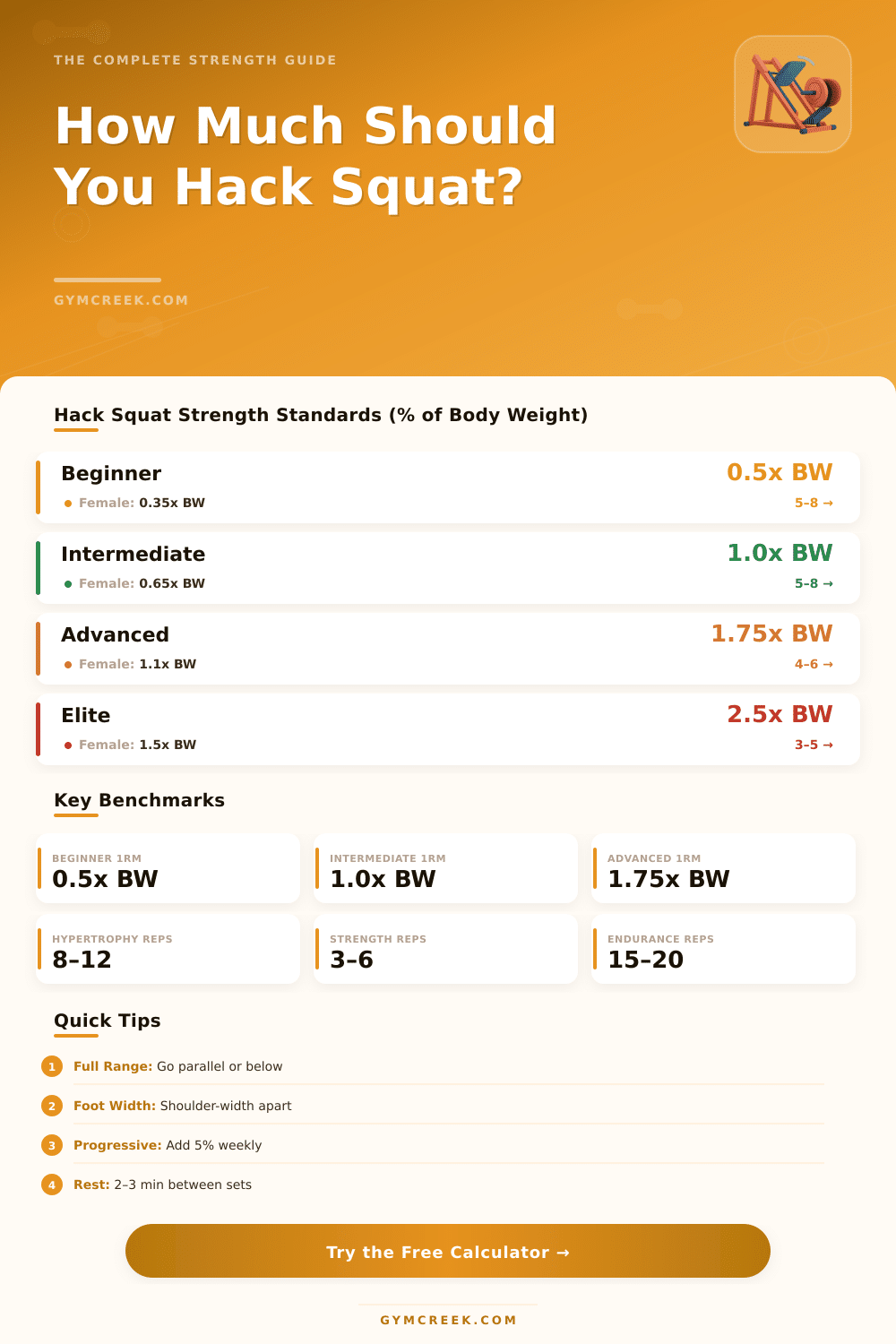
| Level | Male (% BW) | Female (% BW) | Example Male 185 lb | Example Female 135 lb |
|---|---|---|---|---|
| Beginner | 50% | 35% | 93 lb | 47 lb |
| Novice | 80% | 55% | 148 lb | 74 lb |
| Intermediate | 125% | 80% | 231 lb | 108 lb |
| Advanced | 175% | 115% | 324 lb | 155 lb |
| Elite | 250% | 160% | 463 lb | 216 lb |
| Reps | % of 1RM | Goal | Sets | Rest |
|---|---|---|---|---|
| 1 | 100% | Max Strength Test | 1–3 | 3–5 min |
| 2 | 97% | Max Strength | 3–5 | 3–5 min |
| 3 | 94% | Max Strength | 3–5 | 3–5 min |
| 5 | 87% | Strength | 4–6 | 2–3 min |
| 6 | 85% | Strength / Power | 3–5 | 2–3 min |
| 8 | 80% | Hypertrophy | 3–4 | 90s–2 min |
| 10 | 75% | Hypertrophy | 3–4 | 90s–2 min |
| 12 | 70% | Hypertrophy | 3–4 | 60s–90s |
| 15 | 65% | Endurance / Tone | 2–3 | 45s–60s |
| 20 | 60% | Metabolic / Fat Loss | 2–3 | 30s–45s |
| Metric | Hack Squat Machine | Barbell Back Squat |
|---|---|---|
| Primary Muscles | Quads (dominant), Glutes | Quads, Glutes, Hamstrings |
| Core Demand | Low (machine guided) | Very High (stabilization) |
| Load Multiplier vs Squat | ~0.7–0.85x | 1.0x (baseline) |
| Lower Back Stress | Low | Moderate–High |
| Knee Stress at High Load | Moderate | Moderate |
| Beginner Friendly | Yes | Requires coaching |
| Set | % of Working Weight | Reps | Rest | Purpose |
|---|---|---|---|---|
| Warm-Up 1 | 40% | 15 | 60s | Prime joints & blood flow |
| Warm-Up 2 | 60% | 10 | 60–90s | Groove movement pattern |
| Warm-Up 3 | 80% | 5 | 90s–2min | CNS activation |
| Working Set 1 | 100% | Target | 2–3 min | Full training stimulus |
Hack squat exercises is extremely effective at helping lifters of all levels develop impressive quads and leg size without placing excessive compressive loads upon the back. The hack squat machine limit the motion that the lifter can perform with the machine to primarily enable the development of the quadriceps muscles alone. Therefore, this exercise is recommended for beginners or those with back problems to begin with.
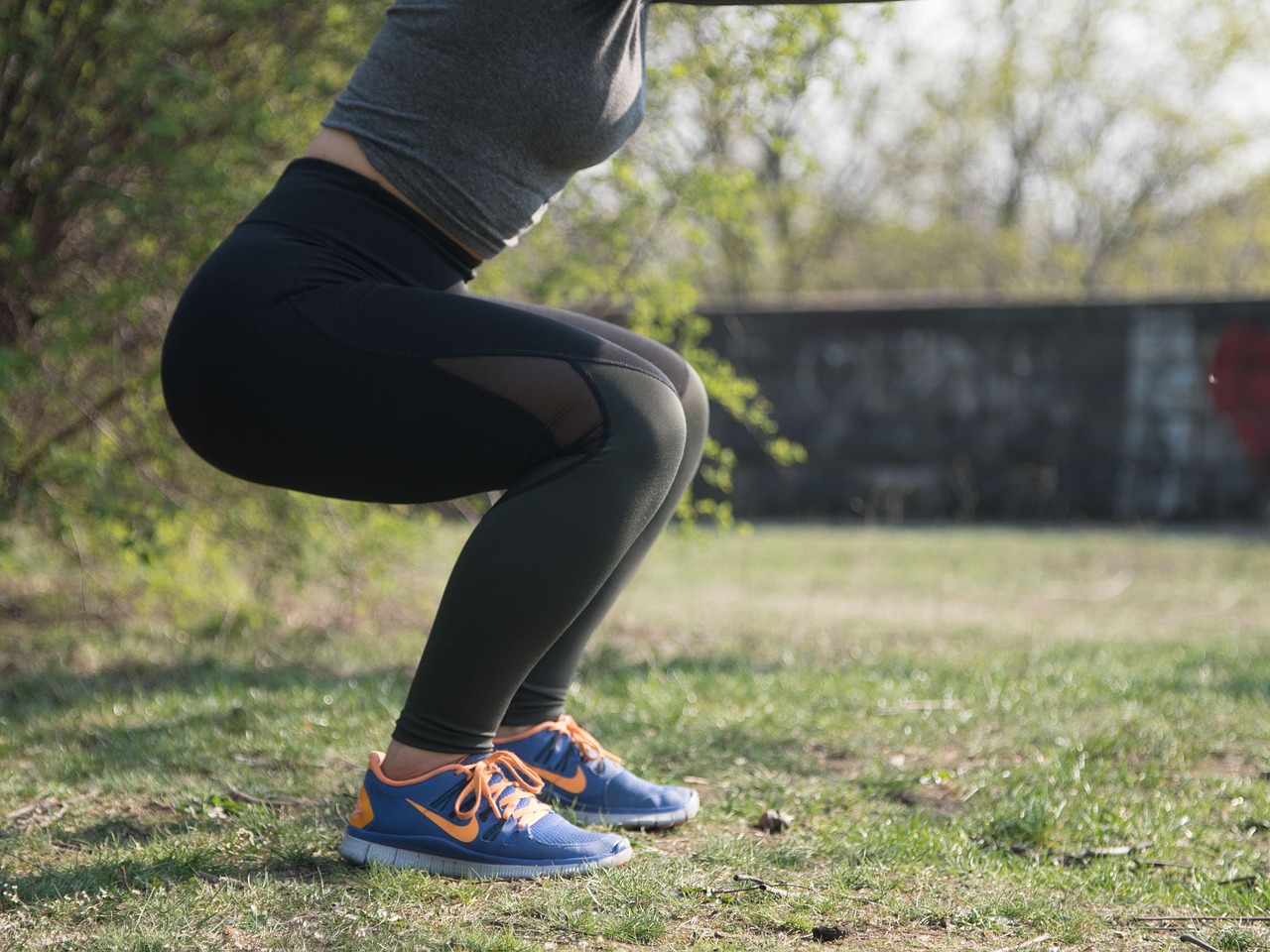
To determine the proper load for hack squat exercises requires consideration of various factor regarding the lifter, such as their body weight, their training experience, and their gender. The hack squat weight calculator that is available online can help these athletes determine the proper loads for their squat exercises according to these different factors.
Hack Squat Weight Calculator
Hack squat strength standards are notably different from barbell squat strength standards due to the way in which the hack squat machine change the way in which the lifter performs the exercises. Individuals can lift significantly more weight with a hack squat machine than they can with a barbell squat exercise. This additional weight, however, is primarily due to the weight of the hack squat machines sled, which can weigh between 75 and 100 pounds depending upon the brand of the machine. Lifeguards typically ignore this weight in there calculations of squat strength and only consider the weight of the squat plates that they add to the machine.
Beginners can start with loads of 50% of their body weight if they are male lifters, or 35% of their body weight if they are female lifters. With experience, however, these percentage will increase. For instance, intermediate male lifters can typically squat loads of 125% of their body weight, while advanced female lifters can squat 115% or more of their body weight. These percentages, however, refer to the total of the loaded weight of the individual and the sled.
Hack squats can be utilized for a variety of different training goals. Strength goals for squat exercises will use higher loads and lower reps for the best results. Individuals that aim to develop muscles will utilize squat loads between 8 and 12 repetitions. Endurance and fat loss goals require lighter loads for the squat exercises and higher repetitions, between 15 and 20 repetitions per set of exercises.
To determine the next goal for the lifter and their squat training, a hack squat weight calculator can be utilized. For instance, novice lifters can typically develop the strength to lift loads of 50% of their body weight for males, 35% for females. Intermediate athletes may reach the goal of 125% of body weight for males, while 115% for females. For strength gains to be made, athletes will need to train consistently over many months to reach intermediate strength. To go from intermediate to advanced strength, though, dedication will have to increase. Periodic measurements of the athlete’s one-repetition maximum for squat exercises will allow them to more easily identify their gains over time.
Compared to the squat exercises that use barbells, hack squat exercises are considered to be significantly less difficult in the development of total strength due to the fact that the back muscles are not required to stabilize the body in the same way as in a barbell squat exercise. However, hack squat exercises may be superior to barbell squats for those individuals who have back issues or those who wish to develop the quadriceps muscles alone. Additionally, powerlifters often perform both types of squat exercises; the barbell squat to exhibit their total strength for competition, and the hack squat exercise to exhibit the strength of their legs while minimizing the strain upon their back.
Warm-up routines for squat exercises will typically begin with empty sleds or very light loads for the first few sets of 15 or 20 repetitions. Following these initial warm-up sets, the athlete may perform weights at 40%, 60%, and 80% of their squat goal to warm up their muscles for the squat exercise. These warm-ups are crucial for minimizing the chance of injury when performing squat exercises on these machines.
Rest periods between sets of squat exercises will depend upon the goal of the lifter for those squat exercises. Heavy squats will allow 3 to 5 minutes of rest between sets to permit the replenishment of the phosphagen system in the athlete’s muscles. Muscles that are developing in strength should rest for 90 seconds to 2 minutes between sets of squat exercises. Endurance and fat loss programs will incorporate rest periods of 30 to 45 seconds between sets.
The number of sets of squat exercises that an athlete performs each week will depend upon the athlete’s experience with squat exercises. Most athletes that perform squat exercises will perform between 10 and 20 sets of squat exercises each week. Beginners may require as few as 6 to 9 sets of squat exercises each week. However, experienced lifters that have trained for years may be able to perform more sets each week. However, the body and mental fatigue of the lifter should dictate their training program more than any guidelines regarding the number of sets that can be performed.
In addition to the squatting exercises and the body’s strength, many lifters will also incorporate the other components of a well-rounded strength training program into their training schedule. For instance, adequate protein intake is required to enable the muscles to develop properly. Additionally, the athlete will have to include both calories and sleep as essential components of their training program for best results.

Technique for squat exercises with hack squat machines requires the lifter to place their feet between 1 and 2 inches from their shoulders. The toes of the lifter should be pointed slightly outward from the body. The lifter should maintain the back in a neutral position throughout the squat exercise. Additionally, the squat exercise should involve lowering the weight slowly to the bottom of the squat, taking 2 or 3 seconds to reach the bottom of the exercise. Lifting too quick out of the bottom of the squat can lead to knee pain over time.
One of the benefits of utilizing the hack squat weight calculator that is made available for these types of exercises is that it allows the lifters to determine their starting point for their training with the hack squat machines. Utilizing the hack squat weight calculator above, for instance, will provide recommendations for the lifter according to their experience with squat exercises. By following the guidelines that are established for each goal for the lifter, impressive gains in strength can be made within a few years.
Whether the lifter desires to exhibit strength, endurance, or muscle hypertrophy through squat exercises, the hack squat machine can help those athletes to reach their goals. By following the guidelines that are established in this article regarding the hack squat exercise, even the most inexperienced lifter can achieve impressive numbers in as little as a few years.
Although the strength guidelines that are established for each goal for the lifter are a starting point for squat programs with hack squat machines, each lifter’s body and strength can differ. Thus, each lifter should focus upon their own statistics and the gains that they can make over time. Setting goals for the number of reps, sets, or weight that can be lifted is great, but making gains in strength over time is even better.
Overall, though, these guidelines for beginners, intermediates, and even the most advanced lifters may help those athletes of all experience levels to develop impressive numbers for each lifter.