Gym Weight Calculator
Select a lifting weight from your current top set, target reps, RPE, experience, fatigue, and equipment, with warm-up sets, volume load, progression target, and deload flag.
📌Lifting Presets
Presets are starting examples for load selection. Replace them with your own tested top set, target reps, equipment jumps, and readiness for the day.
⚙Calculator Inputs
Working Weight Plan
Enter your current top set and target reps to calculate a practical gym weight.
📊Training Metrics
📘Reference Tables
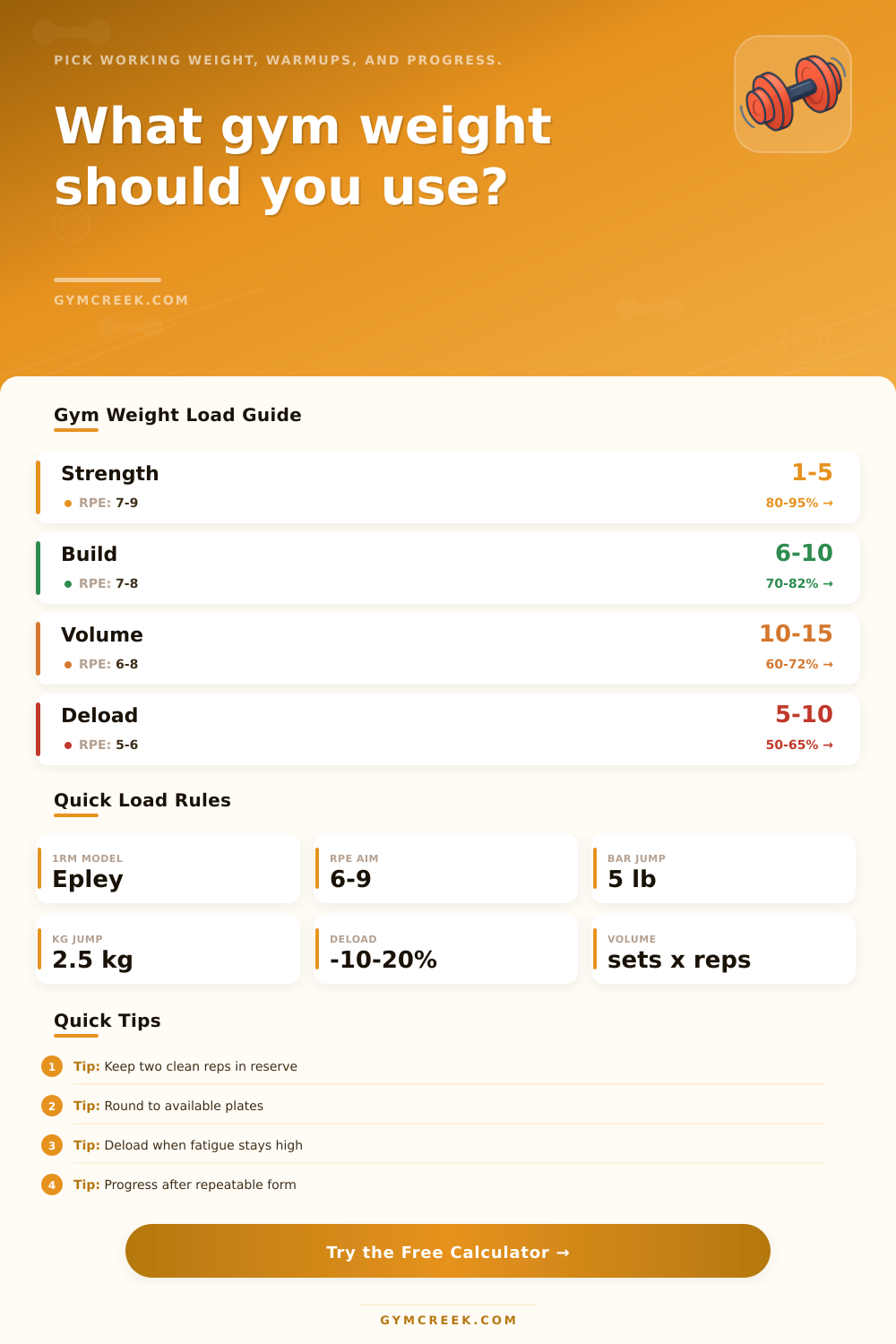
| Target reps | Base percent | Typical RPE | Best use |
|---|---|---|---|
| 1-3 reps | 89-95% of estimated 1RM | RPE 7-9 | Heavy practice, singles, triples, peaking work |
| 4-6 reps | 80-86% of estimated 1RM | RPE 7-9 | Strength blocks, compound lifts, low-volume days |
| 7-10 reps | 70-77% of estimated 1RM | RPE 6-8 | Hypertrophy, repeatable technique, balanced workload |
| 11-15 reps | 62-69% of estimated 1RM | RPE 6-8 | Accessories, machines, muscular endurance, volume |
| 16-30 reps | 50-60% of estimated 1RM | RPE 5-8 | Conditioning sets, bands, rehab-style loading |
| Equipment | Default rounding | Progression when ready | Warmup note |
|---|---|---|---|
| Barbell with plates | 5 lb or 2.5 kg total | Add one plate jump or add one rep per set | Use bar, 40%, 60%, then 80% if heavy |
| Dumbbells | 5 lb or 2 kg per hand | Add one rack jump after all sets are clean | Warm up with the next lighter pair |
| Kettlebells | 5 lb or 4 kg per bell | Add reps before jumping bell size | Use lighter skill sets before power work |
| Machine or cable | 5 lb or 2.5 kg stack step | Add one pin step or slow tempo | One light set often works for isolation lifts |
| Bands | Nearest band tension estimate | Add reps, range, or band thickness | Keep setup consistent each session |
| Flag source | What triggers it | Calculator response | Practical check |
|---|---|---|---|
| High RPE | Target RPE 9.5 or higher | Suggest hold, repeat, or reduce | Bar speed and form should stay consistent |
| Fatigue | Sore, poor sleep, or planned deload | Reduce load by fatigue modifier | Warmups should feel crisp before work sets |
| High stress lift | Deadlift or heavy squat with many sets | Lower progression aggressiveness | Watch bracing, depth, and starting position |
| Volume spike | More than 5 sets at hard RPE | Flags recovery risk | Compare with your last similar session |
✅Load Selection Tips
Choosing an working weight for the gym involve a plan that is often difficult for many peoples to make due to the difficulty in knowing there limits. Tools that use the number of repetition and the Rate of Perceived Exertion (RPE) scale allow a person to start there gym session with a define number. The calculator that are present on the site will define a specific weight based on the information that you enters into the form.
You must enter your recent top set, the number of repetitions that you performed during your top set, and your target repetitions for your working set into the form. Additionally, you will also enter your RPE goal, experience level, fatigue state, and equipment types into the form to calculate your working weight. Each of these factor impacts your safety margin and the rate at which you can increase your working sets.
How to Choose Your Working Weight for the Gym
For instance, a deadlift will have a more different calculated working weight than a machine row due to the different factors that impacts each lift. The Rate of Perceived Exertion (RPE) will be one of the main factor that you use to calculate your working weight. RPE is used to calculate how many repetitions of the defined exercise that you have left to complete once you finish your set.
By understanding how many repetition you have left to complete, you can understand how repeatable the weight is. The best range of RPE for many athlete is between 7 and 8. An RPE of 7 or 8 mean that the weight is repeatable for the sets that you define, and that it provides enough stimulus to your muscles to encourage the body to adapt.
By reducing the calculated weight to meet an RPE goal, the calculator ensures that you have enough time to recover for your next session. Experience level as an athlete will also impact the calculated working weight. Beginners will have a lower calculated weight than more experienced athlete.
The reason for this difference in calculated weights is that the beginner have yet to establish the technique that is required to lift heavy weights. Small increases in weight will impact the form of the newer lifter. Experienced athlete have established the proper technique to allow them to lift more weights, so they are given a slightly higher calculated weight.
Fatigue levels and training goals will also impact the calculated working weight. If you select the deload or return from layoff as your goal, the calculator will automatically lower your calculated weight to ensure that you are not increasing your fatigue level. For strength sessions, the calculator will automatically increase the weight.
These goal ensure that the same barbell weight has different impacts on an athlete based on there level of fatigue. The tables to the right of the calculator will provide information regarding the relationship between target repetitions and percentages of one repetition max weight. These tables will also indicate the various weights for each type of equipment.
These tables will allow you to verify the calculation that the calculator made. If you feel that the calculated weight feels incorrect after your warm-up set, the tables will provide the reason for the calculated weight for your sets. The calculator will provide information to you regarding the structure of your warm-up sets.
Warm-up sets will gradually increase your weight to 75 or 88% of your calculated working weight. Warm-up sets will prepare your joint for the exercise, and they will allow you to feel if your calculated working weight is realistic for your body. Finally, the calculator will provide instructions to you regarding the changes in your weight for your sets.
The calculator will inform you whether you should increase the weight that you use in your sets, if you should leave the current weight, or if you should reduce the weight that you use in your training. These suggestion are provided to those who use the calculator to inform there training. If you are able to complete your target repetitions with good speed and your RPE is shown as repeatable, then the suggestion for changes to your weight will be correct.
If your speed with which you perform your repetitions slow or if your recovery is suffering, then the indication of a deload session will inform you that you should be reducing the weights that you use in your gym to prevent further fatigue accumulation. By using this tool, the math is removed from the equation to allow individual to focus on there training.