RPM Calculator Gym
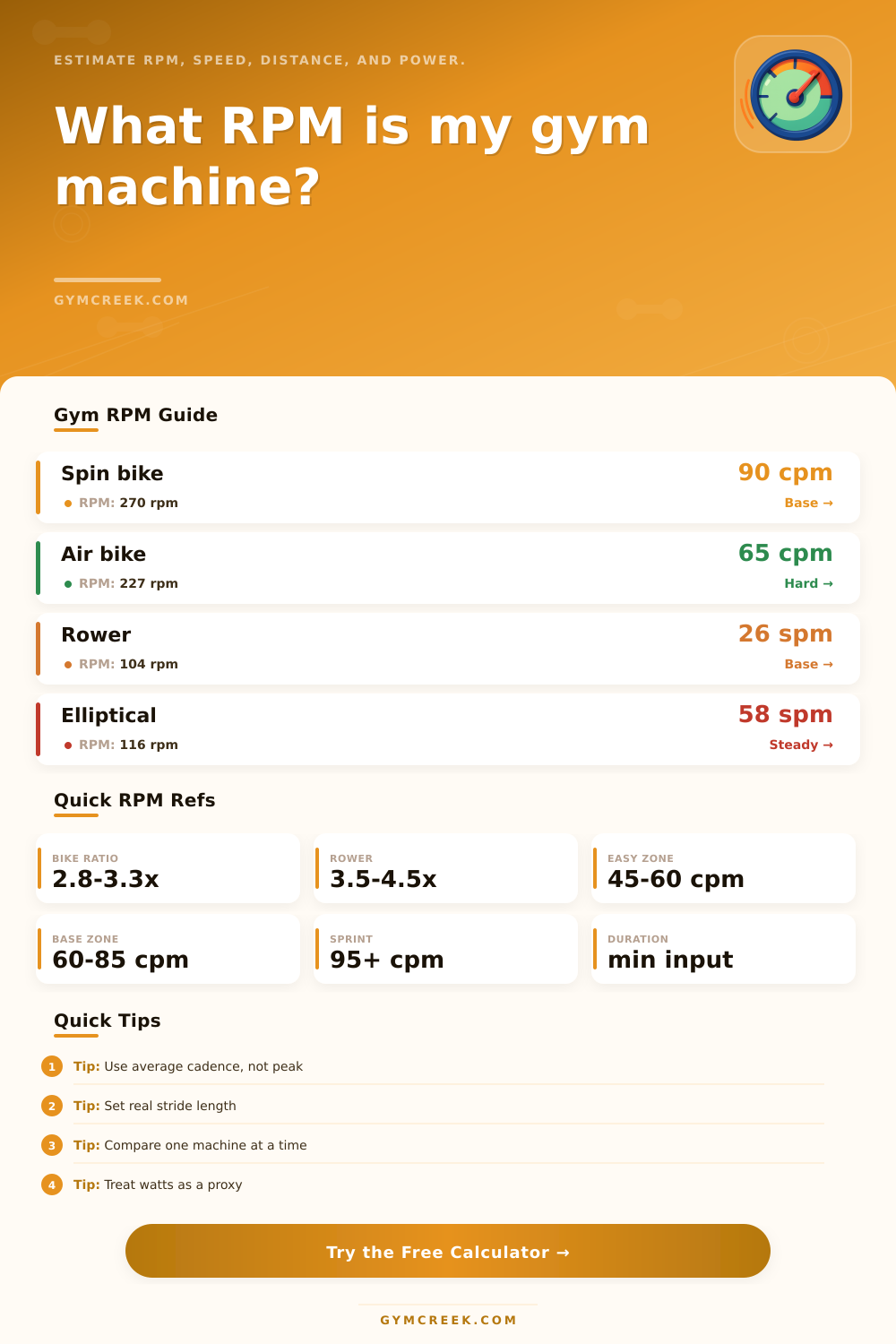
Estimate gym machine RPM, speed, distance, cadence zone, and power proxy from cadence, flywheel diameter, resistance, duration, target speed, stride or stroke length, workout type, and machine type.
📌Machine Presets
Each preset uses a practical gym scenario. Replace the values with your console cadence, machine dimensions, resistance level, target speed, and workout duration.
⚙Calculator Inputs
Gym RPM snapshot
Enter your machine settings to estimate RPM, speed, distance, cadence zone, and power proxy.
📊Metrics Grid
📑Reference Tables
| Machine | Cadence input | Typical drive ratio | Speed estimate source |
|---|---|---|---|
| Indoor spin bike | Pedal cadence | 2.8 to 3.3 x | Flywheel RPM and resistance adjusted bike speed |
| Air bike | Pedal or fan cadence | 3.2 to 3.8 x | Fan RPM with higher drag at resistance |
| Rower | Strokes per minute | 3.5 to 4.5 x | Stroke length, stroke rate, and drag factor |
| Ski erg | Pulls per minute | 3.0 to 4.0 x | Pull length and tempo adjusted for resistance |
| Elliptical | Strides per minute | 1.8 to 2.3 x | Stride length and machine stride factor |
| Zone | Bike cadence | Rower or ski cadence | Common use |
|---|---|---|---|
| Easy | 50 to 70 cpm | 16 to 22 spm | Warmup, cooldown, recovery blocks |
| Base | 71 to 90 cpm | 23 to 28 spm | Endurance and steady aerobic sessions |
| Tempo | 91 to 105 cpm | 29 to 34 spm | Hard cardio, threshold work, short climbs |
| Sprint | 106+ cpm | 35+ spm | Intervals, finishes, short anaerobic bursts |
| Output | Formula | Main inputs | Meaning |
|---|---|---|---|
| Estimated RPM | cadence x drive ratio x resistance factor | Cadence, machine, resistance | Approximate flywheel, fan, or drum RPM |
| Speed estimate | stride distance x cadence x machine factor | Cadence, stride, machine | Machine-neutral speed estimate |
| Distance | speed x duration / 60 | Speed, minutes | Session distance estimate |
| Power proxy | cadence x resistance x machine factor | Cadence, resistance, weight | Estimated watts for comparison only |
| Workout type | RPM pattern | Resistance pattern | Tracking note |
|---|---|---|---|
| Warmup or recovery | Low and smooth | Light to moderate | Watch cadence consistency and low power proxy |
| Endurance base | Stable middle RPM | Moderate | Compare distance and zone time week to week |
| Resistance climb | Lower cadence, higher load | Heavy | Power proxy may rise while speed drops |
| Intervals or sprint | High peaks | Moderate to hard | Use average cadence for the full interval block |
💡RPM Tips
An RPM calculator can help you understand your workout from the gym machine. Most gym machine collect several types of information in different units. These different unit make it difficult for people to understand the effort they are putting into there workouts.
An RPM calculator will make it easier for people to understand their workout because an RPM calculator will turn all of these different variable into one set of numbers for people to understand. Cadence calculate how many times a person performs a cycle per minute. However, cadence does not give a complete understanding of the workout that a person performed on a gym machine.
How an RPM Calculator Helps You Understand Your Workout
For example, on a spin bike, the number of time a person turns their pedals may not necessarily have resulted in the same number of cycles for the bikes flywheel. On a row machine or an elliptical exercise machine, the stride length that a person take will alter the number of cycles that a person can perform in a minute. An RPM calculator will allow a person to input these physical dimension of an exercise machine so that the calculator can produce the appropriate number of cycles for that persons physical attribute.
The resistance level that a person selects for a gym machine will alter the relationship between the number of time that a person cycles a machine and the speed at which the machine produce. Additionally, the resistance level will alter the amount of power that a person must produce with their body to exercise on that particular machine. An RPM calculator will take into account the resistance level to produce both the speed and power calculation for a persons workout, allowing the RPM calculator to provide different result for a persons two exercise session with the same cadence numbers.
Distance and time are also two component of an RPM calculator that are necessary to provide a complete calculation of a persons workout. By simply noting the number of RPMs that a person achieve during their workout session, a person might believe that they performed more productive workout than they actualy did. By taking into account the distance that a person traveled during their workout and the length of time that they spent performing their workout, an RPM calculator can provide an accurate calculation of the distance that a person traveled during their workout session.
This distance measurement is another value that allows a person to compare the different workout sessions that they performed on different machine or during different week. Cadence zone are specific range of cadence values that provide a person with different benefit from exercising at those rates. For example, easy cadence range allow a person to warm up their tissue and to flush waste product out of their bodies.
Base cadence range allow a person to build their aerobic engine, while tempo or sprint cadence range allow a person to develop the ability to sustain or exceed a threshold. An RPM calculator will allow for a person to input the number of cadence value that they performed at while also automatically placing that value into the correct cadence zone for that particular machine. Power is a measurement of the amount of work that a person output during their exercise session.
Often, it can be difficult to measure a persons power output directly from the exercise machine that they are using. An RPM calculator provide a proxy for power output. This proxy can allow for a person to note whether they are performing more work during one exercise than during another exercise session, even if their RPM and speed value are the same.
This power proxy measurement can reveal to a person whether they are getting stronger over time while performing their exercise routine. Body weight is used to calculate the power output that a person generate during their exercise session. However, body weight isnt used to calculate the rate of RPMs or the speed at which a person travel on the exercise machine.
The body weight is used to calculate power because the more mass that a person has to move with their body, the more energy that they will have to expend during exercise. An RPM calculator consider these two values separately, but recognizes that a person who weigh more will be performing more work during their exercise session than a person who weigh less. The value of an RPM calculator can be further increased if a person uses that RPM calculator as a running log for a persons workout session.
If a person log each of their workout session with the same setting on the exercise machine, the RPM calculator will provide insight into the bodys ability to adapt to those setting. A person who exercise at the same setting for a few workout in a row may discover their cadence has drifted into a different zone, or that increasing the resistance level for an exercise like an air bike will increase their power output more than increasing their cadence will. However, it should of been noted that the number that are provided from an RPM calculator are estimate only.
Factors like a persons fatigue and their resistance level on an air bike can change with different factor in the gym environment. Therefore, a person should still use the RPM calculator to compare their workout to the machines displays of RPM and speed output. Over time, using the RPM calculator will allow a person to have more insight into their strength and effort level during their exercise session and to determine if they were performing more intense workout than previous session.