Gym Nutrition Calculator
Plan workout meal timing, pre and post training grams, hydration, fiber placement, supplement timing, and a recovery nutrition score from your daily schedule.
📌Nutrition Timing Presets
Each preset changes timing, meal frequency, hydration, fiber, and supplement preference without changing this into a macro calculator.
⚙Timing Inputs
Gym nutrition timing plan
Enter your workout time and daily targets to build the schedule.
📊Nutrition Metrics
🕓Meal Timing Schedule
📑Reference Tables
| Timing | Carbs | Protein | Best Use |
|---|---|---|---|
| 2-3 hours pre | 0.8-1.2 g/kg | 0.25-0.4 g/kg | Larger mixed meal |
| 60-90 minutes pre | 0.4-0.8 g/kg | 20-35 g | Most gym sessions |
| 30-45 minutes pre | 20-40 g | 10-25 g | Light, low fiber |
| 0-2 hours post | 0.6-1.0 g/kg | 0.3-0.5 g/kg | Recovery anchor |
| Sweat Level | Fluid Add | Sodium Cue | Timing |
|---|---|---|---|
| Low | 300-500 ml/hr | Normal meals | Sip to thirst |
| Moderate | 500-700 ml/hr | Light sodium | Start early |
| High | 700-950 ml/hr | Electrolytes | Every 10-15 min |
| Very salty | 750-1000 ml/hr | Higher sodium | Pre and during |
| Session Time | Fiber Move | Pre Meal | Recovery Note |
|---|---|---|---|
| Morning | Shift later | Low fiber | Fiber at lunch |
| Lunch | Split breakfast | Moderate | Dinner fiber |
| Evening | Earlier day | Lower fiber | Post meal simple |
| Late night | Mostly earlier | Very low | Light post meal |
| Preference | Timing | Purpose | Watch Point |
|---|---|---|---|
| Food only | Meals | Simple plan | Protein gaps |
| Caffeine | 30-60 min pre | Focus | Late workouts |
| Creatine | Any meal | Consistency | Daily habit |
| Electrolyte | Pre or during | Fluid retention | Sweat level |
💡Tips
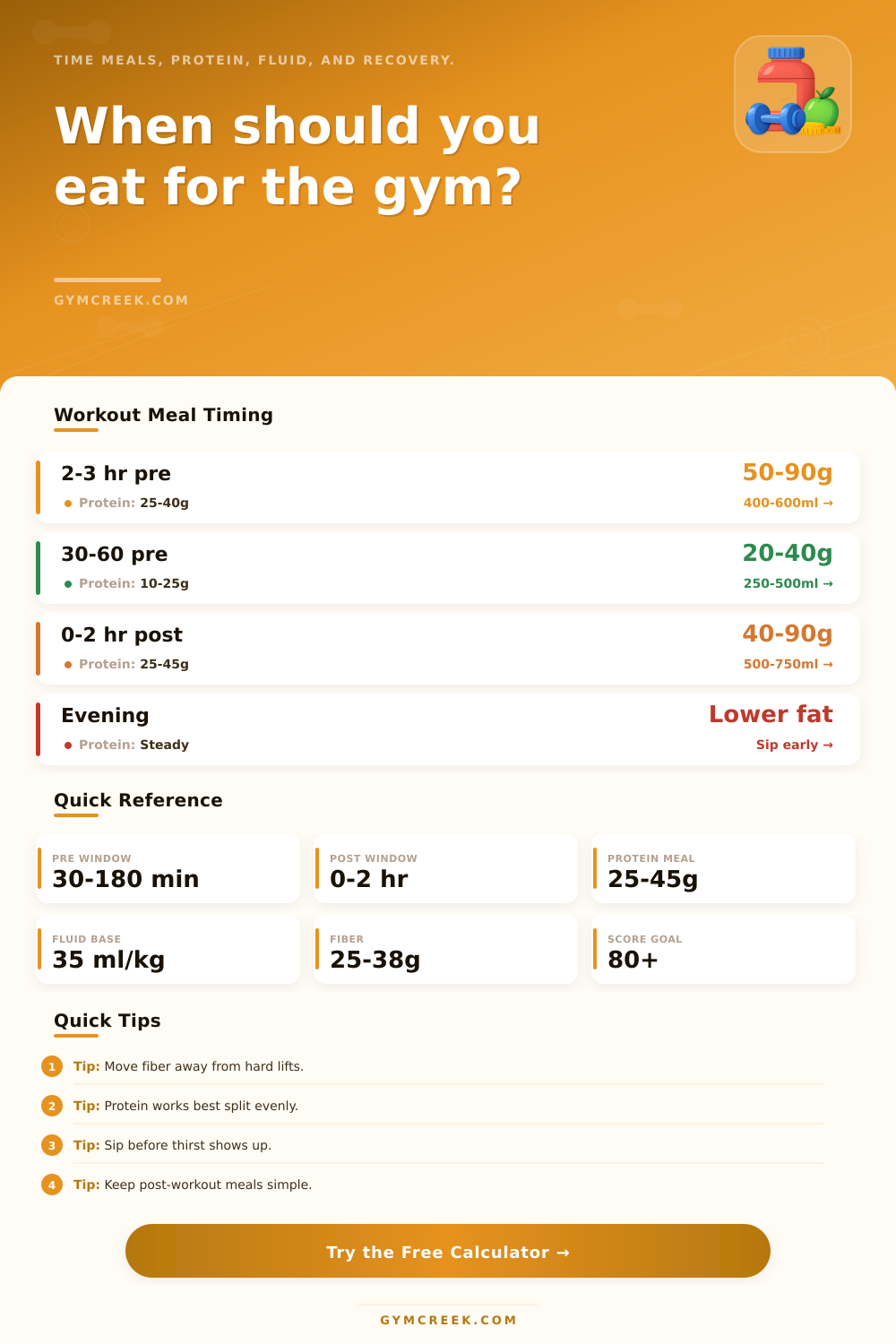
Nutritional timing involve the management of protein, carbohydrate, and fluids. The timing of protein and carbohydrates is something that must be managed because protein and carbohydrates provides the energy and the building block that your body requires during training. Nutritional timing is important to your training because it affect how you feel during your training and how you recover after your training session.
The calculator determine your total fluid needs, carbohydrate needs, protein needs, meal timing, and pre-post workout meals based off your body weight, the number of hours that you will spend performing your training session, and the time of day that you begin your training. Body weight is used to calculate your fluid needs and your protein needs. Training duration is used to calculate your carbohydrate needs and your fluid needs.
When to Eat and Drink Before and After Training
The time of day that you begin your training session is used to calculate whether or not you should have a large or small meal prior to your training. Finally, the calculator use your goal with your training to determine your carbohydrate needs because individual that wish to gain muscle require more carbohydrates than individuals that wish to lose fat. The time that you consume your pre-training meal can depend upon the time between your meal and your training.
If you have two hours before training, you can consume meals that contain fiber and fat. If you have only thirty minutes before training, you should consume meals that contain low level of fiber and low levels of fat. Low levels of fiber and fat will allow your body to digest the meal.
The same concept apply to the time after training. Consuming a meal post-training will allow your body to recover from the training. However, waiting two or three hours post-training may make it more difficult for your body to recover.
The timing of your fluids should be based upon your fluid needs daily and your bodys sweat rate. Your daily fluid needs will ensure that you are properly hydrated for your daily activity. However, your training will require fluids to compensate for the fluids that you lose through sweating.
The longer and more intense your training session, the more fluids that you will need to replace the fluids that is lost through sweating. Therefore, the calculator calculates your total fluid needs as the fluid needs for training plus your daily fluid needs. You should follow this total number because it is more accurate than your ability to remember how much fluid that you need to properly hydrate for training.
Protein should be distributed throughout the day with many meal. By distributing your protein with many meals throughout the day, your protein intake will be consistent throughout the day. The calculator will calculate the amount of protein that you need each meal based upon your total daily protein intake and the number of meals that you consume each day.
Additionally, the calculator will suggest that you consume more protein after training because the body require more protein post-training. Consuming very little protein after training will make it difficult for your body to meet it’s protein goals later in the day. Fiber should be eaten at appropriate time because consuming high fiber meals can lead to digestive discomfort during training.
High fiber meals will make you feel very full and may even make you require the bathroom during training. To avoid these problems, avoid high fiber meals before training. Many individual that train after dinner may find it helpful to eat the majority of their fiber consumption earlier in the day to avoid digestive problems during training.
Supplements should be taken at specific times. Creatine does not have a specific time for supplementation because it work with the supplementation of creatine each day. Caffeine should be taken at specific times because consuming caffeine late in the day can interfere with your sleep cycle.
Additionally, individuals that train long and heavy take electrolyte supplements because these individuals will sweat heavily during training. The recovery score for an individual is calculated based upon the amount of protein consumed relative to body weight, the consumption of fluids, the consumption of fiber meals, the time of the meal post-training, and the choice of supplements. A low recovery score is provided if the protein relative to body weight is low, if the fluids are not consumed adequately for training, if a high fiber meal is consumed during a short pre-training window, if post-training meals are not consumed early, and if supplements is not taken sensibly.
A high recovery score is provided if an individual consumes adequate protein relative to body weight, fluids are consumed adequately, high fiber meals are not consumed during a short pre-training window, meals are consumed early post-training, and if the supplements are taken sensibly. This score can help an individual to understand whether or not they are consistent with their nutritional intake, as the breakdown of the recovery score can provide insight into which area of nutritional timing an individual can improve upon. An individual must use their own physical feedback to adjust the suggestion of the calculator.
For instance, an individual may feel better consuming a pre-training snack on some days then other days. Therefore, while the calculator may suggest a certain type of meal for consumption prior to training, an individual must use their physical self to adjust their training diet according to their physical need. It’s important to recieve the best results from your diet.
You should of listened to your body. Most people find that they can’t manage alot of nutritous food at once without feeling uncomfortabley full. This is a moddern problem.